Neurosurgery Unit, CTO Hospital, Careggi University Hospital, Largo P Palagi 1, 50139, Florence, Italy.
Department of Neurosciences, Psychology, Drug Research and Child Health, University of Florence, Florence, Italy.
Sci Rep. 2024 Jun 5;14(1):12966. doi: 10.1038/s41598-024-63926-8.
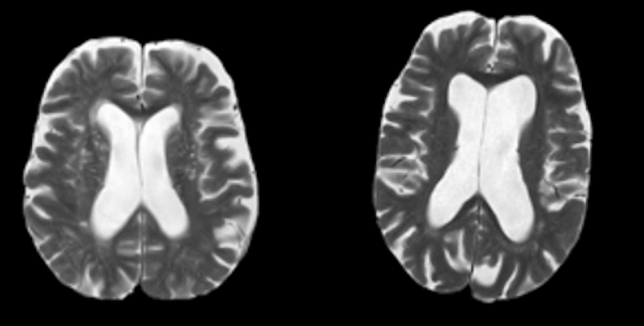
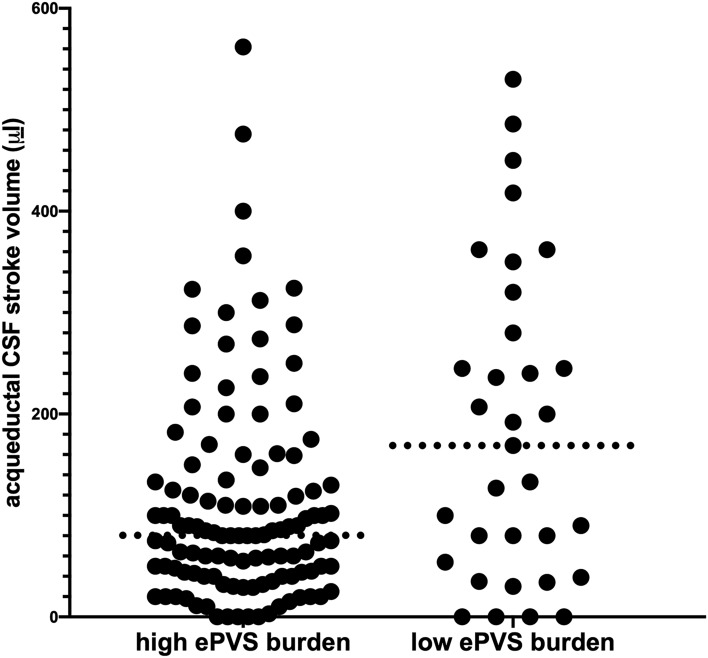
The inflow of CSF into perivascular spaces (PVS) in the brain is crucial for clearing waste molecules. Inefficiency in PVS flow leads to neurodegeneration. Failure of PVS flushing is associated with CSF flow impairment in the intracranial hydrodynamic condition of CSF hypo-pulsatility. However, enlarged PVS (ePVS), a finding indicative of PVS flow dysfunction, is also present in patients with derangement of CSF dynamics characterized by CSF hyper-pulsatility, which increases CSF flow. Intriguingly, two opposite intracranial hydrodynamic conditions would lead to the same result of impairing the PVS flushing. To investigate this issue, we assessed the subsistence of a dysfunctional interplay between CSF and PVS flows and, if the case, the mechanisms preventing a hyper-pulsatile brain from providing an effective PVS flushing. We analyzed the association between phase contrast MRI aqueductal CSF stroke volume (aqSV), a proxy of CSF pulsatility, and the burden of ePVS in chronic adult hydrocephalus, a disease involving a broad spectrum of intracranial hydrodynamics disturbances. In the 147 (85 males, 62 females) patients, the age at diagnosis ranged between 28 and 88 years (median 73 years). Ninety-seven patients had tri-ventriculomegaly and 50 tetra-ventriculomegaly. According to the extent of ePVS, 113 patients had a high ePVS burden, while 34 had a low ePVS burden. aqSV, which ranged between 0 and 562 μL (median 86 μL), was increased with respect to healthy subjects. Patients presenting with less ePVS burden had higher aqSV (p < 0.002, corrected for the multiple comparisons) than those with higher ePVS burden. The present study confirmed the association between CSF dynamics and PVS flow disturbances and demonstrated this association in intracranial hyper-pulsatility. Further studies should investigate the association between PVS flow failure and CSF hypo- and hyper-pulsatility as responsible/co-responsible for glymphatic failure in other neurodegenerative diseases, particularly in diseases in which CSF disturbances can be corrected, as in chronic adult hydrocephalus.
脑内的脑脊液(CSF)流入血管周围间隙(PVS)对于清除废物分子至关重要。PVS 流动效率低下会导致神经退行性变。CSF 低搏动性颅内流体动力学条件下 CSF 流动受损会导致 PVS 冲洗失败。然而,CSF 高搏动性患者也存在 PVS 扩张(ePVS),这表明 PVS 流动功能障碍,CSF 高搏动性会增加 CSF 流动。有趣的是,两种相反的颅内流体动力学条件会导致相同的 PVS 冲洗受损结果。为了研究这个问题,我们评估了 CSF 和 PVS 流动之间是否存在功能失调的相互作用,如果存在,是什么机制阻止了 CSF 高搏动性的大脑提供有效的 PVS 冲洗。我们分析了相位对比 MRI 导水管 CSF 搏动容积(aqSV)与慢性成人脑积水(一种涉及广泛颅内流体动力学紊乱的疾病)患者 ePVS 负担之间的相关性,aqSV 是 CSF 搏动的替代物。在 147 名患者(85 名男性,62 名女性)中,诊断时的年龄在 28 至 88 岁之间(中位数 73 岁)。97 名患者存在三脑室扩大,50 名患者存在四脑室扩大。根据 ePVS 的严重程度,113 名患者 ePVS 负担较高,而 34 名患者 ePVS 负担较低。aqSV 范围在 0 至 562 μL(中位数 86 μL)之间,高于健康对照组。ePVS 负担较低的患者 aqSV 较高(p < 0.002,经多次比较校正)。本研究证实了 CSF 动力学与 PVS 流动紊乱之间的相关性,并在颅内高搏动性中证明了这种相关性。进一步的研究应探讨 PVS 流动衰竭与 CSF 低和高搏动性之间的关联,以确定它们在其他神经退行性疾病中是否是导致糖质分解功能障碍的原因/共同原因,特别是在 CSF 紊乱可以纠正的疾病中,如慢性成人脑积水。