Huschtscha Zoya, Silver Jessica, Gerhardy Michael, Urwin Charles S, Kenney Nathan, Le Viet Hung, Fyfe Jackson J, Feros Simon A, Betik Andrew C, Shaw Christopher S, Main Luana C, Abbott Gavin, Tan Sze-Yen, May Anthony, Smith Craig M, Kuriel Vicky, Barnard Jackson, Hamilton D Lee
School of Exercise and Nutrition Sciences, Institute for Physical Activity and Nutrition (IPAN), Deakin University, Geelong, 3216, Australia.
Centre for Sport Research (CSR), School of Exercise and Nutrition Sciences, Deakin University, Geelong, 3216, Australia.
Sports Med Open. 2024 Jun 7;10(1):66. doi: 10.1186/s40798-024-00732-6.
Palmitoylethanolamide (PEA) has analgesic/anti-inflammatory properties that may be a suitable alternative to over-the-counter (OTC) non-steroidal analgesics/anti-inflammatories. While OTC pain medications can impair strength training adaptations, the mechanism of action of PEA is distinct from these and it may not negatively affect skeletal muscle adaptations to strength training.
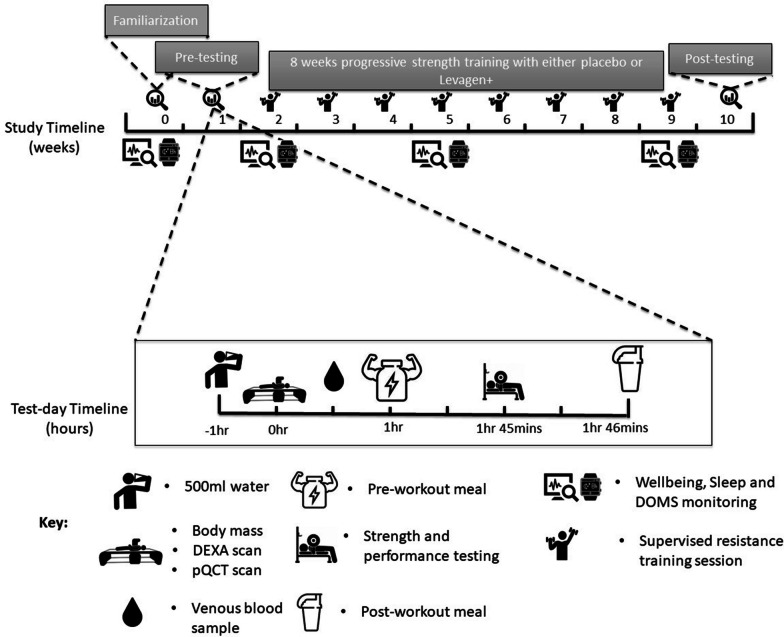
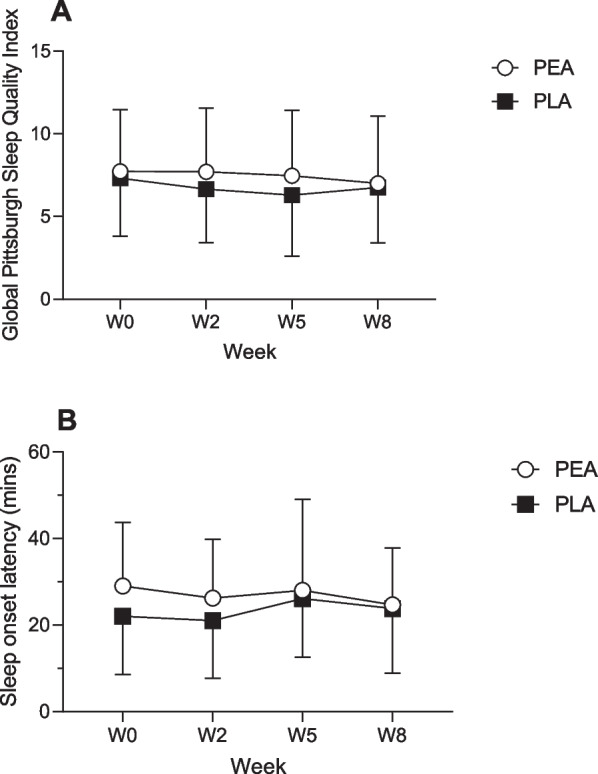
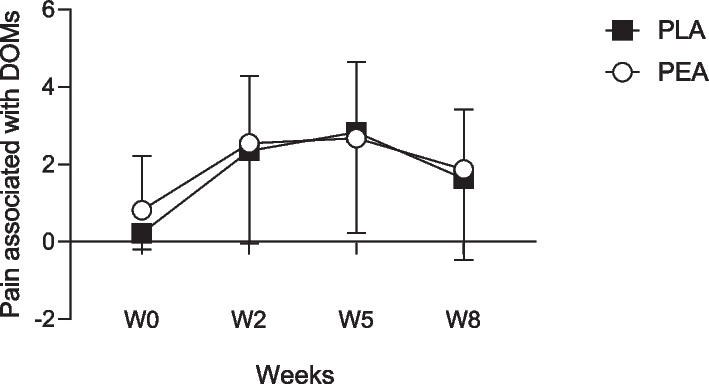
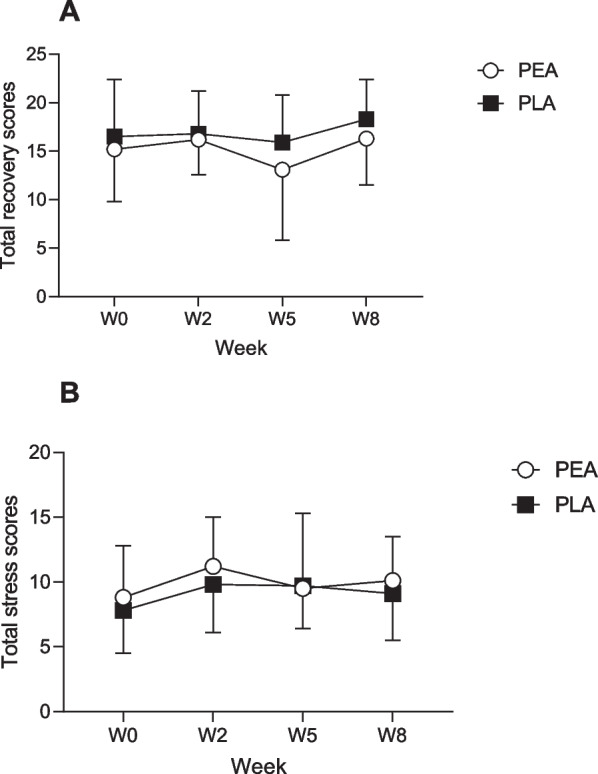
The primary aim of this study was to investigate the effects of daily PEA supplementation (350 mg Levagen + equivalent to 300 mg PEA) combined with 8-weeks of resistance training on lean body mass with secondary aims addressing strength, power, sleep, and wellbeing compared to placebo (PLA) in young, healthy, active adults. In a randomized, controlled, double-blinded trial, 52 untrained, recreationally active participants aged 18-35 y were allocated to either the PEA or PLA groups. Participants consumed either 2 × 175 mg Levagen + PEA or identically matched maltodextrin capsules during an 8-week period of whole-body resistance training. This trial assessed the pre- to post- changes in total and regional lean body mass, muscular strength (1-RM bench, isometric mid-thigh pull), muscular power [countermovement jump (CMJ), bench throw], pain associated with exercise training, sleep, and wellbeing compared with the PEA or PLA condition.
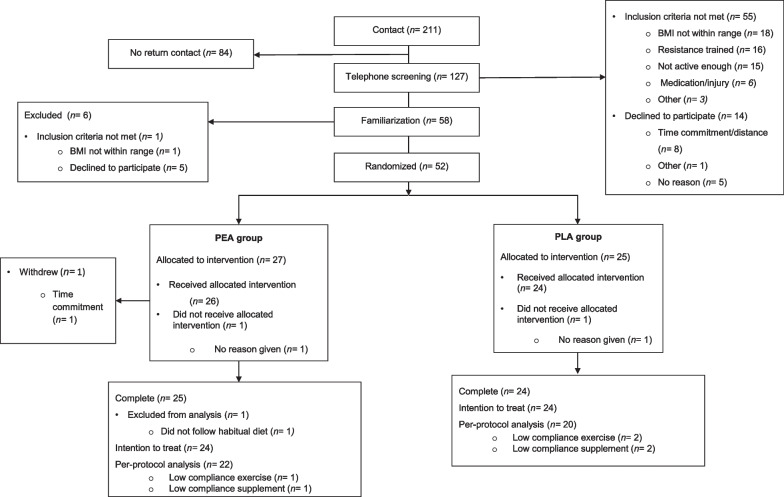
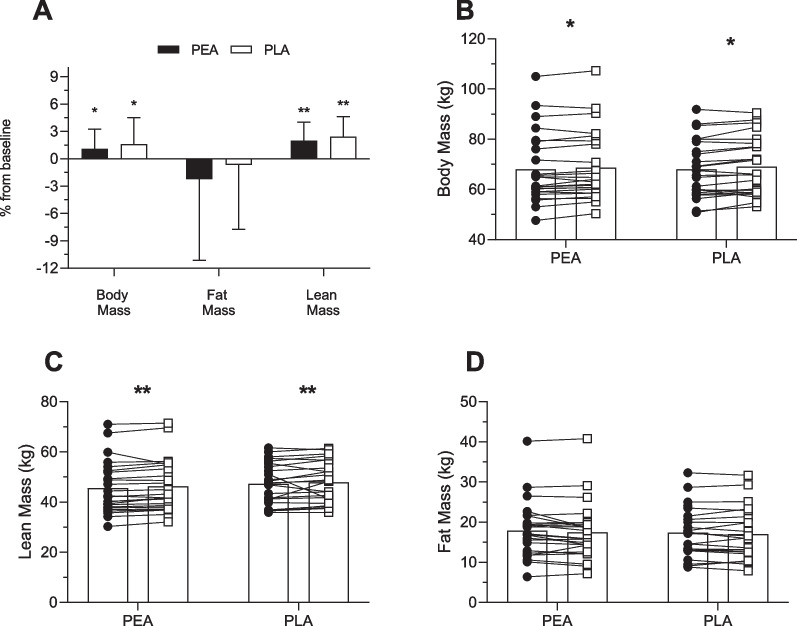
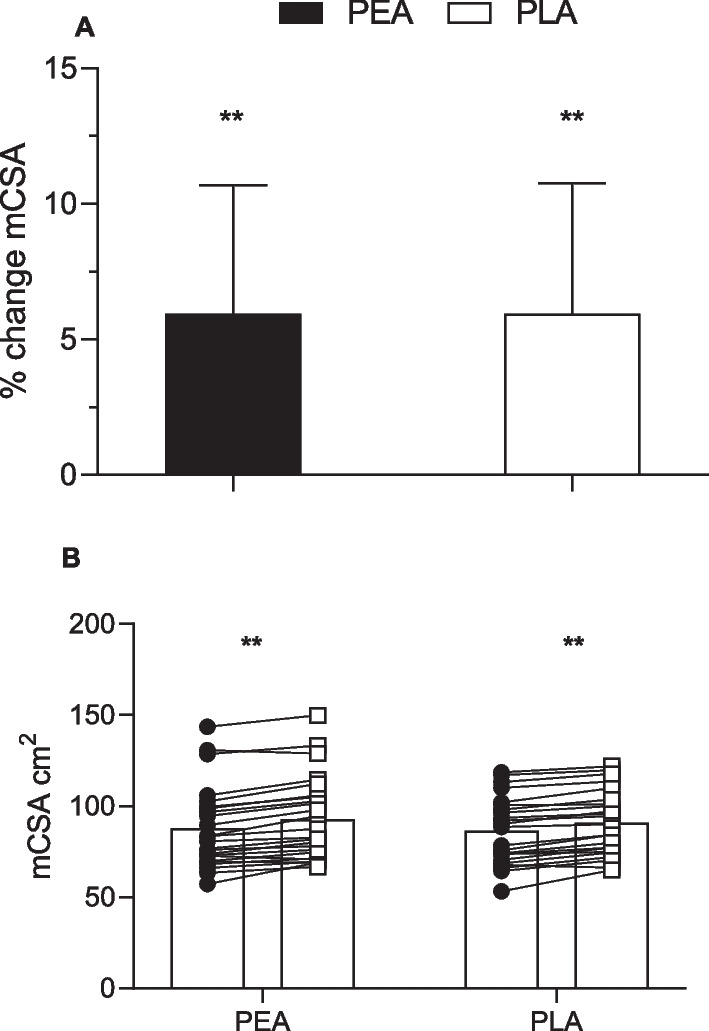
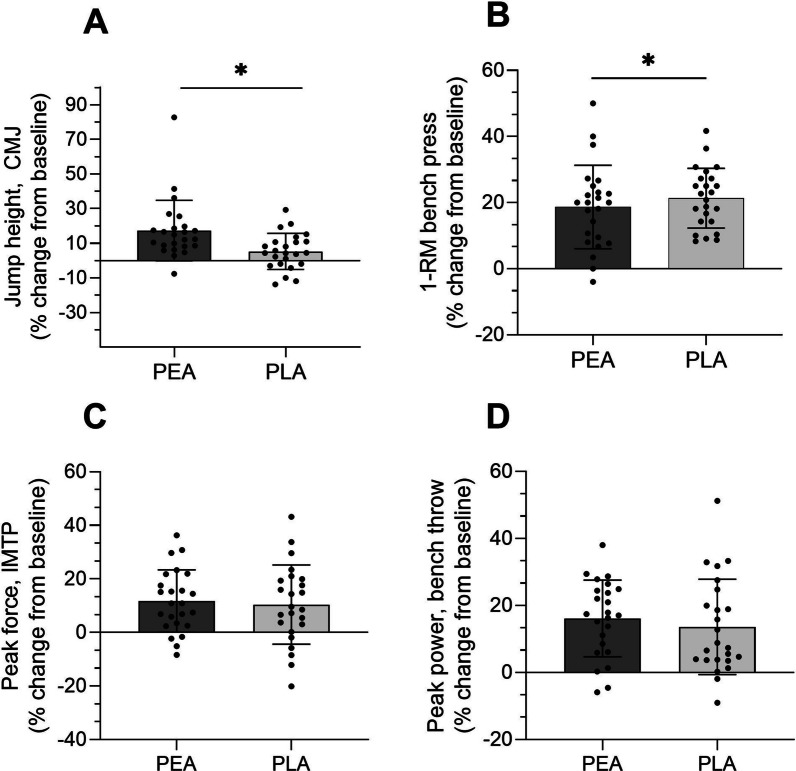
48 Participants were included in the final intention to treat (ITT) analysis and we also conducted per protocol (PP) analysis (n = 42). There were no significant between-group differences for total or regional lean muscle mass post-intervention. There was a significantly higher jump height (CMJ) at week 10 in the PEA group compared to the PLA (Adjusted mean difference [95% CI] p-value; ITT: - 2.94 cm [- 5.15, - 0.74] p = 0.010; PP: - 2.93 cm [- 5.31, - 0.55] p = 0.017). The PLA group had higher 1-RM bench press post-intervention compared with the PEA group (ITT: 2.24 kg [0.12, 4.37] p = 0.039; PP: 2.73 kg [0.40, 5.06] p = 0.023). No significant treatment effects were noted for any of the other outcomes.
PEA supplementation, when combined with 8 weeks of strength training, did not impair lean mass gains and it resulted in significantly higher dynamic lower-body power when compared with the PLA condition.
Australian New Zealand Clinical Trials Registry (ANZCTR: ACTRN12621001726842p).
棕榈酰乙醇胺(PEA)具有镇痛/抗炎特性,可能是一种适合替代非处方(OTC)非甾体类镇痛药/抗炎药的选择。虽然非处方止痛药物会损害力量训练适应性,但PEA的作用机制与这些药物不同,它可能不会对骨骼肌适应力量训练产生负面影响。
本研究的主要目的是调查每日补充PEA(350毫克左旋甘氨酸乙酯,相当于300毫克PEA)与8周抗阻训练相结合对年轻、健康、活跃成年人瘦体重的影响,次要目的是研究与安慰剂(PLA)相比,其对力量、功率、睡眠和幸福感的影响。在一项随机、对照、双盲试验中,将52名年龄在18 - 35岁、未经训练但有休闲运动习惯的参与者分配到PEA组或PLA组。在为期8周的全身抗阻训练期间,参与者分别服用2×175毫克左旋甘氨酸乙酯+PEA或完全匹配的麦芽糖糊精胶囊。本试验评估了与PEA或PLA情况相比,全身和局部瘦体重、肌肉力量(1次最大重复卧推、等长大腿中部拉伸)、肌肉功率[反向移动跳跃(CMJ)、卧推投掷]、与运动训练相关的疼痛、睡眠和幸福感从干预前到干预后的变化。
48名参与者纳入最终意向性分析(ITT),我们还进行了符合方案分析(PP)(n = 42)。干预后,两组在全身或局部瘦肌肉量方面无显著组间差异。与PLA组相比,PEA组在第10周时跳跃高度(CMJ)显著更高(调整后均值差异[95%置信区间]p值;ITT:-2.94厘米[-5.15,-0.74]p = 0.010;PP:-2.93厘米[-5.31,-0.55]p = 0.017)。干预后,PLA组的1次最大重复卧推成绩高于PEA组(ITT:2.24千克[0.12,4.37]p = 0.039;PP:2.73千克[0.40,5.06]p = 0.023)。其他任何结果均未观察到显著的治疗效果。
补充PEA并结合8周力量训练,不会损害瘦体重增加,与PLA组相比,其能显著提高动态下肢功率。
澳大利亚新西兰临床试验注册中心(ANZCTR:ACTRN12621001726842p)