Viral Immunobiology, Institute of Experimental Immunology, University of Zürich, Zürich, Switzerland.
Genentech Inc., 1 DNA Way, South San Francisco, CA, 94080, USA.
Nat Commun. 2024 Jun 6;15(1):4841. doi: 10.1038/s41467-024-49209-w.
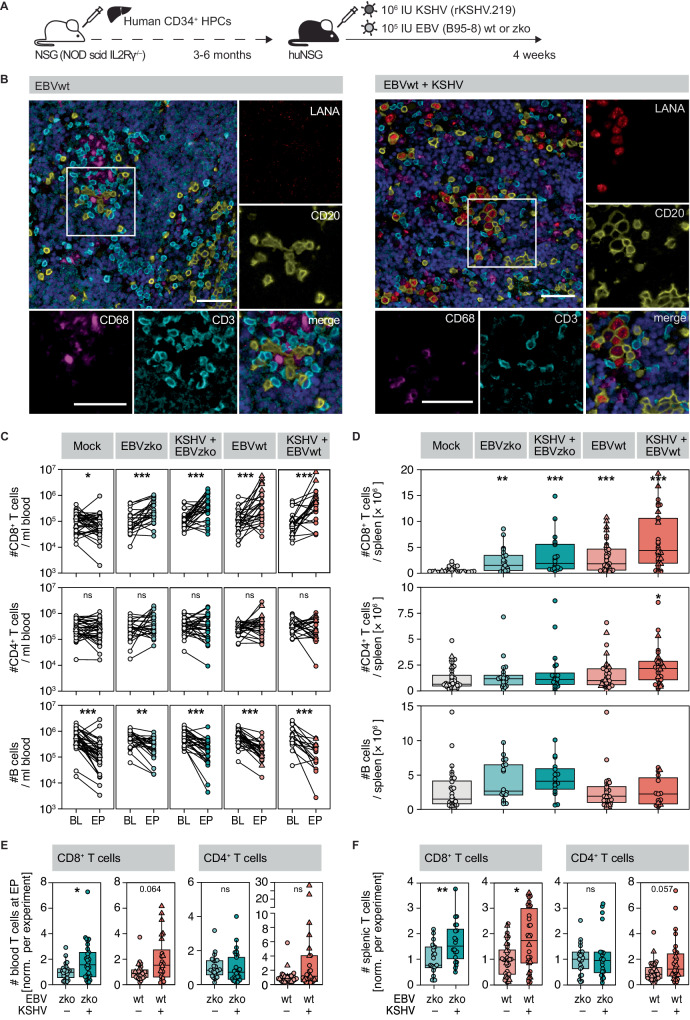
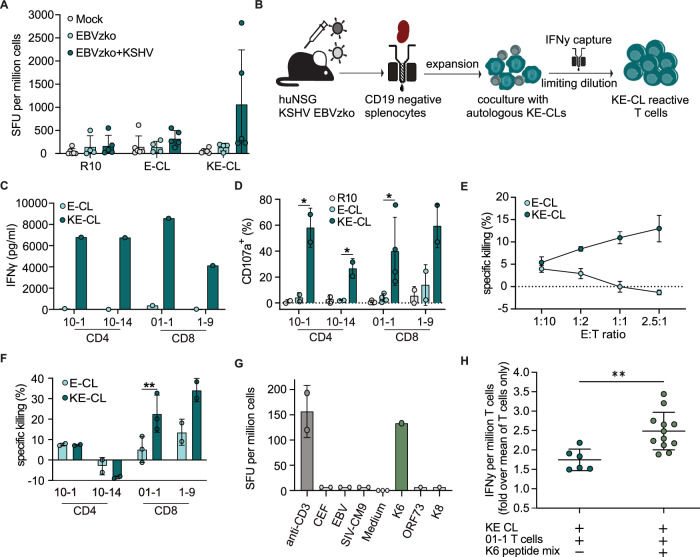
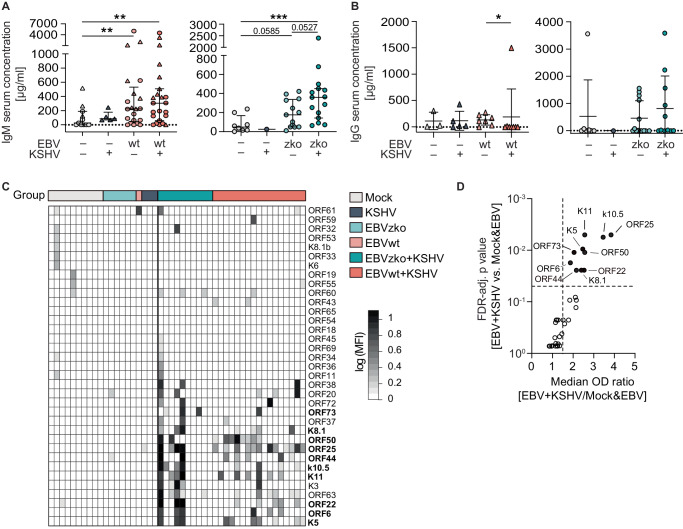
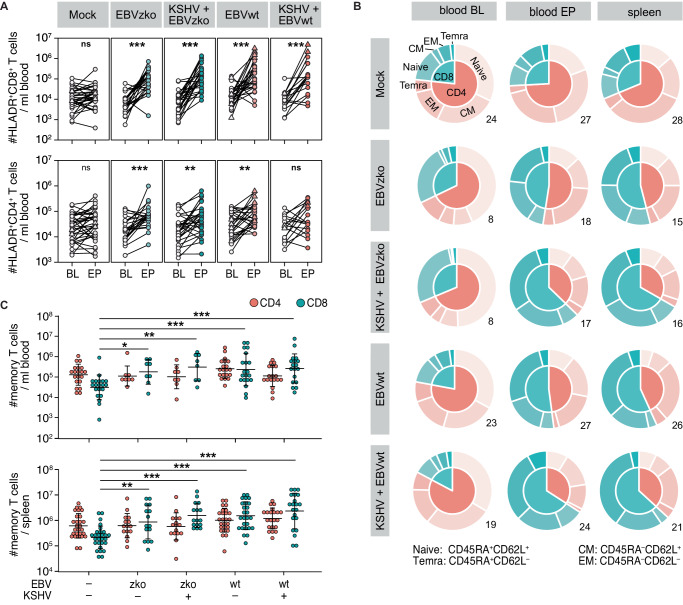
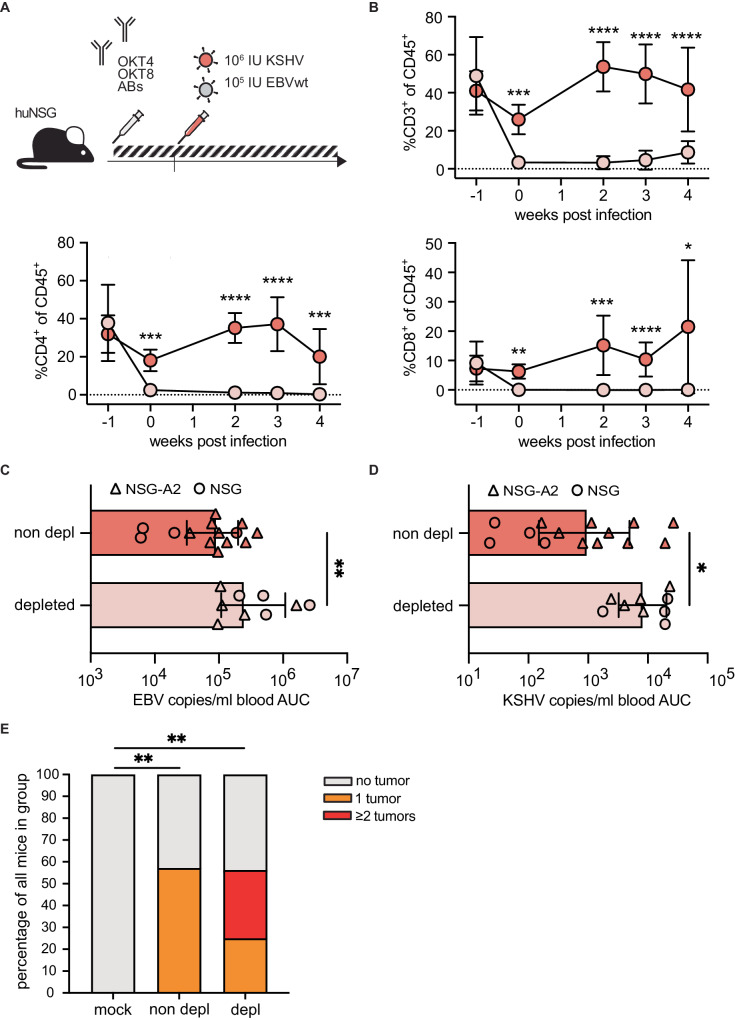
Kaposi sarcoma associated herpesvirus (KSHV) is associated with around 1% of all human tumors, including the B cell malignancy primary effusion lymphoma (PEL), in which co-infection with the Epstein Barr virus (EBV) can almost always be found in malignant cells. Here, we demonstrate that KSHV/EBV co-infection of mice with reconstituted human immune systems (humanized mice) leads to IgM responses against both latent and lytic KSHV antigens, and expansion of central and effector memory CD4 and CD8 T cells. Among these, KSHV/EBV dual-infection allows for the priming of CD8 T cells that are specific for the lytic KSHV antigen K6 and able to kill KSHV/EBV infected B cells. This suggests that K6 may represent a vaccine antigen for the control of KSHV and its associated pathologies in high seroprevalence regions, such as Sub-Saharan Africa.
卡波西肉瘤相关疱疹病毒(KSHV)与约 1%的人类肿瘤有关,包括 B 细胞恶性肿瘤原发性渗出淋巴瘤(PEL),其中恶性细胞中几乎总是存在与 EBV 的共同感染。在这里,我们证明了 KSHV/EBV 对具有重建的人免疫系统(人源化小鼠)的小鼠的共感染导致针对潜伏和裂解 KSHV 抗原的 IgM 反应,并扩增了中央和效应记忆 CD4 和 CD8 T 细胞。在这些细胞中,KSHV/EBV 双重感染允许针对裂解 KSHV 抗原 K6 的 CD8 T 细胞的初始激活,并且能够杀死 KSHV/EBV 感染的 B 细胞。这表明 K6 可能代表控制 KSHV 及其在高血清阳性率地区(如撒哈拉以南非洲)相关病理的疫苗抗原。