Seifi Zahra, Khazaei Mozafar, Cheraghali Danial, Rezakhani Leila
Student Research Committee, Kermanshah University of Medical Sciences, Kermanshah, Iran.
Fertility and Infertility Research Center, Health Technology Institute, Kermanshah University of Medical Sciences, Kermanshah, Iran.
Heliyon. 2024 May 21;10(11):e31589. doi: 10.1016/j.heliyon.2024.e31589. eCollection 2024 Jun 15.
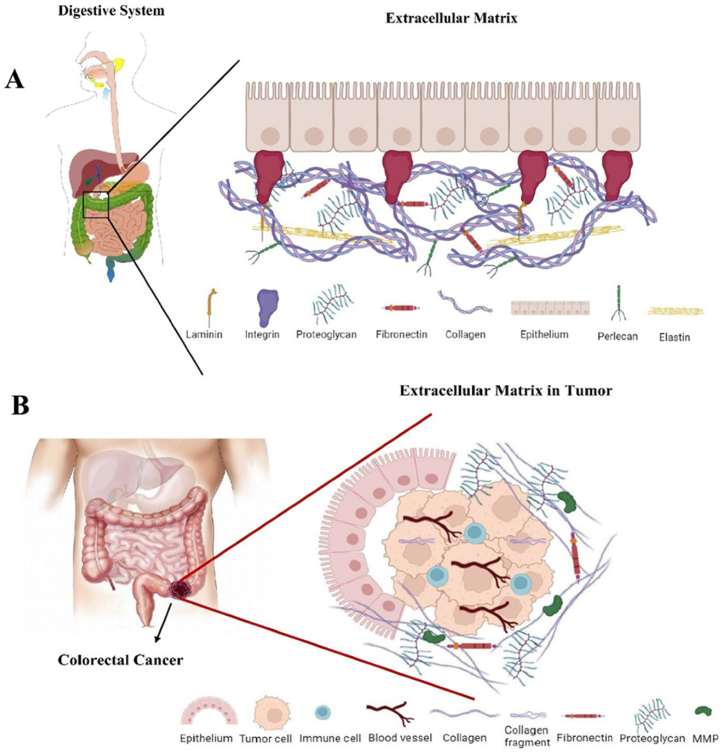
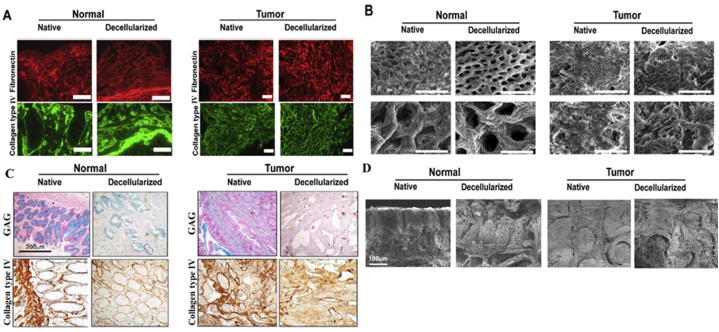
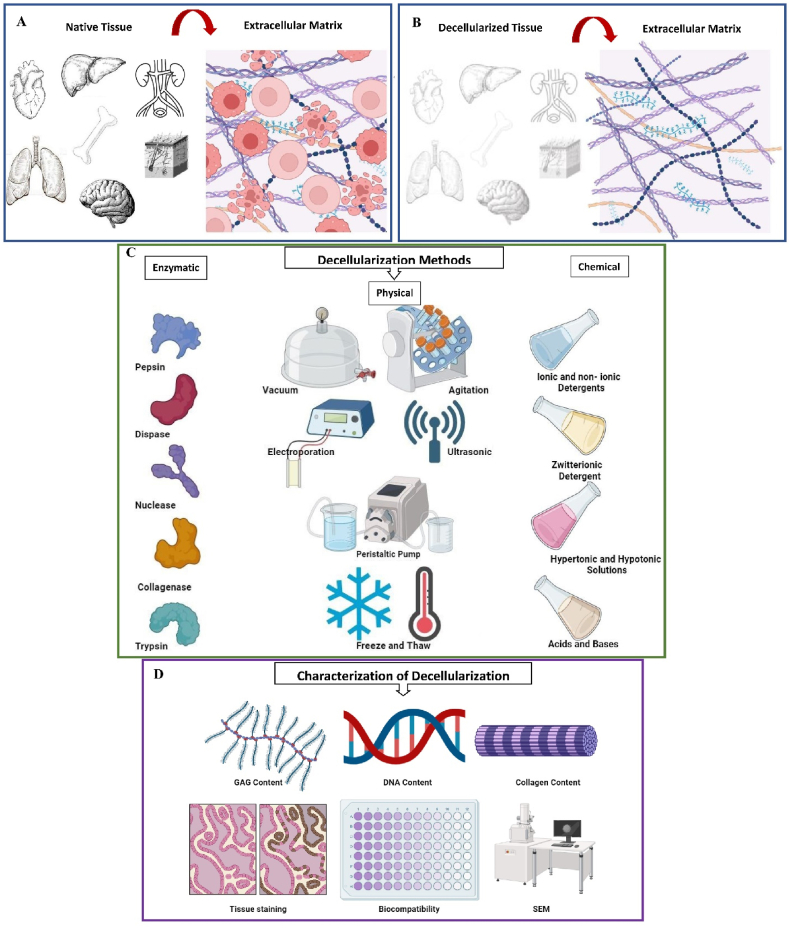
The extracellular matrix (ECM) is a multifunctional network of macromolecules that regulate various cellular functions and physically support the tissues. Besides physiological conditions, the ECM also changes during pathological conditions such as cancer. As tumor cells proliferate, notable changes occur in the quantity and makeup of the surrounding ECM. Therefore, the role of this noncellular component of tissues in studies of tumor microenvironments should be considered. So far, many attempts have been made to create 2-dimensional (2D) or 3-dimensional (3D) models that can replicate the intricate connections within the tumor microenvironment. Decellularized tissues are proper scaffolds that imitate the complex nature of native ECM. This review aims to summarize 3D models of digestive system cancers based on decellularized ECMs. These ECM-based scaffolds will enable us to study the interactive communication between cells and their surrounding environment which brings new potential for a better understanding of the pathophysiology of cancer.
细胞外基质(ECM)是一个由大分子组成的多功能网络,可调节各种细胞功能并为组织提供物理支撑。除了生理条件外,ECM在诸如癌症等病理条件下也会发生变化。随着肿瘤细胞的增殖,周围ECM的数量和组成会发生显著变化。因此,应考虑组织的这种非细胞成分在肿瘤微环境研究中的作用。到目前为止,人们已经进行了许多尝试来创建能够复制肿瘤微环境内复杂连接的二维(2D)或三维(3D)模型。去细胞组织是模仿天然ECM复杂性质的合适支架。本综述旨在总结基于去细胞ECM的消化系统癌症三维模型。这些基于ECM的支架将使我们能够研究细胞与其周围环境之间的相互作用,这为更好地理解癌症的病理生理学带来了新的潜力。