Elenga Narcisse, Ro Vathanaksambath, Mafema Missindu Joddy, Thomas Boizan Noelis, Vaz Tania, Lucarelli Aude, Armoudon-Fleret Marie Élise, Buendé Solange
Service de médecine et chirurgie pédiatrique, Centre hospitalier de Cayenne, Cayenne, Guyane.
Centre intégré de drépanocytose, Centre hospitalier de Cayenne, Cayenne, Guyane.
Med Trop Sante Int. 2024 Feb 13;4(1). doi: 10.48327/mtsi.v4i1.2024.488. eCollection 2024 Mar 31.
Sickle cell disease is one of the most common genetic diseases in France. In French Guiana, neonatal screening was introduced in 1992, at the same time as other screening programs for childhood diseases. The aim of this study is to describe the organization of newborn screening for sickle cell disease in French Guiana.
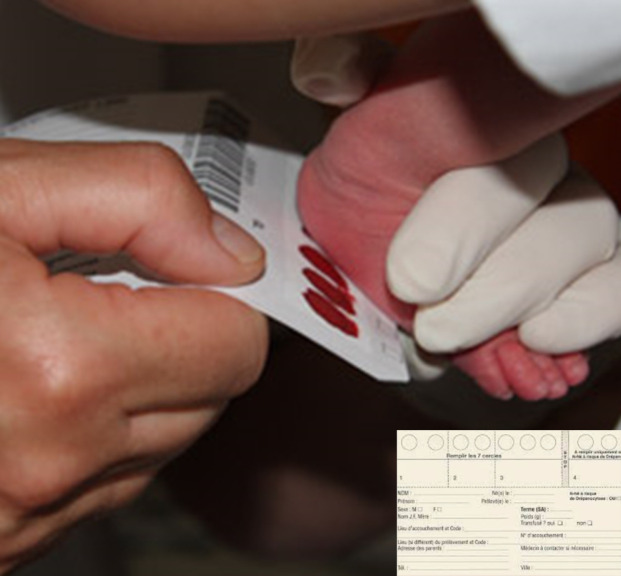
We used several data sources: data collected from hospital records since 2005, activity reports from the national neonatal screening program and data from screening campaigns organized by the Drepaguyane association between 2010 and 2021 on 1,300 subjects. Blood samples from newborns are collected by capillary or venous sampling and absorbed on blotting paper (Guthrie) at the same time as those for other neonatal screenings. The dried papers are sent to the inter-regional laboratory in Lille, for further processing. In Saint-Laurent-du-Maroni, in order to reduce the proportion of people lost to follow-up, a double screening is carried out and the results are returned before discharge from the maternity hospital. All data were entered into an anonymous Excel file. The data were analyzed using STATA software.
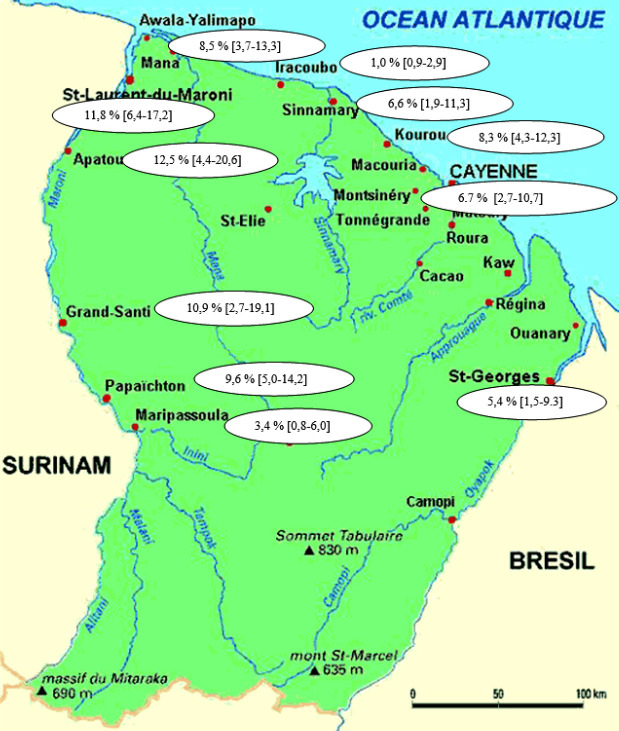
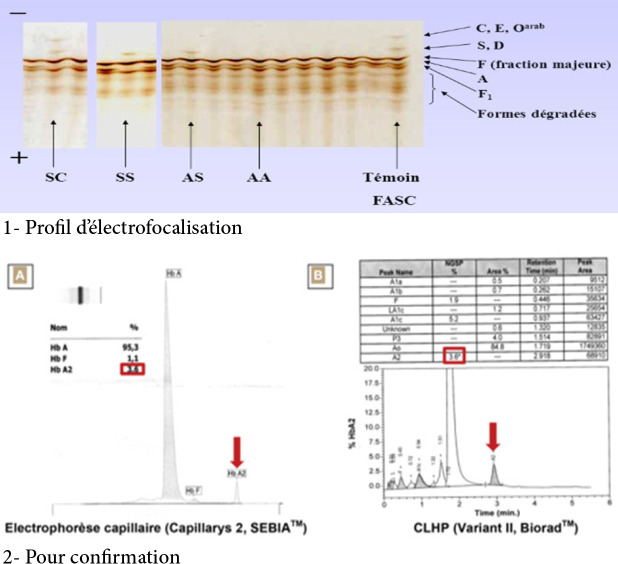
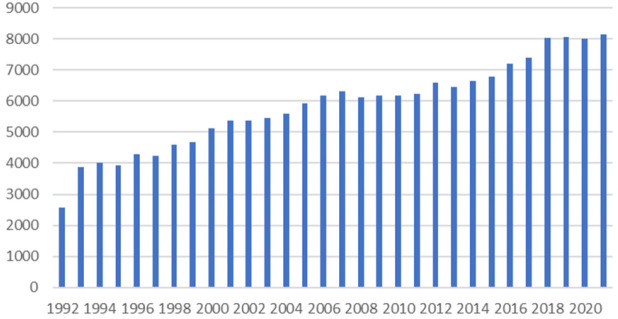
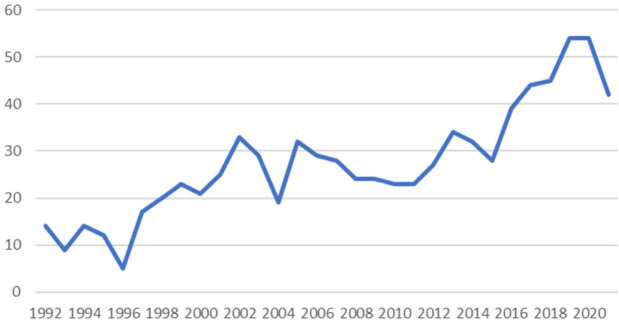
Among the 175,593 screened neonates between 1992 and 2021, screening detected 823 infants with sickle cell disease and 17,950 heterozygotes. Sickle cell genotypes include 493 SS (60%), 302 SC (37%) and 28 S-Beta-thalassemia (3%). The incidence of sickle cell disease was 1/213, 95% CI [1/236-1/204], and that of heterozygotes 1/10, IC 95% [1/12-1/8]. The majority of these children (52%) were from the Maroni region. The delay between screening and test results was 7 days. Only pathological results (homozygous, heterozygous) were communicated to parents and/or the attending physician by post. These data confirm the upward trend in the number of children screened for sickle cell disease in French Guiana. Data from screening campaigns organized by the Drepaguyane association have enabled to describe the distribution of the various abnormal hemoglobin fractions, and to confirm that HbS is more frequent in Western French Guiana. In Cayenne, in 2021, the active file comprised 699 patients, including 266 children under 18 years old.
This study provides valuable data on 30 years of neonatal screening for sickle cell disease in French Guiana, and on the evolution of sickle cell disease patients. It confirms that French Guiana is the French territory with the highest incidence of sickle cell disease. This incidence continues to rise over time. The study reveals the improvement in the organization of sickle cell disease management in French Guiana between 1992, when screening was introduced, and the present day. It highlights the role of patient associations in the fight against this disease, by organizing awareness and screening campaigns. These data will be used to guide public health policies in the pursuit of improved care and primary prevention.
镰状细胞病是法国最常见的遗传病之一。在法属圭亚那,新生儿筛查于1992年引入,与其他儿童疾病筛查项目同时进行。本研究的目的是描述法属圭亚那镰状细胞病新生儿筛查的组织情况。
我们使用了多个数据源:自2005年以来从医院记录中收集的数据、国家新生儿筛查项目的活动报告以及2010年至2021年期间Drepaguyane协会针对1300名受试者组织的筛查活动数据。新生儿的血样通过毛细管或静脉采血收集,并与其他新生儿筛查血样同时吸附在吸水纸上(格思里滤纸)。干燥后的滤纸被送往里尔的区域间实验室进行进一步检测。在圣洛朗迪马罗尼,为了减少失访人数比例,进行了双重筛查,并在产妇出院前返回结果。所有数据都录入了一个匿名的Excel文件。使用STATA软件对数据进行分析。
在1992年至2021年期间筛查的175593名新生儿中,筛查发现823名患有镰状细胞病的婴儿和17950名杂合子。镰状细胞基因型包括493例SS(60%)、302例SC(37%)和28例S - β地中海贫血(3%)。镰状细胞病的发病率为1/213,95%置信区间[1/236 - 1/204],杂合子的发病率为1/10,95%置信区间[1/12 - 1/8]。这些儿童中的大多数(52%)来自马罗尼地区。筛查与检测结果之间的延迟为7天。只有病理结果(纯合子、杂合子)通过邮寄方式告知父母和/或主治医生。这些数据证实了法属圭亚那镰状细胞病筛查儿童数量呈上升趋势。Drepaguyane协会组织的筛查活动数据有助于描述各种异常血红蛋白组分的分布情况,并证实HbS在法属圭亚那西部更为常见。在卡宴,2021年,活跃档案中有699名患者,其中包括266名18岁以下儿童。
本研究提供了法属圭亚那30年镰状细胞病新生儿筛查以及镰状细胞病患者演变的宝贵数据。它证实法属圭亚那是法国境内镰状细胞病发病率最高的地区。这一发病率随时间持续上升。该研究揭示了从1992年引入筛查到现在,法属圭亚那镰状细胞病管理组织方面的改善。它强调了患者协会通过组织宣传和筛查活动在抗击这种疾病中的作用。这些数据将用于指导公共卫生政策,以寻求改善护理和一级预防。