Surrozen, Inc, South San Francisco, United States.
Elife. 2024 Jun 7;13:RP93908. doi: 10.7554/eLife.93908.
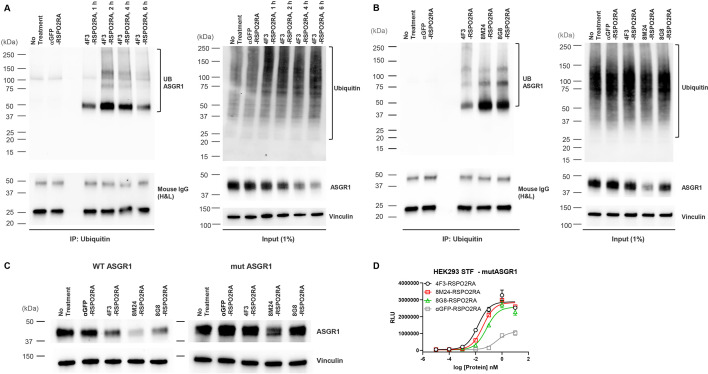
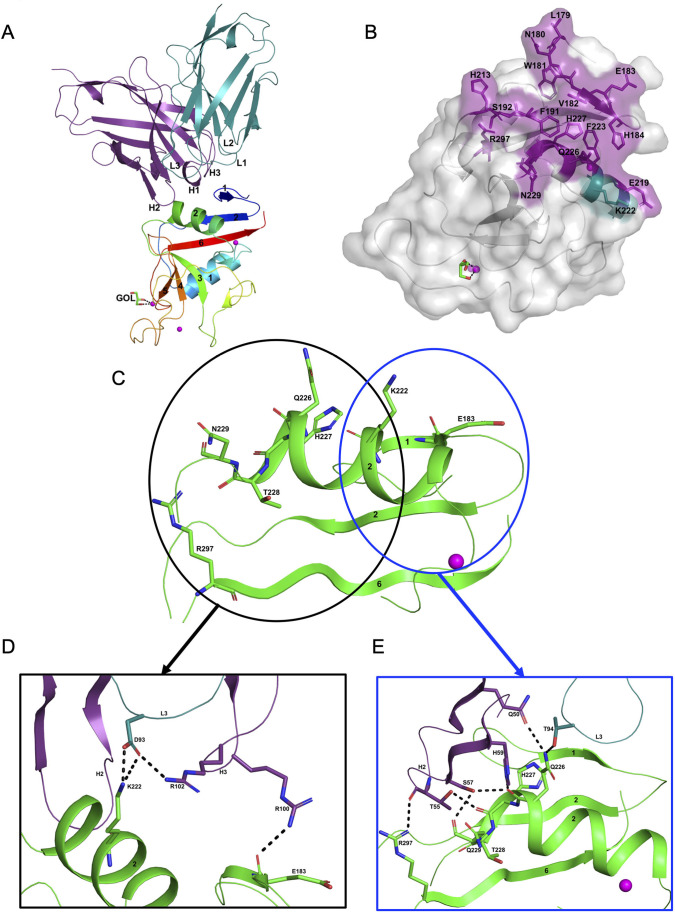
Molecules that facilitate targeted protein degradation (TPD) offer great promise as novel therapeutics. The human hepatic lectin asialoglycoprotein receptor (ASGR) is selectively expressed on hepatocytes. We have previously engineered an anti-ASGR1 antibody-mutant RSPO2 (RSPO2RA) fusion protein (called SWEETS) to drive tissue-specific degradation of ZNRF3/RNF43 E3 ubiquitin ligases, which achieved hepatocyte-specific enhanced Wnt signaling, proliferation, and restored liver function in mouse models, and an antibody-RSPO2RA fusion molecule is currently in human clinical trials. In the current study, we identified two new ASGR1- and ASGR1/2-specific antibodies, 8M24 and 8G8. High-resolution crystal structures of ASGR1:8M24 and ASGR2:8G8 complexes revealed that these antibodies bind to distinct epitopes on opposing sides of ASGR, away from the substrate-binding site. Both antibodies enhanced Wnt activity when assembled as SWEETS molecules with RSPO2RA through specific effects sequestering E3 ligases. In addition, 8M24-RSPO2RA and 8G8-RSPO2RA efficiently downregulate ASGR1 through TPD mechanisms. These results demonstrate the possibility of combining different therapeutic effects and degradation mechanisms in a single molecule.
能够促进靶向蛋白降解(TPD)的分子作为新型治疗药物具有巨大的潜力。人肝凝集素 ASGR1(ASGR)在肝细胞上选择性表达。我们之前已经设计了一种抗 ASGR1 抗体突变体 RSPO2(RSPO2RA)融合蛋白(称为 SWEETS),用于驱动 ZNRF3/RNF43 E3 泛素连接酶的组织特异性降解,从而在小鼠模型中实现了肝细胞特异性增强的 Wnt 信号传导、增殖,并恢复了肝功能,目前一种抗体-RSPO2RA 融合分子正在进行人体临床试验。在本研究中,我们鉴定了两种新的 ASGR1 和 ASGR1/2 特异性抗体 8M24 和 8G8。ASGR1:8M24 和 ASGR2:8G8 复合物的高分辨率晶体结构表明,这些抗体结合在 ASGR 的相对侧的不同表位上,远离底物结合位点。当与 RSPO2RA 组装成 SWEETS 分子时,两种抗体都通过特异性隔离 E3 连接酶来增强 Wnt 活性。此外,8M24-RSPO2RA 和 8G8-RSPO2RA 通过 TPD 机制有效地下调 ASGR1。这些结果表明,在单个分子中结合不同的治疗效果和降解机制是可能的。