Korea University Research Institute for Medical Bigdata Science, Korea University College of Medicine, Seoul, Republic of Korea.
School of Health and Environmental Science, Korea University College of Health Science, Seoul, Republic of Korea.
Medicine (Baltimore). 2024 Jun 7;103(23):e38286. doi: 10.1097/MD.0000000000038286.
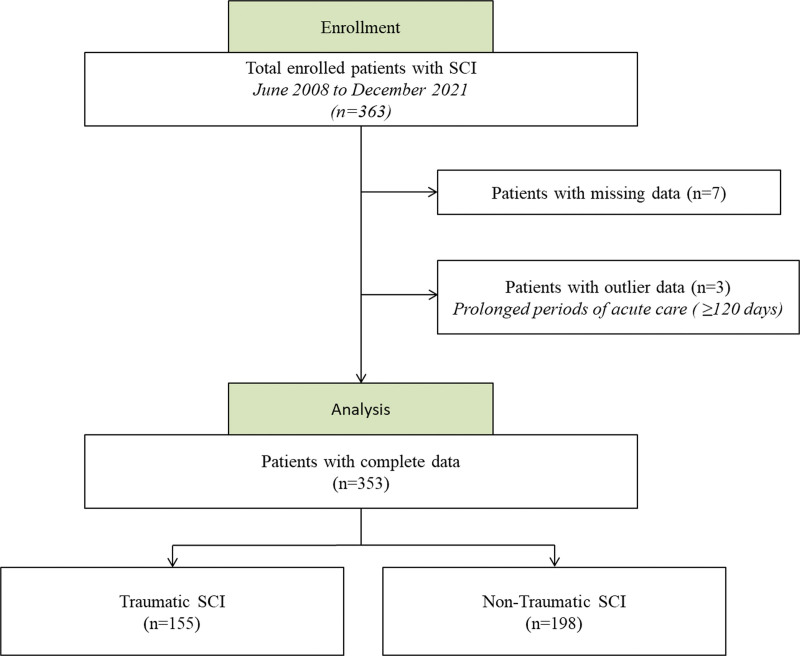
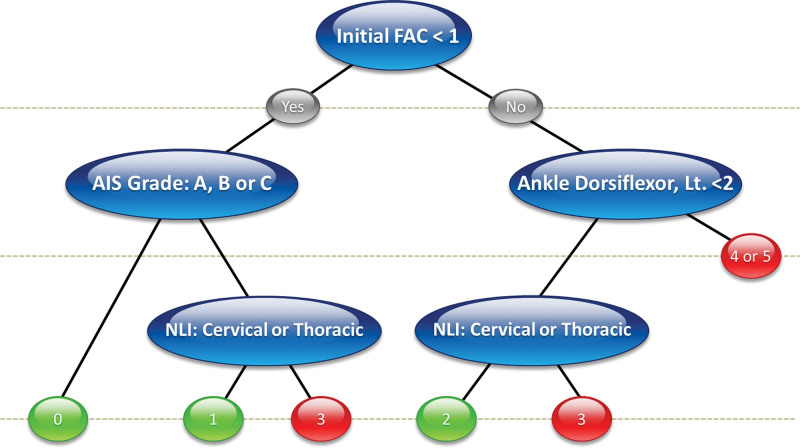
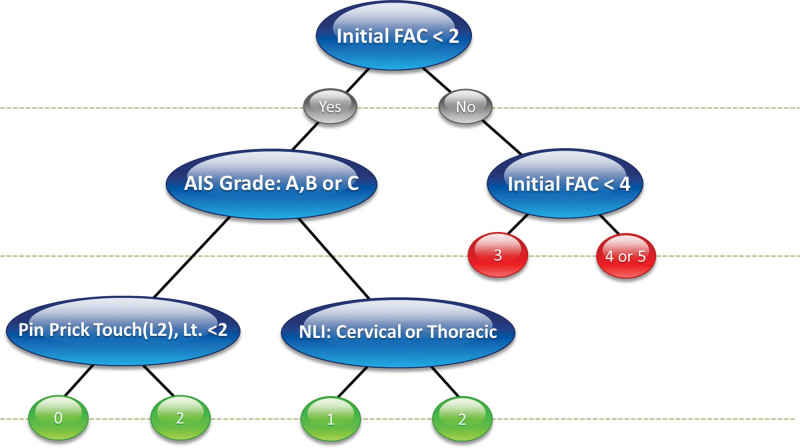
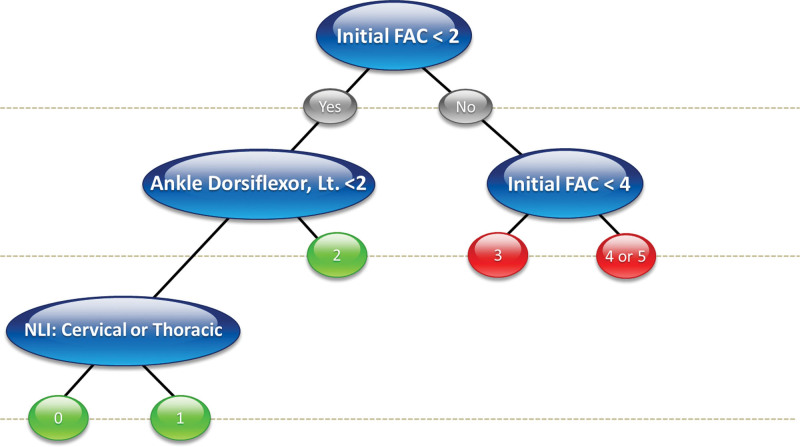
With advances in artificial intelligence, machine learning (ML) has been widely applied to predict functional outcomes in clinical medicine. However, there has been no attempt to predict walking ability after spinal cord injury (SCI) based on ML. In this situation, the main purpose of this study was to predict gait recovery after SCI at discharge from an acute rehabilitation facility using various ML algorithms. In addition, we explored important variables that were related to the prognosis. Finally, we attempted to suggest an ML-based decision support system (DSS) for predicting gait recovery after SCI. Data were collected retrospectively from patients with SCI admitted to an acute rehabilitation facility between June 2008 to December 2021. Linear regression analysis and ML algorithms (random forest [RF], decision tree [DT], and support vector machine) were used to predict the functional ambulation category at the time of discharge (FAC_DC) in patients with traumatic or non-traumatic SCI (n = 353). The independent variables were age, sex, duration of acute care and rehabilitation, comorbidities, neurological information entered into the International Standards for Neurological Classification of SCI worksheet, and somatosensory-evoked potentials at the time of admission to the acute rehabilitation facility. In addition, the importance of variables and DT-based DSS for FAC_DC was analyzed. As a result, RF and DT accurately predicted the FAC_DC measured by the root mean squared error. The root mean squared error of RF and the DT were 1.09 and 1.24 for all participants, 1.20 and 1.06 for those with trauma, and 1.12 and 1.03 for those with non-trauma, respectively. In the analysis of important variables, the initial FAC was found to be the most influential factor in all groups. In addition, we could provide a simple DSS based on strong predictors such as the initial FAC, American Spinal Injury Association Impairment Scale grades, and neurological level of injury. In conclusion, we provide that ML can accurately predict gait recovery after SCI for the first time. By focusing on important variables and DSS, we can guide early prognosis and establish personalized rehabilitation strategies in acute rehabilitation hospitals.
随着人工智能的进步,机器学习 (ML) 已被广泛应用于预测临床医学中的功能结果。然而,目前还没有尝试基于 ML 来预测脊髓损伤 (SCI) 后的行走能力。在这种情况下,本研究的主要目的是使用各种 ML 算法来预测急性康复机构出院时的 SCI 后步态恢复情况。此外,我们还探讨了与预后相关的重要变量。最后,我们试图提出一种基于 ML 的决策支持系统 (DSS) 来预测 SCI 后的步态恢复。数据是从 2008 年 6 月至 2021 年 12 月期间在急性康复机构住院的 SCI 患者中回顾性收集的。线性回归分析和 ML 算法(随机森林 [RF]、决策树 [DT] 和支持向量机)用于预测创伤性或非创伤性 SCI 患者出院时的功能性步行分类(FAC_DC)(n=353)。自变量为年龄、性别、急性护理和康复时间、合并症、国际 SCI 神经分类标准工作表中录入的神经信息以及急性康复机构入院时的体感诱发电位。此外,还分析了变量和基于 DT 的 DSS 对 FAC_DC 的重要性。结果,RF 和 DT 准确地预测了由均方根误差测量的 FAC_DC。RF 和 DT 的均方根误差对于所有参与者分别为 1.09 和 1.24,对于创伤组分别为 1.20 和 1.06,对于非创伤组分别为 1.12 和 1.03。在重要变量的分析中,发现初始 FAC 是所有组中最具影响力的因素。此外,我们可以根据初始 FAC、美国脊髓损伤协会损伤分级和损伤神经水平等强预测因子提供一个简单的 DSS。总之,我们首次提供了 ML 可以准确预测 SCI 后步态恢复的信息。通过关注重要变量和 DSS,我们可以在急性康复医院指导早期预后并制定个性化的康复策略。