Grempka Arkadiusz, Dziubak Damian, Puszko Anna K, Bachurska-Szpala Paulina, Ivanov Maxim, Vilarinho Paula M, Pulka-Ziach Karolina, Sek Slawomir
Biological and Chemical Research Centre, Faculty of Chemistry, University of Warsaw, Zwirki i Wigury 101, Warsaw 02-089, Poland.
Faculty of Chemistry, University of Warsaw, Pasteura 1, Warsaw 02-093, Poland.
ACS Appl Mater Interfaces. 2024 Jun 19;16(24):31817-31825. doi: 10.1021/acsami.4c04767. Epub 2024 Jun 7.
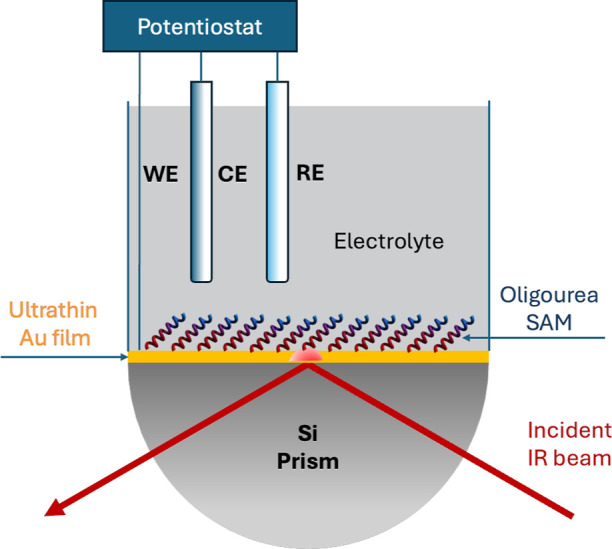
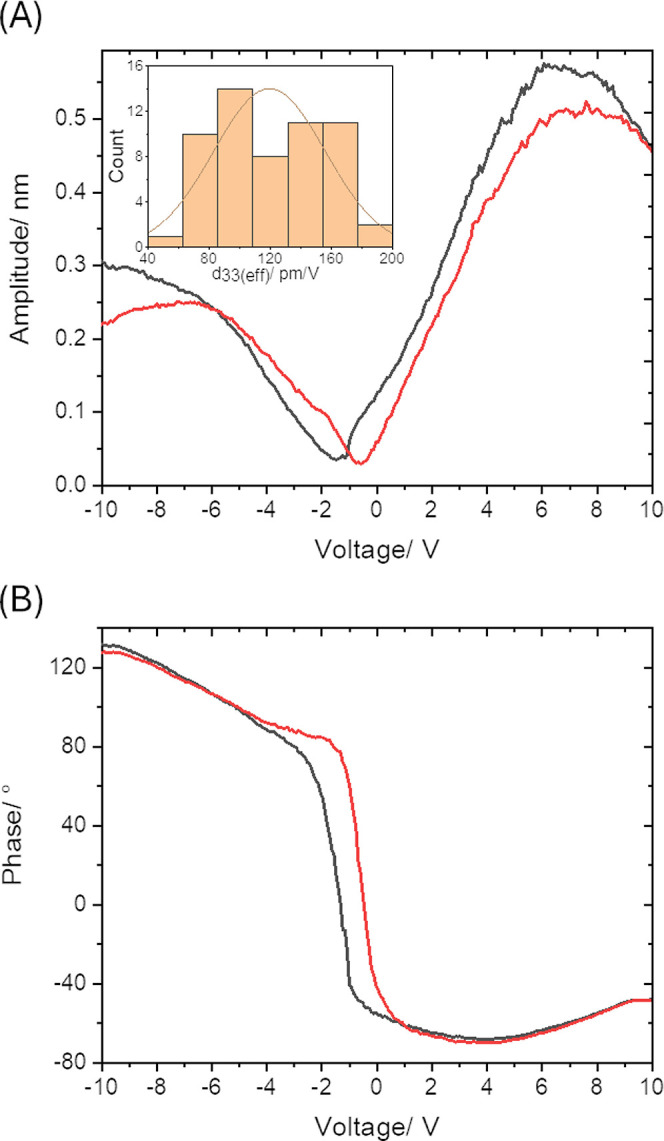
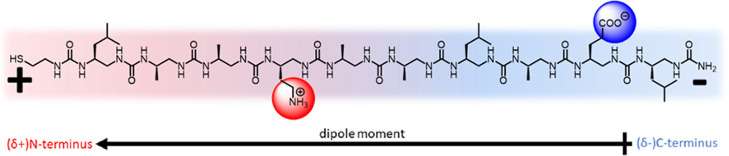
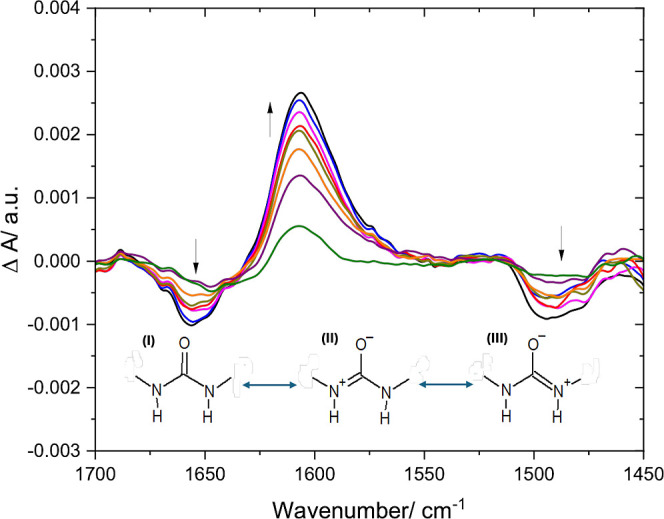
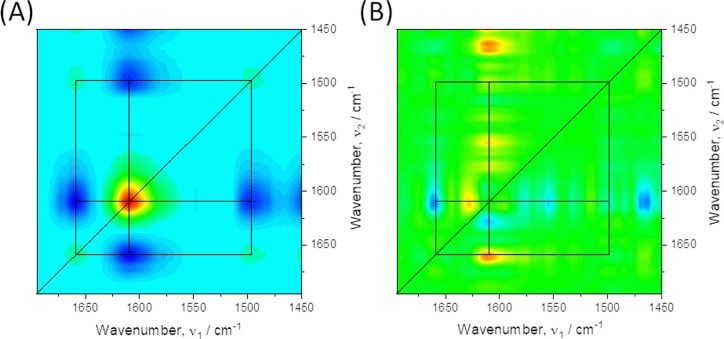
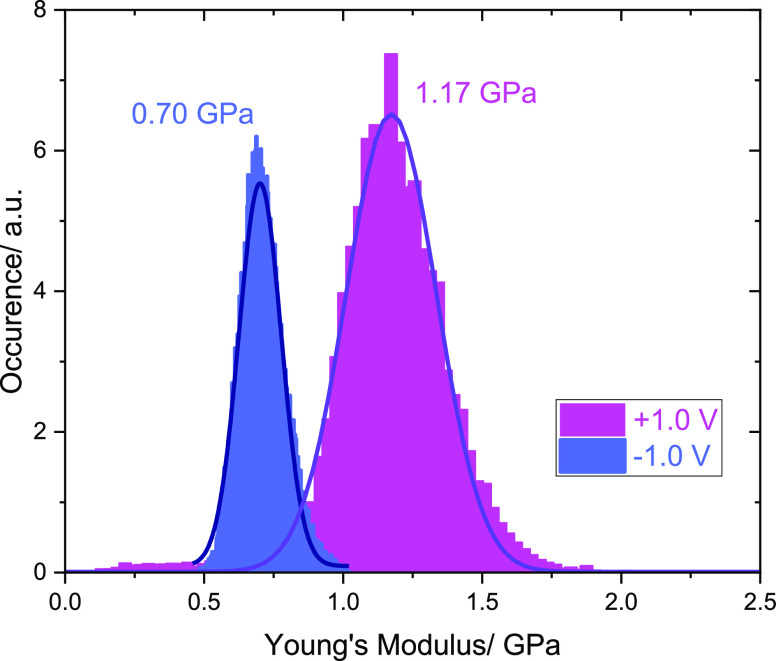
We have designed and synthesized a helical cysteamine-terminated oligourea foldamer composed of ten urea residues featuring side carboxyl and amine groups. The carboxyl group is located in proximity to the C-terminus of the oligourea and hence at the negative pole of the helix dipole. The amine group is located close to the N-terminus and hence at the positive pole of the helix dipole. Beyond the already remarkable dipole moment inherent in oligourea 2.5 helices, the incorporation of additional charges originating from the carboxylic and amine groups is supposed to impact the overall charge distribution along the molecule. These molecules were self-assembled into monolayers on a gold substrate, allowing us to investigate the influence of an electric field on these polar helices. By applying surface-enhanced infrared reflection-absorption spectroscopy, we proved that molecules within the monolayers tend to reorient themselves more vertically when a negative bias is applied to the surface. It was also found that surface-confined oligourea molecules affected by the external electric field tend to rearrange the electron density at urea groups, leading to the stabilization of the resonance structure with charge transfer character. The presence of the external electric field also affected the nanomechanical properties of the oligourea films, suggesting that molecules also tend to reorient in the ambient environment without an electrolyte solution. Under the same conditions, the helical oligourea displayed a robust piezoresponse, particularly noteworthy given the slender thickness of the monolayer, which measured approximately 1.2 nm. This observation demonstrates that thin molecular films composed of oligoureas may exhibit stimulus-responsive properties. This, in turn, may be used in nanotechnology systems as actuators or functional films, enabling precise control of their thickness in the range of even fractions of nanometers.
我们设计并合成了一种由十个尿素残基组成的螺旋状半胱胺封端的寡脲折叠体,其具有侧羧基和胺基。羧基位于寡脲的C端附近,因此位于螺旋偶极的负极。胺基靠近N端,因此位于螺旋偶极的正极。除了寡脲2.5螺旋中已经显著的偶极矩外,源自羧基和胺基的额外电荷的引入应该会影响分子沿整体的电荷分布。这些分子在金基底上自组装成单层,使我们能够研究电场对这些极性螺旋的影响。通过应用表面增强红外反射吸收光谱,我们证明当对表面施加负偏压时,单层内的分子倾向于更垂直地重新定向。还发现受外部电场影响的表面受限寡脲分子倾向于重新排列脲基团处的电子密度,导致具有电荷转移特征的共振结构的稳定。外部电场的存在也影响了寡脲膜的纳米力学性能,这表明分子在没有电解质溶液的环境中也倾向于重新定向。在相同条件下,螺旋状寡脲表现出强大的压阻响应,考虑到单层的厚度约为1.2nm,这一点尤其值得注意。这一观察结果表明,由寡脲组成的薄分子膜可能表现出刺激响应特性。反过来,这可用于纳米技术系统中作为致动器或功能膜,能够在甚至纳米级分数范围内精确控制其厚度。