National Molecular Microbiology Reference Laboratory, Public Health General Directorate, Ministry of Health, Ankara, Türkiye.
Department of National Reference Laboratories and Biological Products, Public Health General Directorate, Ministry of Health, Ankara, Türkiye.
Front Public Health. 2024 May 24;12:1332109. doi: 10.3389/fpubh.2024.1332109. eCollection 2024.
Türkiye confirmed its first case of SARS-CoV-2 on March 11, 2020, coinciding with the declaration of the global COVID-19 pandemic. Subsequently, Türkiye swiftly increased testing capacity and implemented genomic sequencing in 2020. This paper describes Türkiye's journey of establishing genomic surveillance as a middle-income country with limited prior sequencing capacity and analyses sequencing data from the first two years of the pandemic. We highlight the achievements and challenges experienced and distill globally relevant lessons.
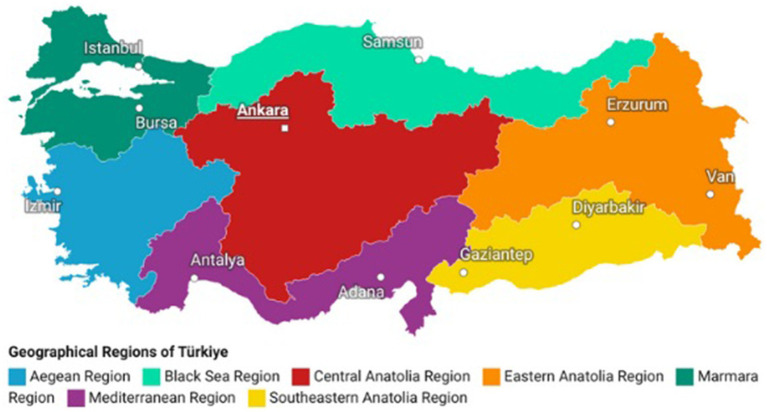
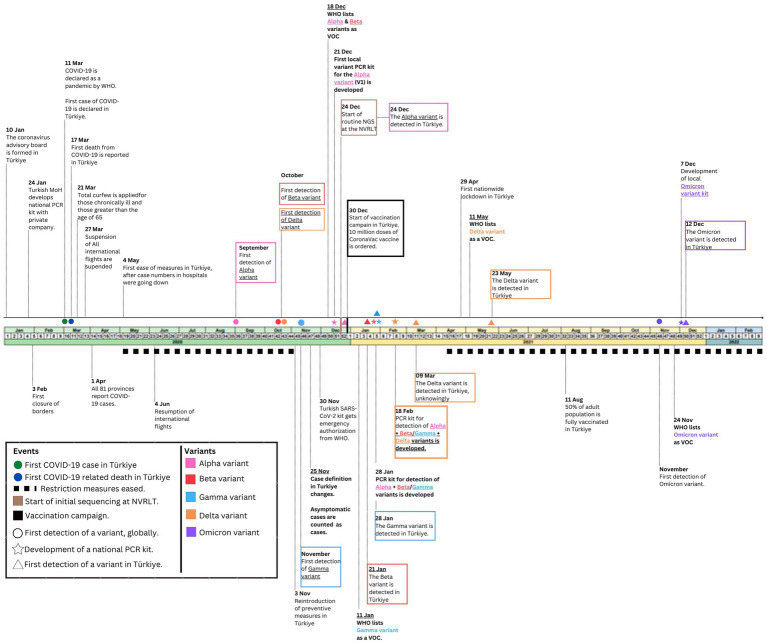
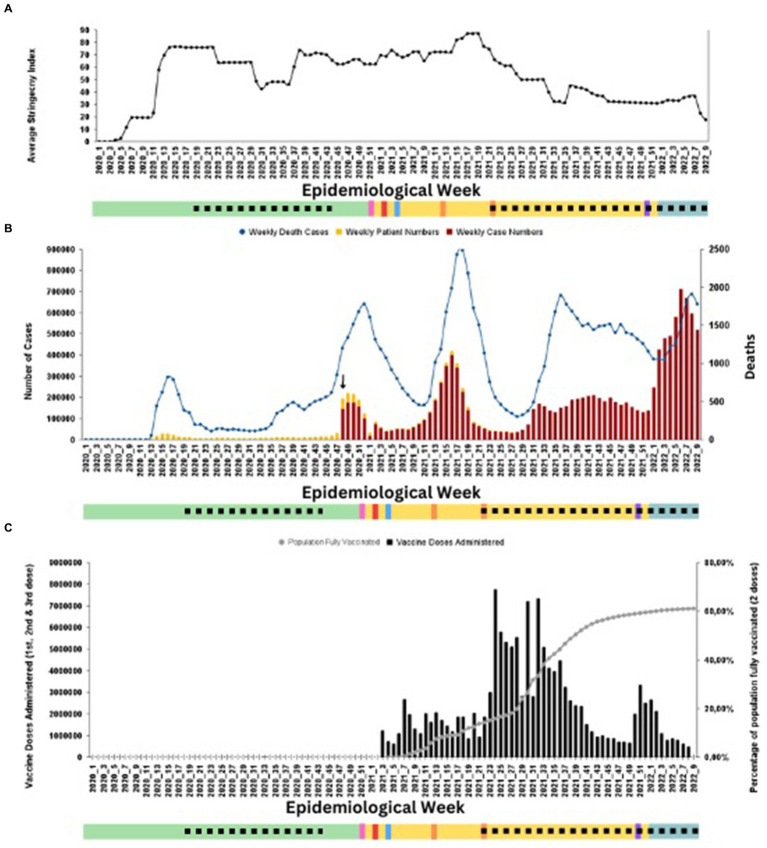
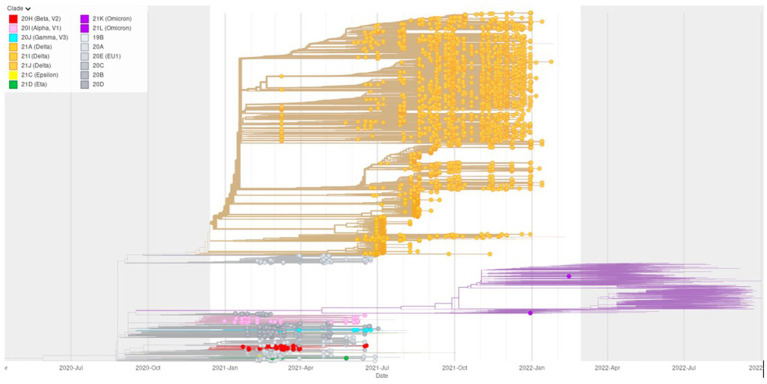
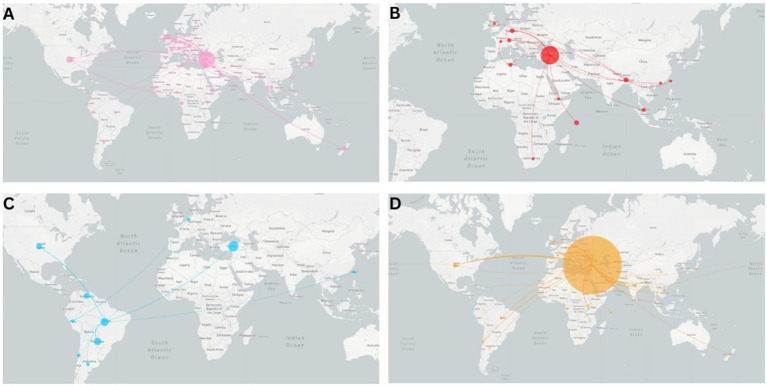
We tracked the evolution of the COVID-19 pandemic in Türkiye from December 2020 to February 2022 through a timeline and analysed epidemiological, vaccination, and testing data. To investigate the phylodynamic and phylogeographic aspects of SARS-CoV-2, we used Nextstrain to analyze 31,629 high-quality genomes sampled from seven regions nationwide.
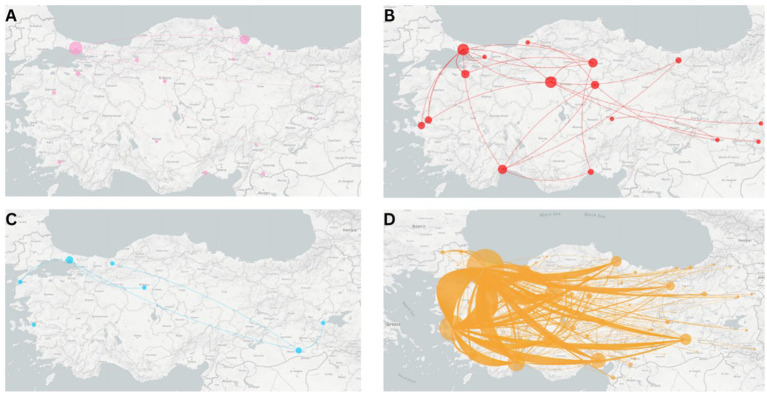
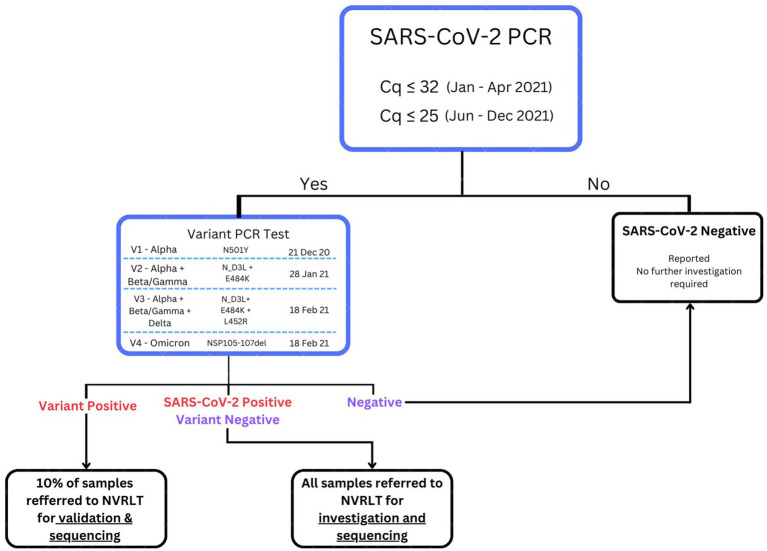
Türkiye's epidemiological curve, mirroring global trends, featured four distinct waves, each coinciding with the emergence and spread of variants of concern (VOCs). Utilizing locally manufactured kits to expand testing capacity and introducing variant-specific quantitative reverse transcription polymerase chain reaction (RT-qPCR) tests developed in partnership with a private company was a strategic advantage in Türkiye, given the scarcity and fragmented global supply chain early in the pandemic. Türkiye contributed more than 86,000 genomic sequences to global databases by February 2022, ensuring that Turkish data was reflected globally. The synergy of variant-specific RT-qPCR kits and genomic sequencing enabled cost-effective monitoring of VOCs. However, data analysis was constrained by a weak sequencing sampling strategy and fragmented data management systems, limiting the application of sequencing data to guide the public health response. Phylodynamic analysis indicated that Türkiye's geographical position as an international travel hub influenced both national and global transmission of each VOC despite travel restrictions.
This paper provides valuable insights into the testing and genomic surveillance systems adopted by Türkiye during the COVID-19 pandemic, proposing important lessons for countries developing national systems. The findings underscore the need for robust testing and sampling strategies, streamlined sample referral, and integrated data management with metadata linkage and data quality crucial for impactful epidemiological analysis. We recommend developing national genomic surveillance strategies to guide sustainable and integrated expansion of capacities built for COVID-19 and to optimize the effective utilization of sequencing data for public health action.
2020 年 3 月 11 日,土耳其确诊了首例 SARS-CoV-2 病例,恰逢全球 COVID-19 大流行的宣布。随后,土耳其迅速提高了检测能力,并于 2020 年开始进行基因组测序。本文描述了土耳其作为一个中等收入国家,在测序能力有限的情况下,建立基因组监测的历程,并分析了大流行前两年的测序数据。我们强调了所经历的成就和挑战,并提炼出具有全球相关性的经验教训。
我们通过时间线跟踪了 2020 年 12 月至 2022 年 2 月期间土耳其 COVID-19 大流行的演变,并分析了流行病学、疫苗接种和检测数据。为了研究 SARS-CoV-2 的系统发育和系统地理学方面,我们使用 Nextstrain 分析了来自全国七个地区的 31629 个高质量基因组。
土耳其的流行病学曲线与全球趋势相吻合,呈现出四个不同的波峰,每个波峰都与关注变体(VOC)的出现和传播相对应。利用本地制造的试剂盒扩大检测能力,并与一家私营公司合作开发针对变体的定量逆转录聚合酶链反应(RT-qPCR)检测,是土耳其在大流行早期全球供应链稀缺和分散的情况下的战略优势。截至 2022 年 2 月,土耳其向全球数据库贡献了超过 86000 个基因组序列,确保了土耳其数据在全球范围内得到反映。针对变体的 RT-qPCR 试剂盒和基因组测序的协同作用实现了对 VOC 的经济高效监测。然而,数据分析受到薄弱的测序采样策略和分散的数据管理系统的限制,限制了测序数据在指导公共卫生应对方面的应用。系统发育分析表明,尽管实施了旅行限制,但土耳其作为国际旅行枢纽的地理位置影响了每个 VOC 的国内和全球传播。
本文提供了有关土耳其在 COVID-19 大流行期间采用的检测和基因组监测系统的有价值的见解,为发展国家系统的国家提出了重要的经验教训。研究结果强调了建立强大的检测和采样策略、简化样本转诊以及整合数据管理(包括元数据链接和数据质量)的必要性,这些对于有影响力的流行病学分析至关重要。我们建议制定国家基因组监测战略,以指导 COVID-19 后可持续和综合扩大能力建设,并优化测序数据在公共卫生行动中的有效利用。