Yang Yiyuan, Sun Wanli, Yang Fan, Zhang Guoxia, Li Xinye, Sun Shipeng, Xing Yanwei
Guang'anmen Hospital, China Academy of Chinese Medical Sciences, Beijing, China.
Front Pharmacol. 2024 May 27;15:1367686. doi: 10.3389/fphar.2024.1367686. eCollection 2024.
The therapeutic effects of vitamin D supplementation on Coronavirus disease 2019 (COVID-19) aggravation remain controversial and inconclusive. To probe into this contentious issue, we performed the present meta-analysis of randomized controlled trials (RCTs).
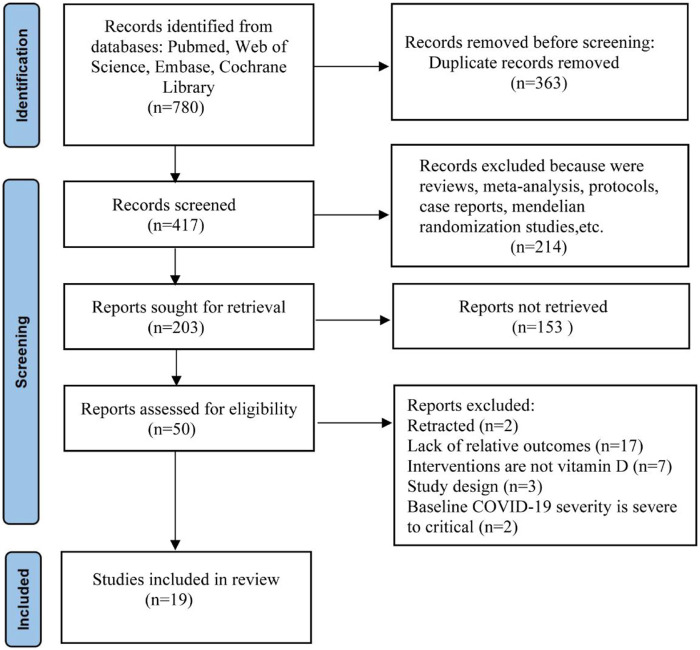
Literature published up to June 2023 was retrieved from Cochrane Library, PubMed, Web of Science and Embase. RCTs assessing mortality, intensive care unit (ICU) admission, mechanical ventilation (MV), length of hospitalization (LOH), and inflammatory markers containing C-reactive protein (CRP), D-dimer, interleukin-6 (IL-6), lactate dehydrogenase (LDH) were included. 19 RCTs were involved in the analysis and were conducted subgroup analyses on the baseline COVID-19 severity and vitamin D administration.
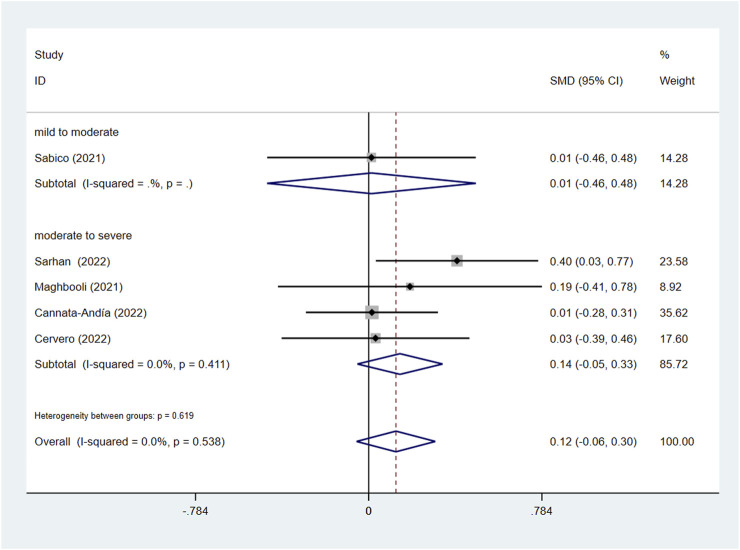
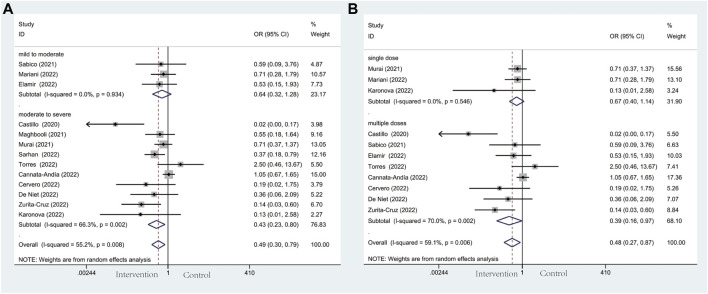
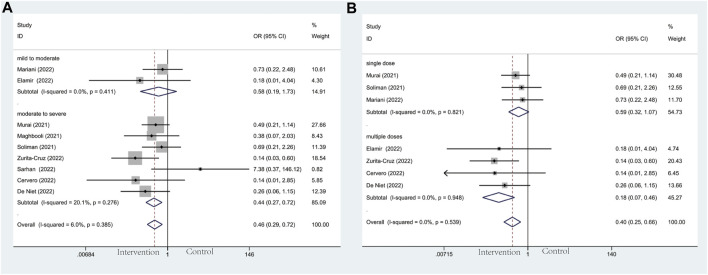
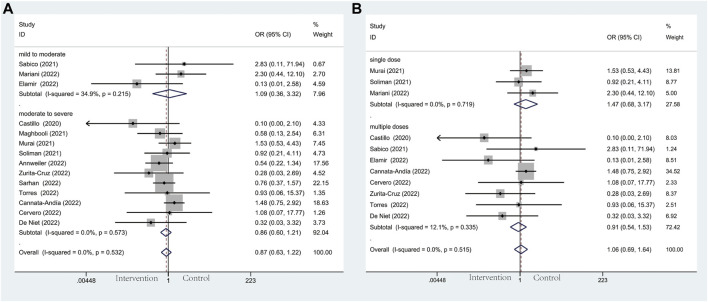
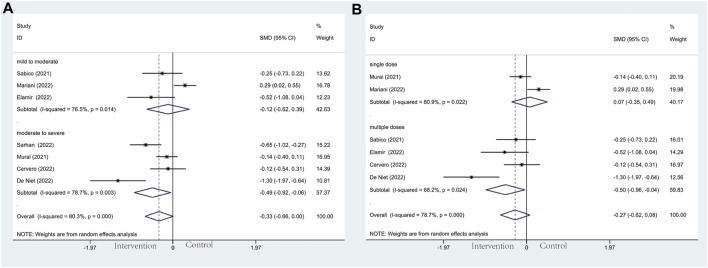
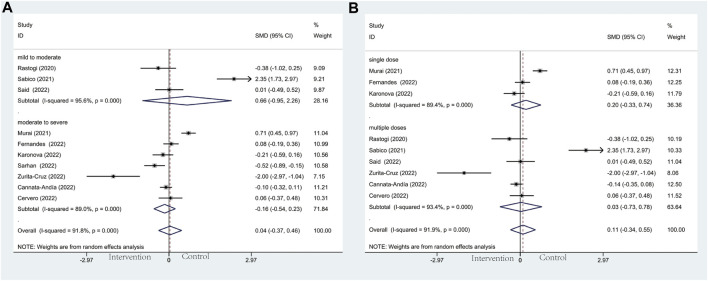
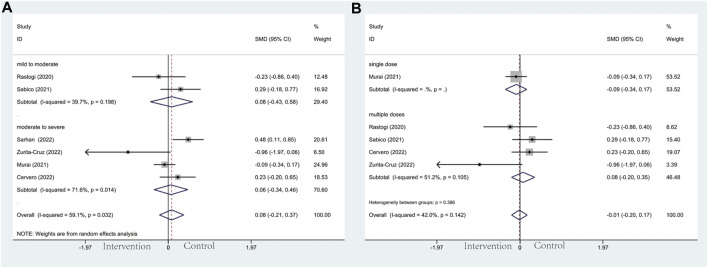
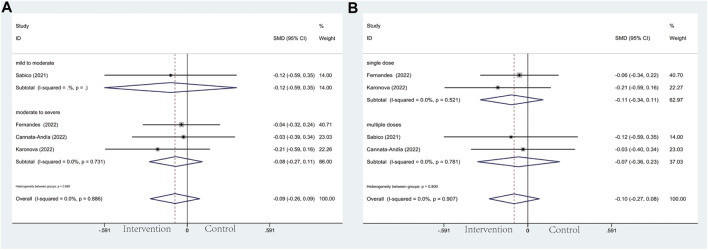
In the severity subgroup, statistically significant effects in moderate to severe group were observed in ICU admission (OR 0.43, 95% CI 0.23, 0.80; = 0.008), MV (OR 0.44, 95% CI 0.27, 0.72; = 0.001) and LOH (SMD -0.49, 95% CI -0.92, -0.06; = 0.027). In the administration subgroup, effects of ICU admission (OR 0.39, 95% CI 0.16, 0.97; = 0.044), MV (OR 0.18, 95% CI 0.07, 0.46; = 0.000) and LOH (SMD -0.50, 95% CI -0.96, -0.04; = 0.034) were more pronounced in patients supplied with multiple-dose vitamin D than single-dose. Although the result of mortality showed no statistically significant effect, it indicated a reduced trend (OR 0.87, 95% CI 0.63, 1.12; > 0.05). The results of inflammatory markers reached no statistical differences.
This meta-analysis revealed that moderate to severe COVID-19 patients supplied with multiple doses of vitamin D were less apt to need ICU admission, mechanical ventilation and have shorter hospital stays.
补充维生素D对2019冠状病毒病(COVID-19)病情加重的治疗效果仍存在争议且尚无定论。为探究这一有争议的问题,我们对随机对照试验(RCT)进行了本次荟萃分析。
检索截至2023年6月发表在Cochrane图书馆、PubMed、Web of Science和Embase上的文献。纳入评估死亡率、重症监护病房(ICU)入院率、机械通气(MV)、住院时间(LOH)以及包括C反应蛋白(CRP)、D-二聚体、白细胞介素-6(IL-6)、乳酸脱氢酶(LDH)在内的炎症标志物的RCT。19项RCT参与了分析,并根据基线COVID-19严重程度和维生素D给药情况进行了亚组分析。
在严重程度亚组中,中重度组在ICU入院率(OR 0.43,95%CI 0.23,0.80;P = 0.008)、MV(OR 0.44,95%CI 0.27,0.72;P = 0.001)和LOH(SMD -0.49,95%CI -0.92,-0.06;P = 0.027)方面观察到具有统计学意义的效果。在给药亚组中,多剂量维生素D供应组患者在ICU入院率(OR 0.39,95%CI 0.16,0.97;P = 0.044)、MV(OR 0.18,95%CI 0.07,0.46;P = 0.000)和LOH(SMD -0.50,95%CI -0.96,-0.04;P = 0.034)方面的效果比单剂量组更显著。尽管死亡率结果无统计学意义,但显示出下降趋势(OR 0.87,95%CI 0.63,1.12;P>0.05)。炎症标志物结果无统计学差异。
这项荟萃分析表明,多剂量补充维生素D的中重度COVID-19患者不太容易需要入住ICU、进行机械通气,且住院时间更短。