Laboratory of Virology, Division of Intramural Research, National Institute of Allergy and Infectious Diseases, National Institutes of Health, Hamilton, Montana, United States of America.
Rocky Mountain Veterinary Branch, Division of Intramural Research, National Institute of Allergy and Infectious Diseases, National Institutes of Health, Hamilton, Montana, United States of America.
PLoS Pathog. 2024 Jun 11;20(6):e1012290. doi: 10.1371/journal.ppat.1012290. eCollection 2024 Jun.
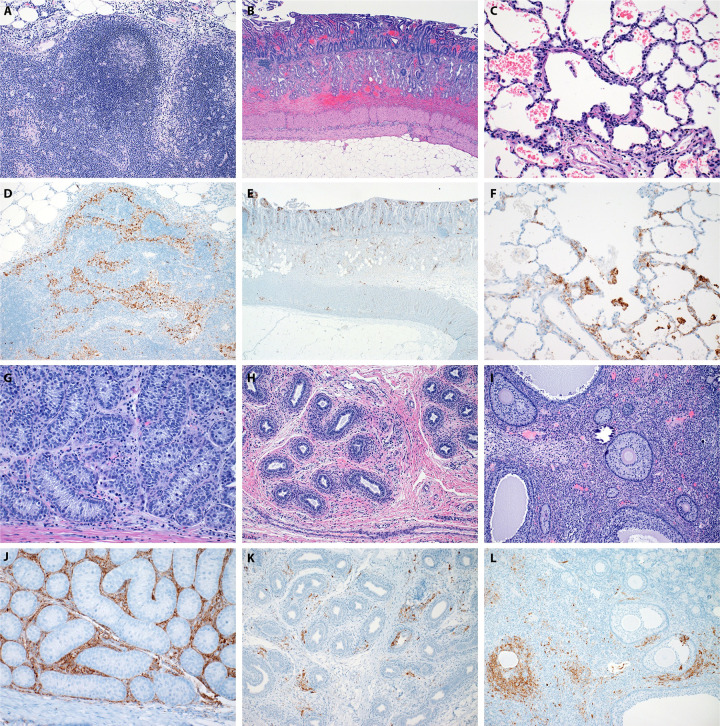
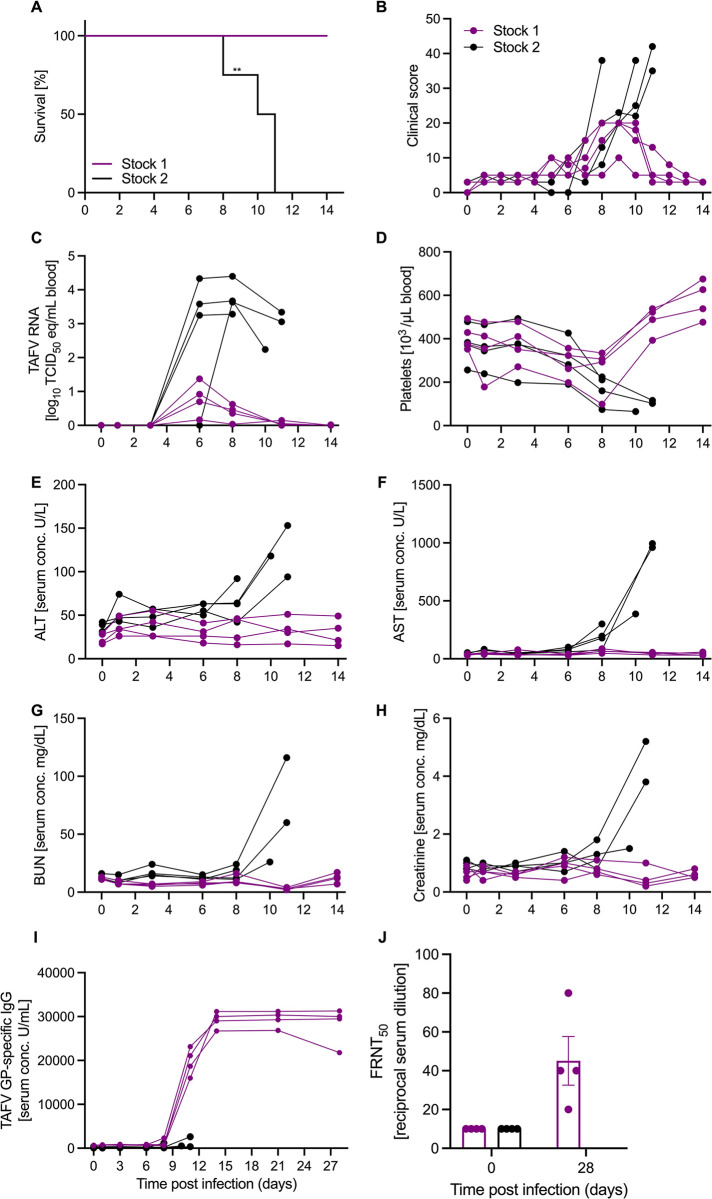
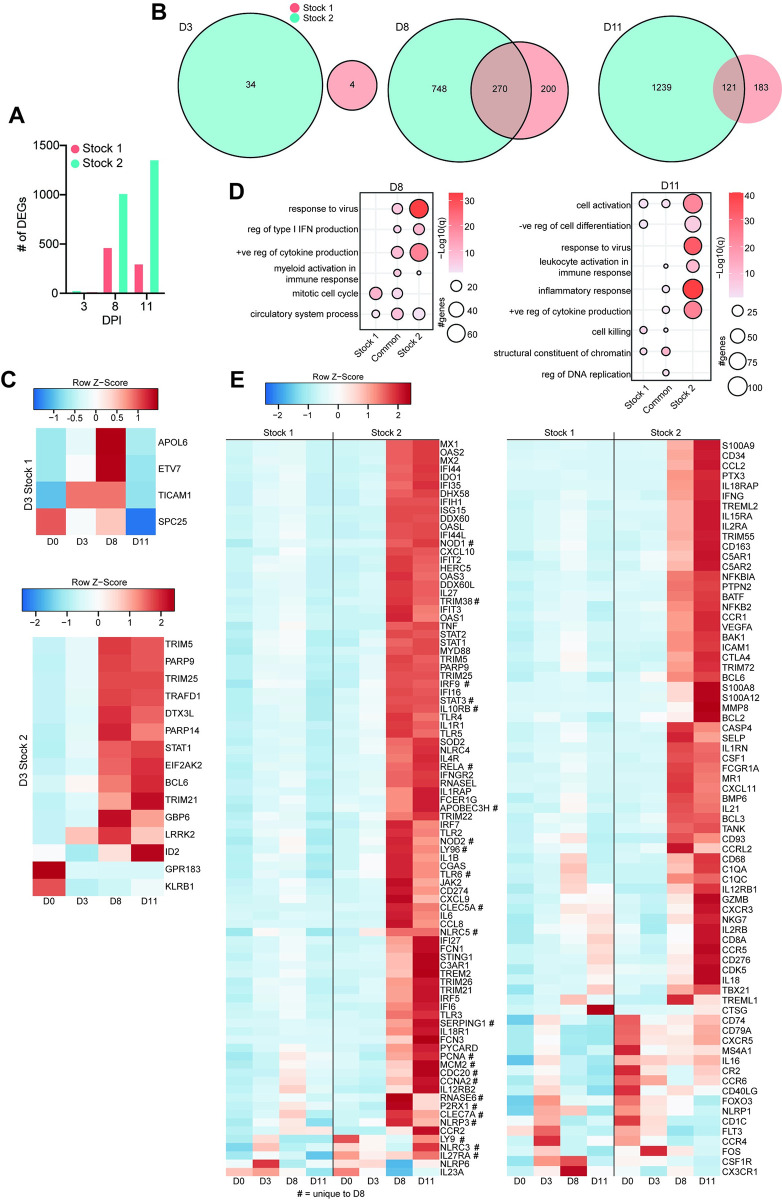
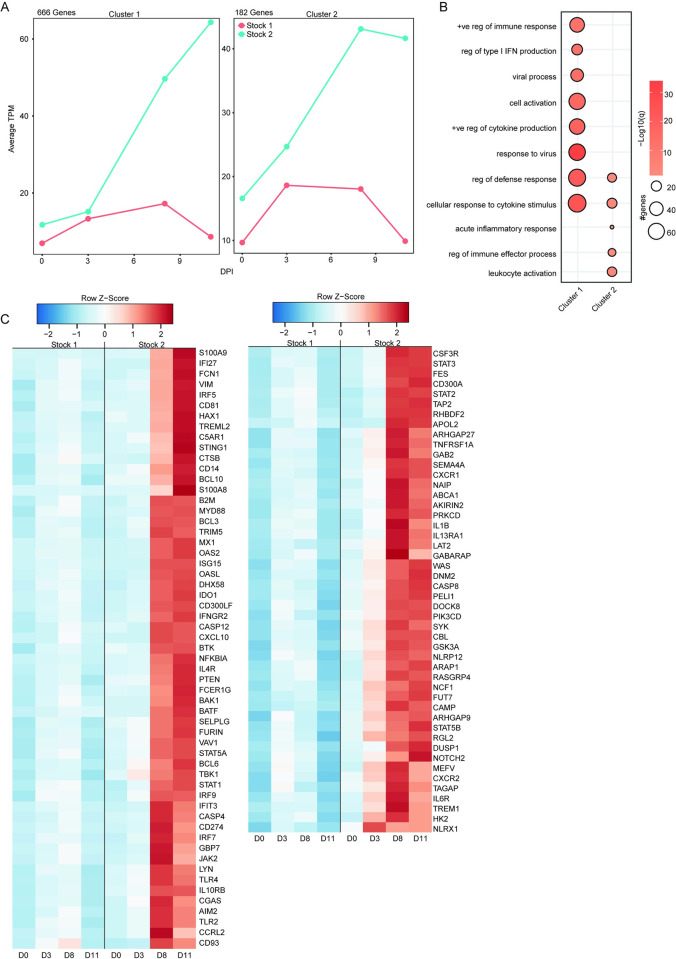
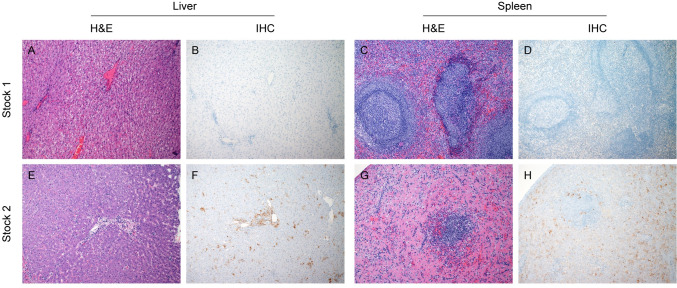
Taï Forest virus (TAFV) is a negative-sense RNA virus in the Filoviridae family. TAFV has caused only a single human infection, but several disease outbreaks in chimpanzees have been linked to this virus. Limited research has been done on this human-pathogenic virus. We sought to establish an animal model to assess TAFV disease progression and pathogenicity at our facility. We had access to two different viral stock preparations from different institutions, both originating from the single human case. Type I interferon receptor knockout mice were inoculated with TAFV stock 1 or stock 2 by the intraperitoneal route. Inoculation resulted in 100% survival with no disease regardless of viral stock preparation or infectious dose. Next, cynomolgus macaques were inoculated with TAFV stock 1 or stock 2. Inoculation with TAFV stock 1 resulted in 100% survival and robust TAFV glycoprotein-specific IgG responses including neutralizing antibodies. In contrast, macaques infected with TAFV stock 2 developed disease and were euthanized 8-11 days after infection exhibiting viremia, thrombocytopenia, and increased inflammatory mediators identified by transcriptional analysis. Histopathologic analysis of tissue samples collected at necropsy confirmed classic filovirus disease in numerous organs. Genomic differences in both stock preparations were mapped to several viral genes which may have contributed to disease severity. Taken together, we demonstrate that infection with the two TAFV stocks resulted in no disease in mice and opposing disease phenotypes in cynomolgus macaques, highlighting the impact of viral stock propagation on pathogenicity in animal models.
太福森林病毒(TAFV)是丝状病毒科中的一种负义 RNA 病毒。TAFV 仅导致过一次人类感染,但与该病毒相关的几种黑猩猩疾病爆发已被证实。目前对这种人类致病病毒的研究还很有限。我们试图在我们的机构中建立一个动物模型,以评估 TAFV 的疾病进展和致病性。我们有两个不同机构提供的两种不同病毒株,均源自单一的人类病例。I 型干扰素受体敲除小鼠通过腹腔途径接种 TAFV 株 1 或株 2。无论病毒株制剂或感染剂量如何,接种均导致 100%的存活率且无疾病发生。接下来,我们用 TAFV 株 1 或株 2 对食蟹猴进行了接种。接种 TAFV 株 1 导致 100%的存活率和强烈的 TAFV 糖蛋白特异性 IgG 反应,包括中和抗体。相比之下,感染 TAFV 株 2 的猕猴出现疾病,并在感染后 8-11 天被安乐死,表现出血症、血小板减少和转录分析确定的炎症介质增加。尸检采集的组织样本的组织病理学分析证实了多种器官中的经典丝状病毒疾病。两种病毒株制剂中的基因组差异被映射到几个病毒基因上,这些基因可能导致疾病严重程度不同。总之,我们证明了两种 TAFV 株的感染在小鼠中没有导致疾病,而在食蟹猴中则表现出相反的疾病表型,这突出了病毒株繁殖对动物模型中致病性的影响。