Ros-Santaella Jose Luis, Nový Pavel, Scaringi Maria, Pintus Eliana
Department of Veterinary Sciences, Faculty of Agrobiology, Food and Natural Resources, Czech University of Life Sciences Prague, Prague, 165 00, Czech Republic.
Department of Food Science, Faculty of Agrobiology, Food and Natural Resources, Czech University of Life Sciences Prague, Prague, 165 00, Czech Republic.
BMC Vet Res. 2024 Jun 12;20(1):257. doi: 10.1186/s12917-024-04105-9.
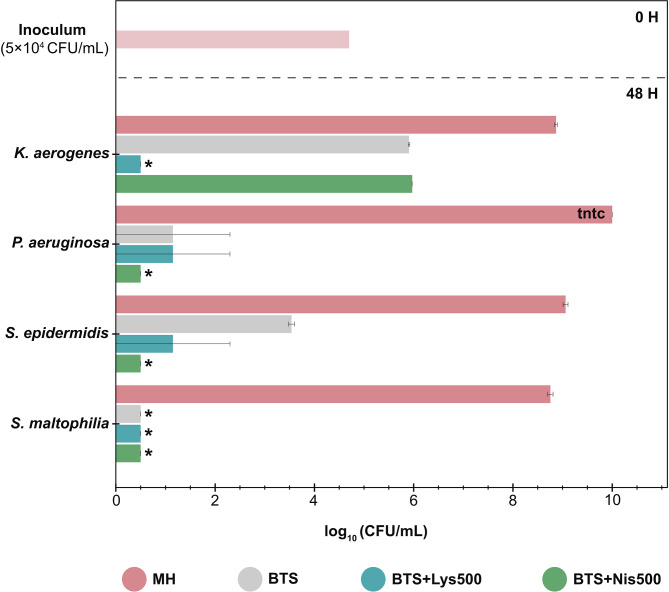
Antimicrobial resistance (AMR) is nowadays a major emerging challenge for public health worldwide. The over- and misuse of antibiotics, including those for cell culture, are promoting AMR while also encouraging the research and employment of alternative drugs. The addition of antibiotics to the cell media is strongly recommended in sperm preservation, being gentamicin the most used for boar semen. Because of its continued use, several bacterial strains present in boar semen have developed resistance to this antibiotic. Antimicrobial peptides and proteins (AMPPs) are promising candidates as alternative antibiotics because their mechanism of action is less likely to promote AMR. In the present study, we tested two AMPPs (lysozyme and nisin; 50 and 500 µg/mL) as possible substitutes of gentamicin for boar semen preservation up to 48 h of storage.
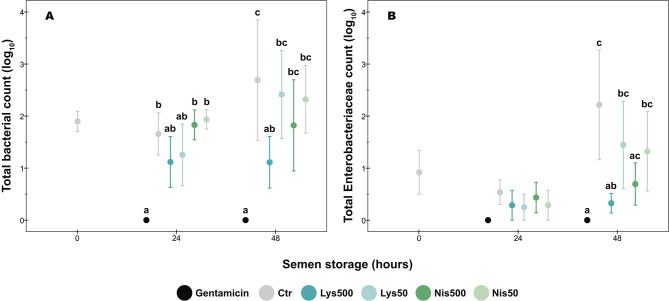
We found that both AMPPs improved sperm plasma membrane and acrosome integrity during semen storage. The highest concentration tested for lysozyme also kept the remaining sperm parameters unaltered, at 48 h of semen storage, and reduced the bacterial load at comparable levels of the samples supplemented with gentamicin (p > 0.05). On the other hand, while nisin (500 µg/mL) reduced the total Enterobacteriaceae counts, it also decreased the rapid and progressive sperm population and the seminal oxidation-reduction potential (p < 0.05).
The protective effect of lysozyme on sperm function together with its antimicrobial activity and inborn presence in body fluids, including semen and cervical mucus, makes this enzyme a promising antimicrobial agent for boar semen preservation.
如今,抗菌药物耐药性(AMR)是全球公共卫生领域一个重大的新出现挑战。抗生素的过度使用和滥用,包括用于细胞培养的抗生素,正在促进AMR,同时也促使人们研究和使用替代药物。在精子保存中强烈建议在细胞培养基中添加抗生素,庆大霉素是公猪精液中最常用的抗生素。由于其持续使用,公猪精液中存在的几种细菌菌株已对这种抗生素产生耐药性。抗菌肽和蛋白质(AMPPs)作为替代抗生素很有前景,因为它们的作用机制不太可能促进AMR。在本研究中,我们测试了两种AMPPs(溶菌酶和乳链菌肽;50和500μg/mL)作为庆大霉素的可能替代品,用于公猪精液保存长达48小时。
我们发现,两种AMPPs在精液保存期间均改善了精子质膜和顶体完整性。溶菌酶测试的最高浓度在精液保存48小时时也使其余精子参数保持不变,并将细菌载量降低到与添加庆大霉素的样品相当的水平(p>0.05)。另一方面,虽然乳链菌肽(500μg/mL)减少了肠杆菌科细菌总数,但它也降低了快速和进行性精子数量以及精液氧化还原电位(p<0.05)。
溶菌酶对精子功能的保护作用及其抗菌活性以及在包括精液和宫颈黏液在内的体液中的天然存在,使这种酶成为公猪精液保存的一种有前景的抗菌剂。