Qu Fang, Huang Yu-Jie, Wang Ying-Ying, Cao Xi-Meng, Shen Ying-Yi, Wu Zi-Ang, Wu Ya-Qin, Xu Chun
Department of Prosthodontics, Shanghai Ninth People's Hospital, College of Stomatology, Shanghai Jiao Tong University School of Medicine, Shanghai, China.
National Center for Stomatology, National Clinical Research Center for Oral Diseases, Shanghai, China.
Heliyon. 2024 May 29;10(11):e32027. doi: 10.1016/j.heliyon.2024.e32027. eCollection 2024 Jun 15.
Understanding the characteristics of alveolar bone resorption in an East Asian population after maxillary incisor extraction and providing a reference for implant treatment plans.
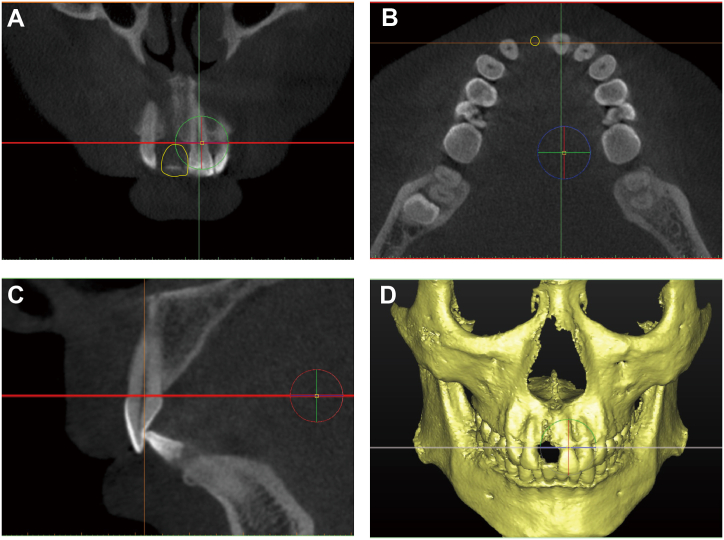
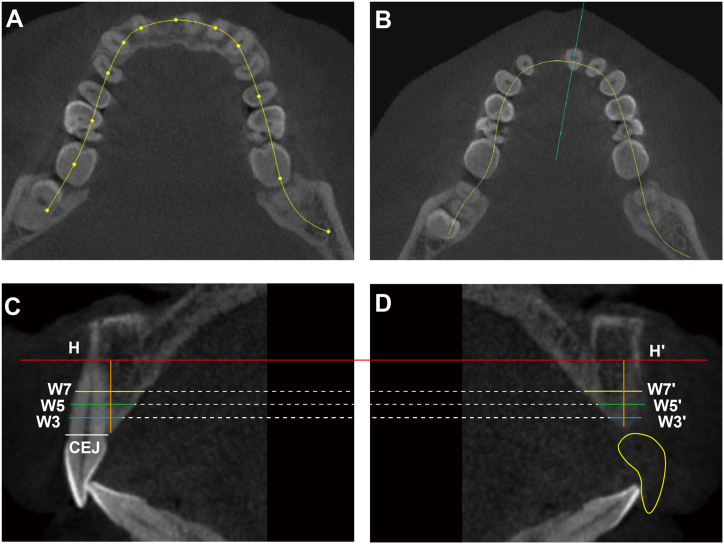
Cone-beam computerized tomography (CBCT) data of 125 East Asian patients with unilateral extraction of maxillary incisors for 3 months were collected. The alveolar bone width and height in the extraction sites were measured and compared with the corresponding contralateral sites.
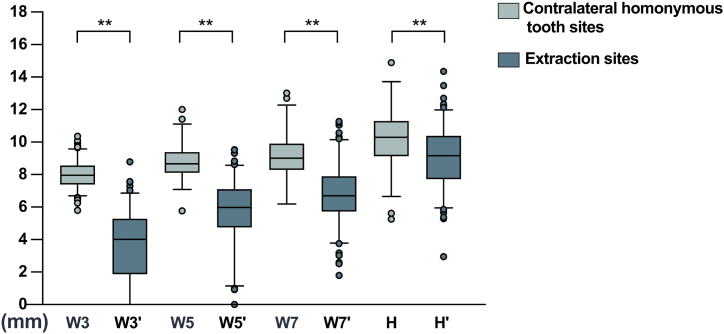
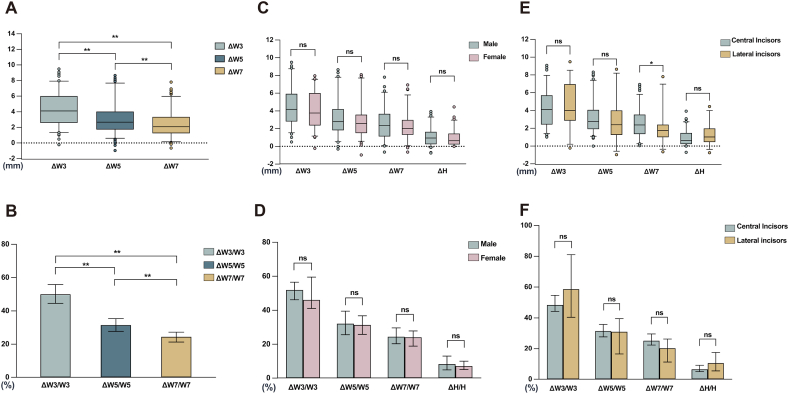
The differences in alveolar bone width between the extraction site and contralateral site were as follows: 4.11 mm, 2.68 mm, and 2.09 mm (3 mm, 5 mm, 7 mm apical from CEJ of the contralateral tooth). Data are expressed as the median. The horizontal resorption ratio of alveolar bone was 49.94 %, 31.5 %, and 24.46 %. The difference in alveolar bone height was 0.78 mm. The vertical resorption ratio was 7.78 %. The resorption did not differ significantly between sexes and was not significantly affected by tooth positions.
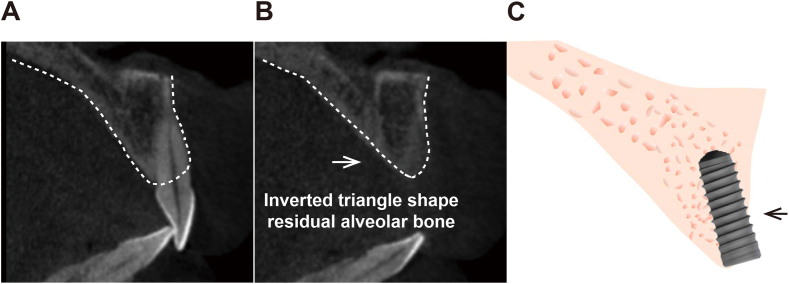
In the studied East Asian population, significant horizontal and vertical alveolar bone resorption occurs after natural healing of maxillary incisor extraction for 3 months. The closer to the alveolar ridge crest, the more significant the horizontal resorption, resulting in an "inverted triangle" shape residual alveolar bone.
了解东亚人群上颌切牙拔除后牙槽骨吸收的特征,为种植治疗方案提供参考。
收集125例单侧上颌切牙拔除3个月的东亚患者的锥形束计算机断层扫描(CBCT)数据。测量拔牙部位的牙槽骨宽度和高度,并与相应的对侧部位进行比较。
拔牙部位与对侧部位牙槽骨宽度的差异如下:4.11mm、2.68mm和2.09mm(从对侧牙的牙颈缘根尖3mm、5mm、7mm处)。数据以中位数表示。牙槽骨水平吸收比例分别为49.94%、31.5%和24.46%。牙槽骨高度差异为0.78mm。垂直吸收比例为7.78%。吸收在性别之间无显著差异,且不受牙位的显著影响。
在所研究的东亚人群中,上颌切牙拔除自然愈合3个月后发生显著的水平和垂直牙槽骨吸收。离牙槽嵴顶越近,水平吸收越显著,导致剩余牙槽骨呈“倒三角形”。