Xie Chen, Wilson Blake A, Qin Zhenpeng
Department of Mechanical Engineering, University of Texas at Dallas 800 West Campbell Road EW31 Richardson Texas 75080 USA
Department of Bioengineering, Center for Advanced Pain Studies, University of Texas at Dallas 800 West Campbell Road Richardson Texas 75080 USA.
Nanoscale Adv. 2024 Apr 30;6(12):3082-3092. doi: 10.1039/d3na00781b. eCollection 2024 Jun 11.
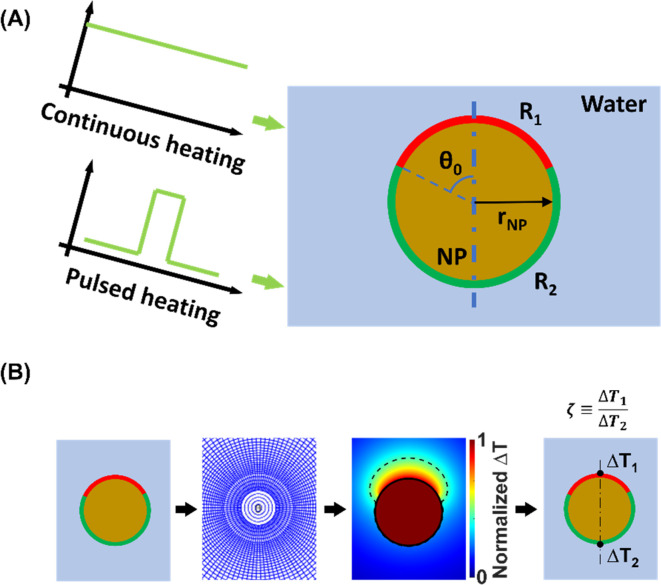
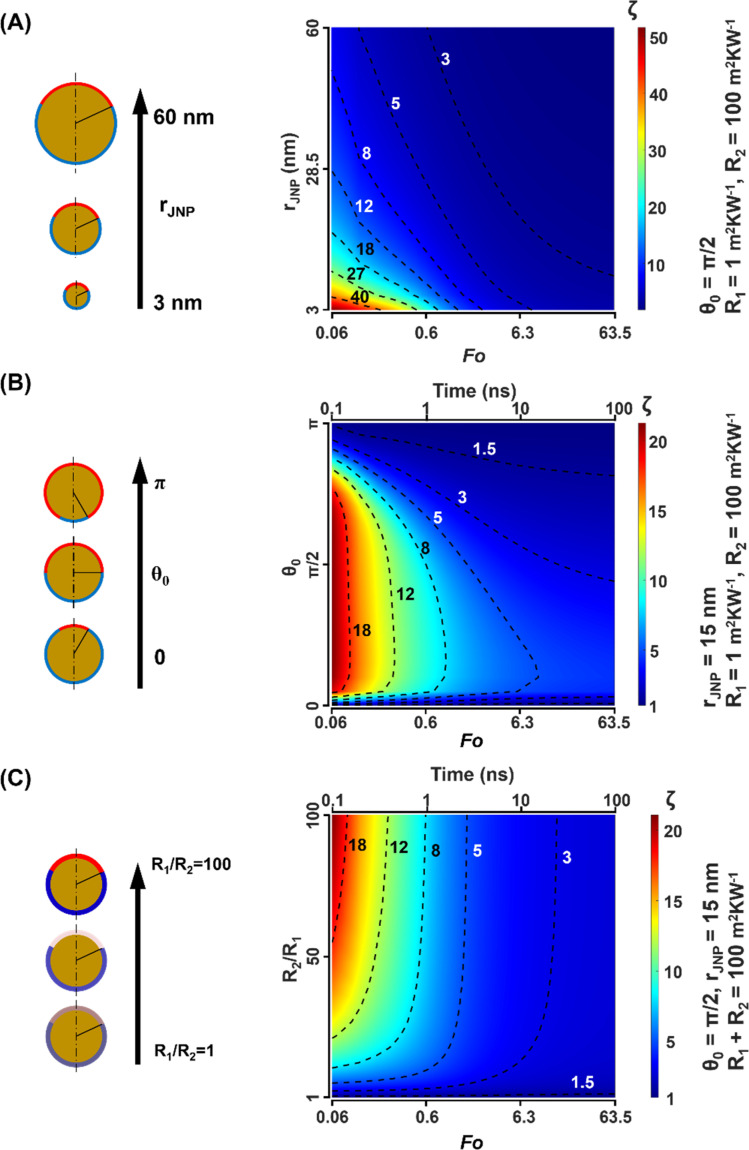
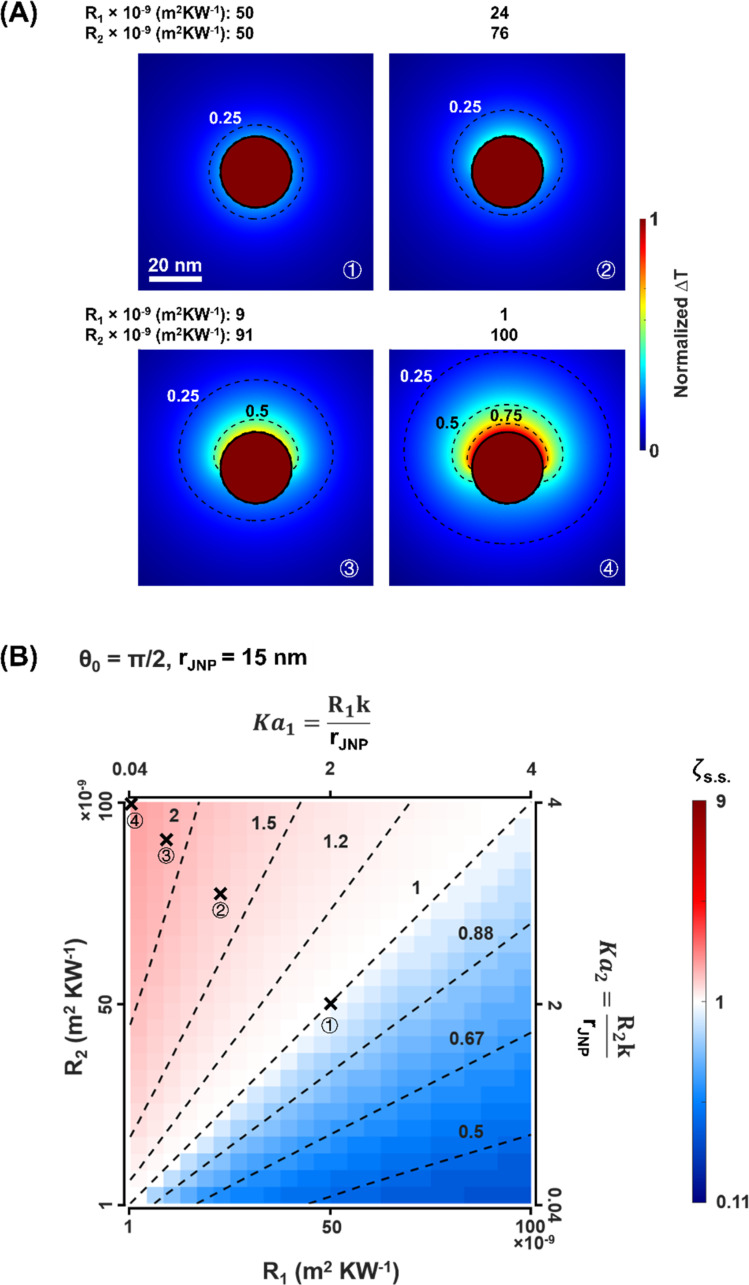
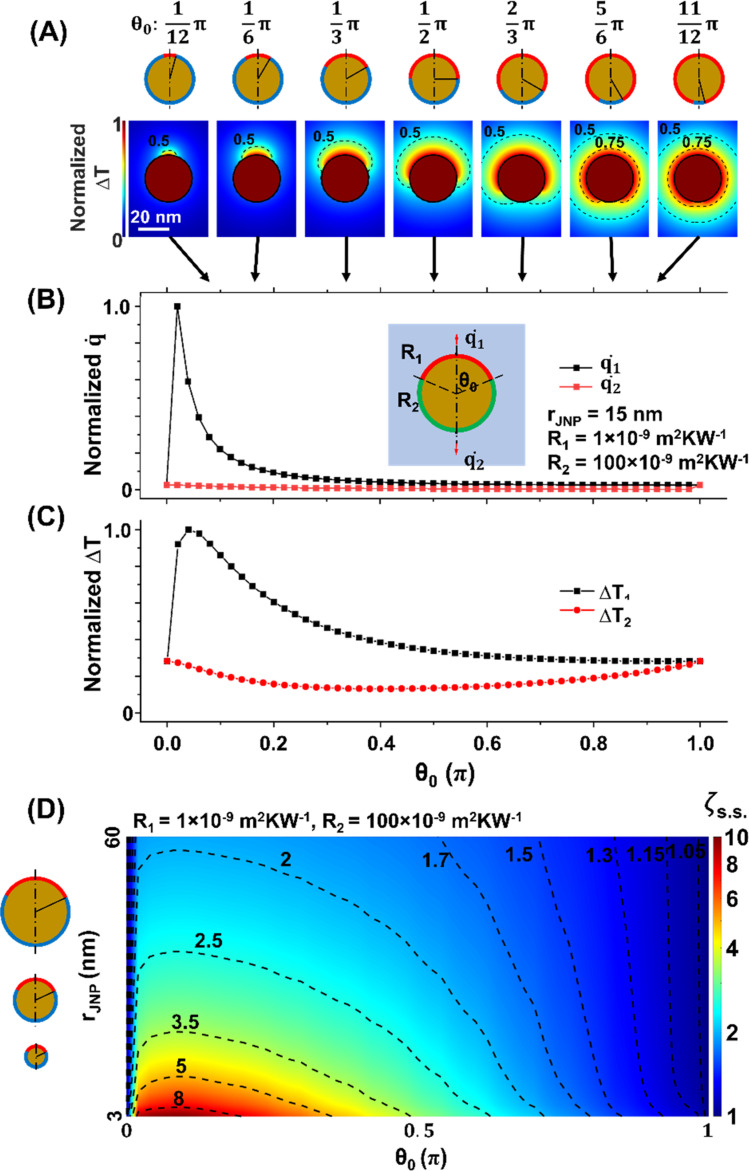
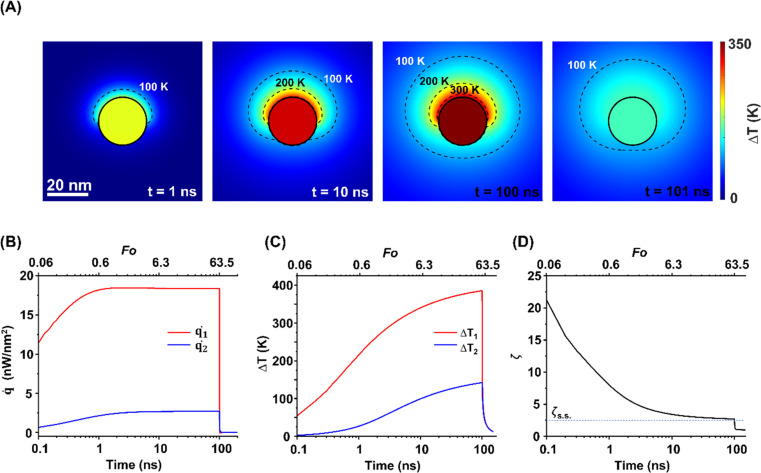
Janus nanoparticles (JNPs) with heterogeneous compositions or interfacial properties can exhibit directional heating upon external excitation with optical or magnetic energy. This directional heating may be harnessed for new nanotechnology and biomedical applications. However, it remains unclear how the JNP properties (size, interface) and laser excitation method (pulsed continuous) regulate the directional heating. Here, we developed a numerical framework to analyze the asymmetric thermal transport in JNP heating under photothermal stimulation. We found that JNP-induced temperature contrast, defined as the ratio of temperature increase on the opposite sides in the surrounding medium, is highest for smaller JNPs and when a low thermal resistance coating covers a minor fraction of JNP surface. Notably, we discovered up to 20-fold enhancement of the temperature contrast based on thermal confinement under pulsed heating compared with continuous heating. This work brings new insights to maximize the asymmetric thermal responses for JNP heating.
具有异质组成或界面性质的Janus纳米颗粒(JNPs)在受到光或磁能的外部激发时可表现出定向加热。这种定向加热可用于新的纳米技术和生物医学应用。然而,JNPs的性质(尺寸、界面)和激光激发方法(脉冲、连续)如何调节定向加热仍不清楚。在这里,我们开发了一个数值框架来分析光热刺激下JNPs加热过程中的不对称热传输。我们发现,对于较小的JNPs以及当低热阻涂层覆盖JNPs表面的一小部分时,JNPs引起的温度对比度(定义为周围介质中相对两侧温度升高的比率)最高。值得注意的是,我们发现与连续加热相比,基于脉冲加热下的热限制,温度对比度提高了20倍。这项工作为最大化JNPs加热的不对称热响应带来了新的见解。