
层孔菌子实体互补片段的层次结构和化学成分微调了压缩性能。
Hierarchical structure and chemical composition of complementary segments of the fruiting bodies of Fomes fomentarius fungi fine-tune the compressive properties.
作者信息
Klemm Sophie, Freidank-Pohl Carsten, Bauer Leona, Mantouvalou Ioanna, Simon Ulla, Fleck Claudia
机构信息
Technische Universität Berlin, Faculty III Process Sciences, Institute of Materials Science and Technology, Fachgebiet Werkstofftechnik/Chair of Materials Science & Engineering, Berlin, Germany.
Technische Universität Berlin, Faculty III Process Sciences, Institute of Biotechnology, Chair of Applied and Molecular Microbiology, Berlin, Germany.
出版信息
PLoS One. 2024 Jun 13;19(6):e0304614. doi: 10.1371/journal.pone.0304614. eCollection 2024.
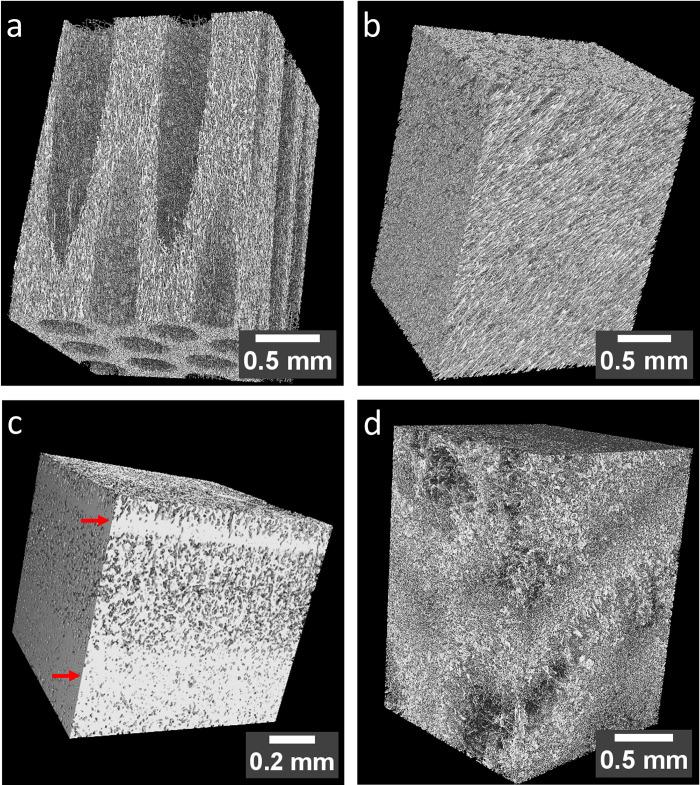
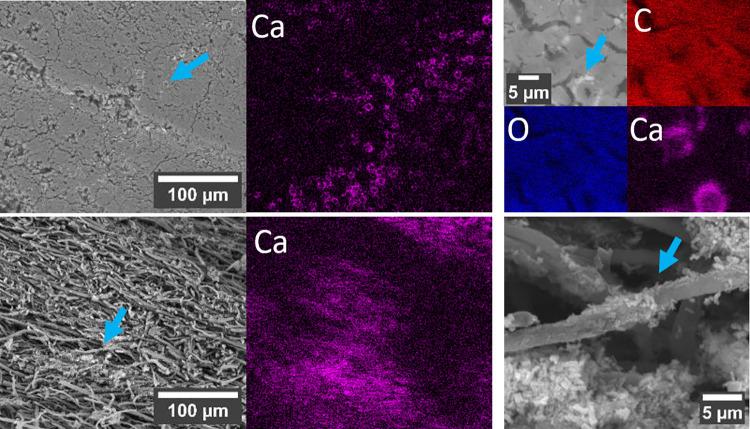
Humanity is often fascinated by structures and materials developed by Nature. While structural materials such as wood have been widely studied, the structural and mechanical properties of fungi are still largely unknown. One of the structurally interesting fungi is the polypore Fomes fomentarius. The present study deals with the investigation of the light but robust fruiting body of F. fomentarius. The four segments of the fruiting body (crust, trama, hymenium, and mycelial core) were examined. The comprehensive analysis included structural, chemical, and mechanical characterization with particular attention to cell wall composition, such as chitin/chitosan and glucan content, degree of deacetylation, and distribution of trace elements. The hymenium exhibited the best mechanical properties even though having the highest porosity. Our results suggest that this outstanding strength is due to the high proportion of skeletal hyphae and the highest chitin/chitosan content in the cell wall, next to its honeycomb structure. In addition, an increased calcium content was found in the hymenium and crust, and the presence of calcium oxalate crystals was confirmed by SEM-EDX. Interestingly, layers with different densities as well as layers of varying calcium and potassium depletion were found in the crust. Our results show the importance of considering the different structural and compositional characteristics of the segments when developing fungal-inspired materials and products. Moreover, the porous yet robust structure of hymenium is a promising blueprint for the development of advanced smart materials.
人类常常对大自然所形成的结构和材料着迷。虽然诸如木材之类的结构材料已得到广泛研究,但真菌的结构和力学性能在很大程度上仍不为人知。结构上有趣的真菌之一是多孔菌火木层孔菌。本研究涉及对火木层孔菌轻盈却坚固的子实体的研究。对子实体的四个部分(外皮、菌髓、子实层和菌丝核心)进行了检查。全面分析包括结构、化学和力学表征,特别关注细胞壁组成,如几丁质/壳聚糖和葡聚糖含量、脱乙酰度以及微量元素分布。子实层尽管孔隙率最高,却展现出最佳的力学性能。我们的研究结果表明,这种出色的强度归因于骨架菌丝的高比例以及细胞壁中最高的几丁质/壳聚糖含量,以及其蜂窝状结构。此外,在子实层和外皮中发现钙含量增加,并且通过扫描电子显微镜 - 能谱仪(SEM - EDX)证实了草酸钙晶体的存在。有趣的是,在外皮中发现了具有不同密度的层以及钙和钾含量不同的层。我们的研究结果表明,在开发受真菌启发的材料和产品时,考虑各部分不同的结构和组成特征非常重要。此外,子实层多孔却坚固的结构是开发先进智能材料的一个很有前景的蓝本。






 Zotero 插件