Qu Jiuxin, Liu Wanfei, Chen Shuyan, Wu Chi, Lai Wenjie, Qin Rui, Ye Feidi, Li Yuanchun, Fu Liang, Deng Guofang, Liu Lei, Lin Qiang, Cui Peng
Department of Clinical Laboratory, Shenzhen Third People's Hospital, National Clinical Research Center for Infectious Diseases, The Second Affiliated Hospital of Southern University of Science and Technology, Shenzhen 518114, China.
Shenzhen Branch, Guangdong Laboratory for Lingnan Modern Agriculture, Genome Analysis Laboratory of the Ministry of Agriculture and Rural Area, Agricultural Genomics Institute at Shenzhen, Chinese Academy of Agricultural Sciences, Shenzhen 518120, China.
Genomics Proteomics Bioinformatics. 2025 Jan 15;22(6). doi: 10.1093/gpbjnl/qzae046.
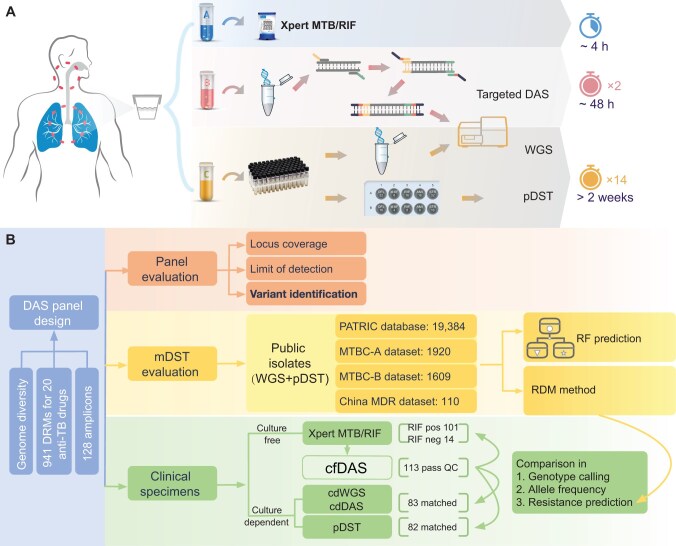
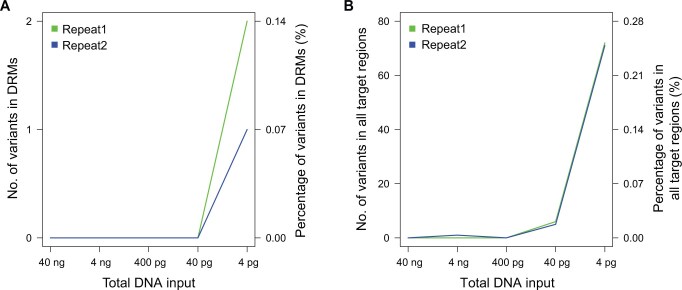
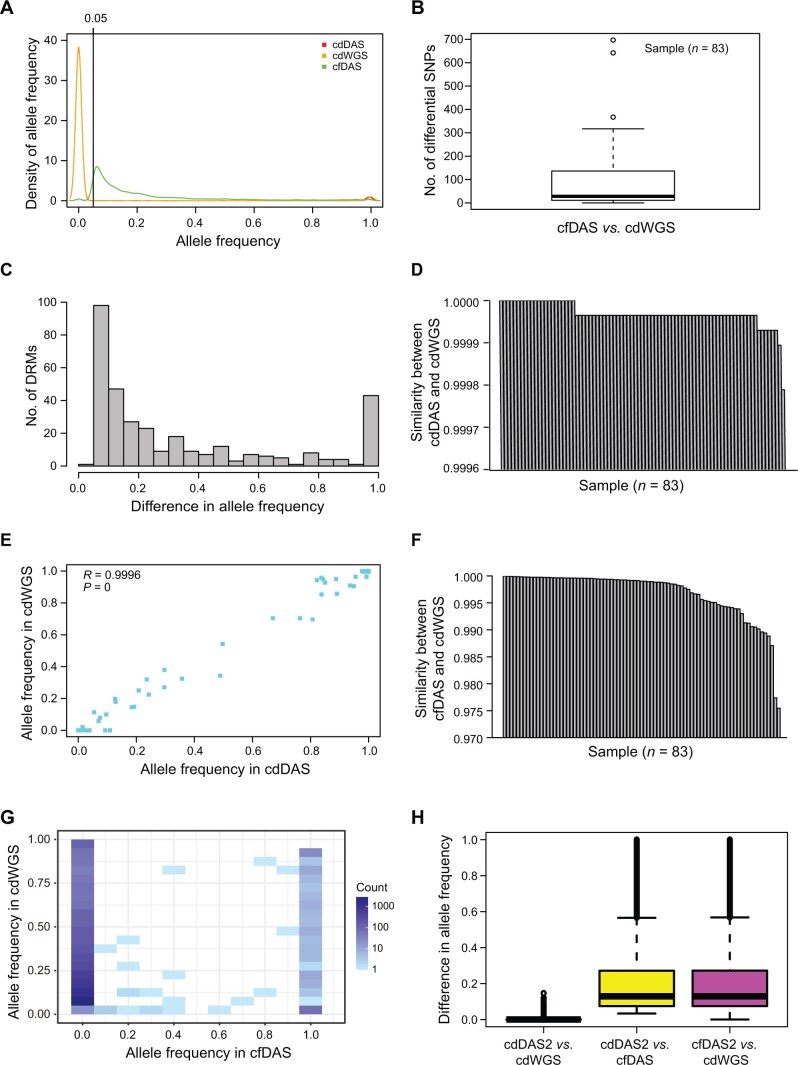
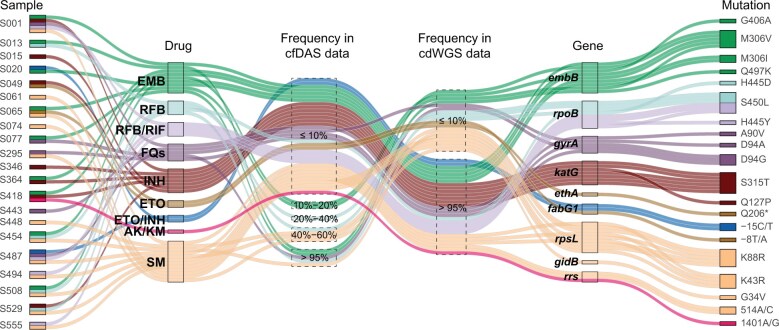
The commonly-used drug susceptibility testing (DST) relies on bacterial culture and faces shortcomings such as long turnaround time and clonal/subclonal selection biases. Here, we developed a targeted deep amplicon sequencing (DAS) method directly applied to clinical specimens. In this DAS panel, we examined 941 drug-resistant mutations (DRMs) associated with 20 anti-tuberculosis drugs with only 4 pg of initial DNA input, and reduced the clinical testing time from 20 days to 2 days. A prospective study was conducted using 115 clinical specimens, predominantly positive for the Xpert® Mycobacterium tuberculosis/rifampicin (Xpert MTB/RIF) assay, to evaluate DRM detection. DAS was performed on culture-free specimens, while culture-dependent isolates were used for phenotypic DST, DAS, and whole-genome sequencing (WGS). For in silico molecular DST, our result based on DAS panel revealed the similar accuracy to three published reports based on WGS. For 82 isolates, application of DAS using the resistance-determining mutation method showed better accuracy (93.03% vs. 92.16%), sensitivity (96.10% vs. 95.02%), and specificity (91.33% vs. 90.62%) than WGS using the Mykrobe software. Compared to culture-dependent WGS, culture-free DAS provides a full picture of sequence variation at the population level, exhibiting in detail the gain-and-loss variants caused by bacterial culture. Our study performs a systematic verification of the advantages of DAS in clinical applications and comprehensively illustrates the discrepancies in Mycobacterium tuberculosis before and after culture.
常用的药敏试验(DST)依赖于细菌培养,存在周转时间长和克隆/亚克隆选择偏倚等缺点。在此,我们开发了一种直接应用于临床标本的靶向深度扩增子测序(DAS)方法。在这个DAS检测板中,我们仅用4 pg的初始DNA输入量检测了与20种抗结核药物相关的941个耐药突变(DRM),并将临床检测时间从20天缩短至2天。使用115份临床标本进行了一项前瞻性研究,这些标本主要为Xpert®结核分枝杆菌/利福平(Xpert MTB/RIF)检测阳性,以评估DRM检测情况。对无培养标本进行DAS检测,而依赖培养的分离株用于表型DST、DAS和全基因组测序(WGS)。对于计算机模拟分子DST,我们基于DAS检测板的结果显示出与三篇基于WGS的已发表报告相似的准确性。对于82株分离株,使用耐药决定突变法进行DAS检测比使用Mykrobe软件进行WGS检测显示出更高的准确性(93.03%对92.16%)、敏感性(96.10%对95.02%)和特异性(91.33%对90.62%)。与依赖培养的WGS相比,无培养DAS提供了群体水平序列变异的全貌,详细展示了细菌培养引起的得失变异。我们的研究对DAS在临床应用中的优势进行了系统验证,并全面说明了结核分枝杆菌培养前后的差异。