Siva Nanda K, Bauer Christopher, Glover Colson, Stolin Alexander, Chandi Sonia, Melnick Helen, Marano Gary, Parker Benjamin, Mandich MaryBeth, Lewis James W, Qi Jinyi, Gao Si, Nott Kaylee, Majewski Stan, Brefczynski-Lewis Julie A
Department of Neuroscience, West Virginia University, P.O. Box 9303, Morgantown, WV, USA.
University of Kentucky College of Medicine, Lexington, KY, USA.
Commun Med (Lond). 2024 Jun 13;4(1):117. doi: 10.1038/s43856-024-00547-2.
Mobile upright PET devices have the potential to enable previously impossible neuroimaging studies. Currently available options are imagers with deep brain coverage that severely limit head/body movements or imagers with upright/motion enabling properties that are limited to only covering the brain surface.
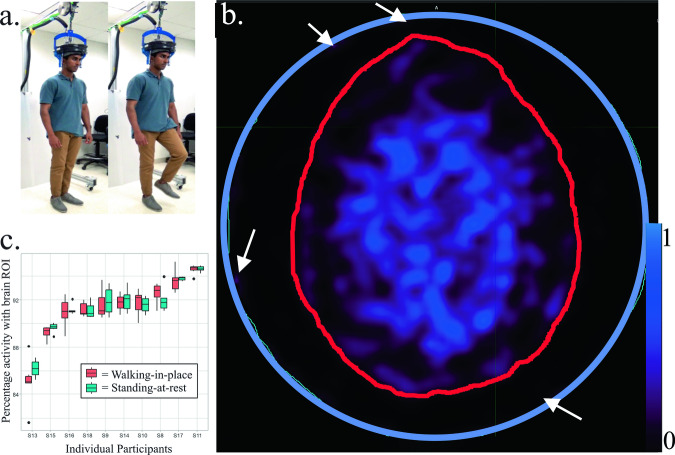
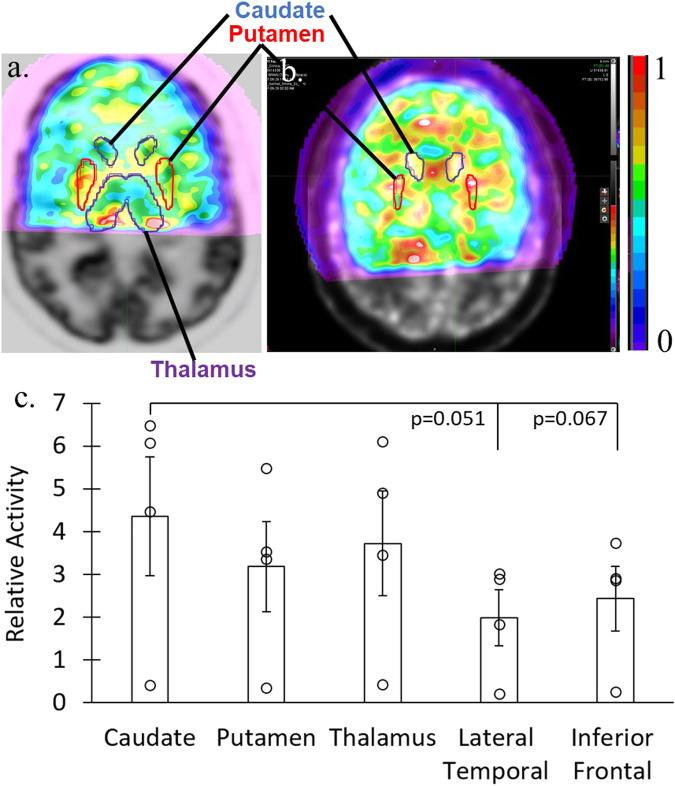
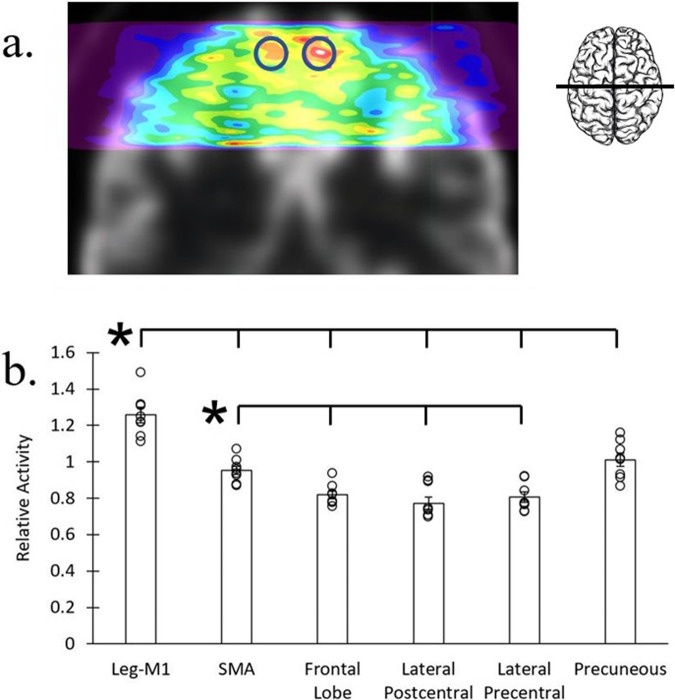
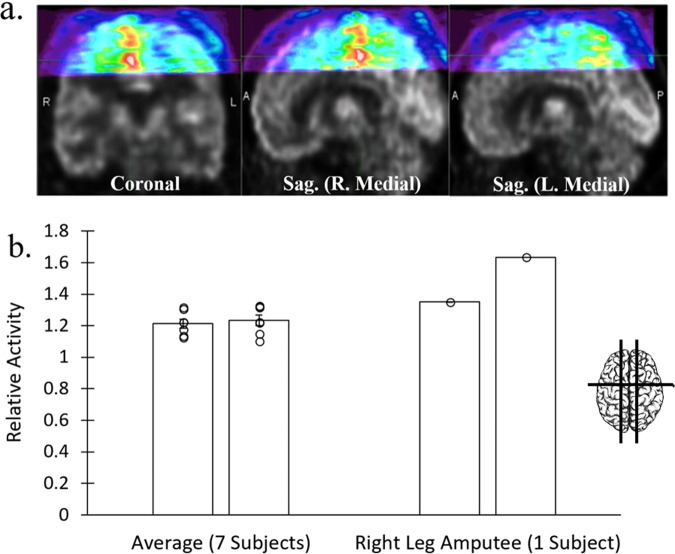
In this study, we test the feasibility of an upright, motion-compatible brain imager, our Ambulatory Motion-enabling Positron Emission Tomography (AMPET) helmet prototype, for use as a neuroscience tool by replicating a variant of a published PET/fMRI study of the neurocorrelates of human walking. We validate our AMPET prototype by conducting a walking movement paradigm to determine motion tolerance and assess for appropriate task related activity in motor-related brain regions. Human participants (n = 11 patients) performed a walking-in-place task with simultaneous AMPET imaging, receiving a bolus delivery of F-Fluorodeoxyglucose.
Here we validate three pre-determined measure criteria, including brain alignment motion artifact of less than <2 mm and functional neuroimaging outcomes consistent with existing walking movement literature.
The study extends the potential and utility for use of mobile, upright, and motion-tolerant neuroimaging devices in real-world, ecologically-valid paradigms. Our approach accounts for the real-world logistics of an actual human participant study and can be used to inform experimental physicists, engineers and imaging instrumentation developers undertaking similar future studies. The technical advances described herein help set new priorities for facilitating future neuroimaging devices and research of the human brain in health and disease.
移动式直立正电子发射断层扫描(PET)设备有可能实现以前无法进行的神经影像学研究。目前可用的设备有两种,一种是具有深部脑覆盖功能但严重限制头部/身体运动的成像仪,另一种是具有直立/运动功能但仅限于覆盖脑表面的成像仪。
在本研究中,我们通过复制一项已发表的关于人类行走神经关联的PET/fMRI研究的变体,测试了一种直立、运动兼容的脑成像仪,即我们的动态运动正电子发射断层扫描(AMPET)头盔原型作为神经科学工具的可行性。我们通过进行步行运动范式来验证我们的AMPET原型,以确定运动耐受性并评估运动相关脑区中与任务相关的适当活动。人类参与者(n = 11名患者)在进行AMPET成像的同时执行原地行走任务,接受一次氟代脱氧葡萄糖的团注给药。
在此,我们验证了三个预先确定的测量标准,包括脑对齐运动伪影小于2毫米以及与现有行走运动文献一致的功能神经影像学结果。
该研究扩展了在现实世界、生态有效范式中使用移动、直立和耐运动神经成像设备的潜力和效用。我们的方法考虑了实际人类参与者研究的现实世界后勤情况,可用于为未来进行类似研究的实验物理学家、工程师和成像仪器开发者提供参考。本文所述的技术进步有助于为促进未来神经成像设备以及人类健康和疾病大脑研究设定新的优先事项。