Sir Peter Mansfield Imaging Centre, School of Physics and Astronomy, University of Nottingham, University Park, Nottingham, NG7 2RD, UK.
Sir Peter Mansfield Imaging Centre, School of Physics and Astronomy, University of Nottingham, University Park, Nottingham, NG7 2RD, UK.
Trends Neurosci. 2022 Aug;45(8):621-634. doi: 10.1016/j.tins.2022.05.008. Epub 2022 Jun 30.
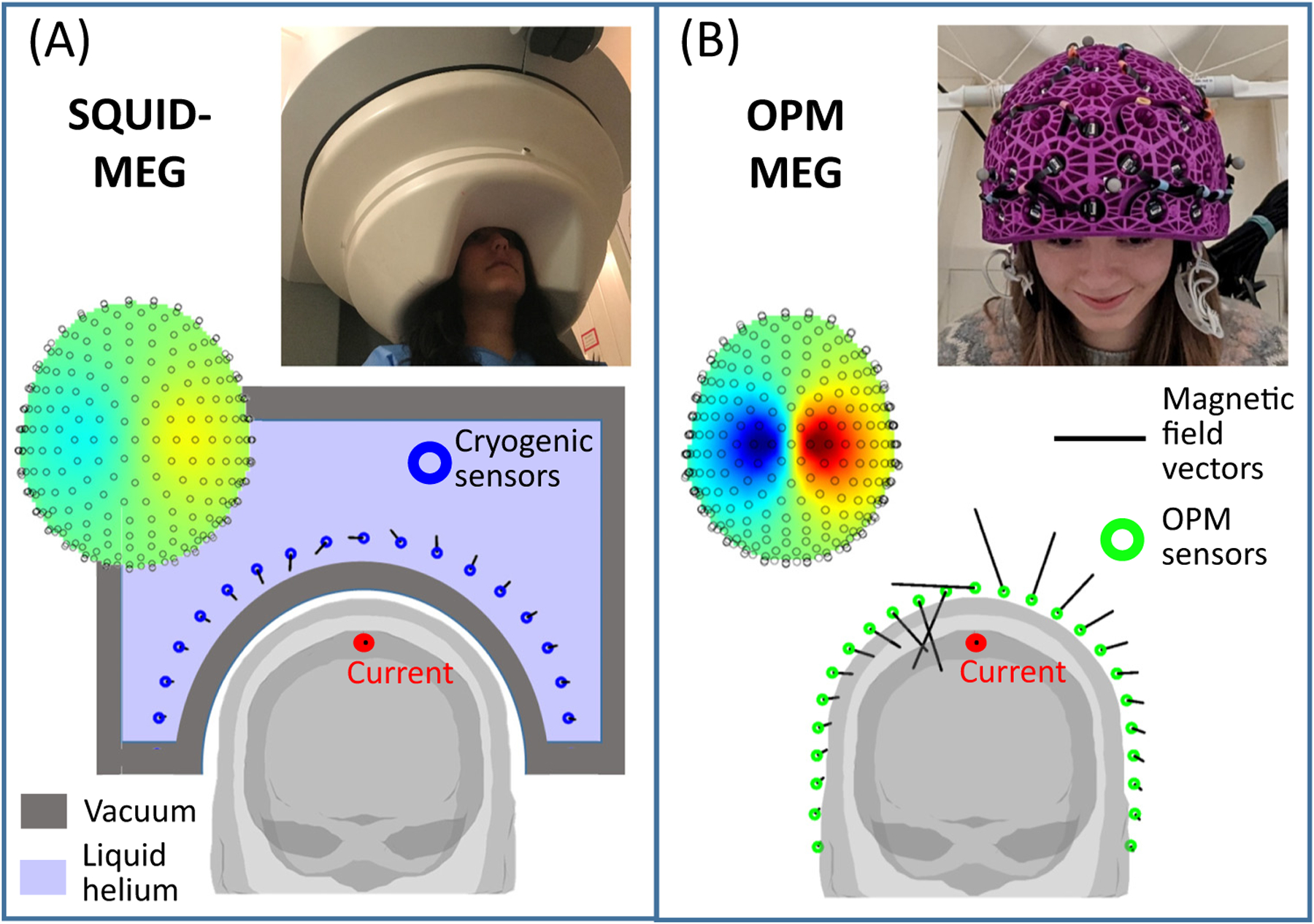
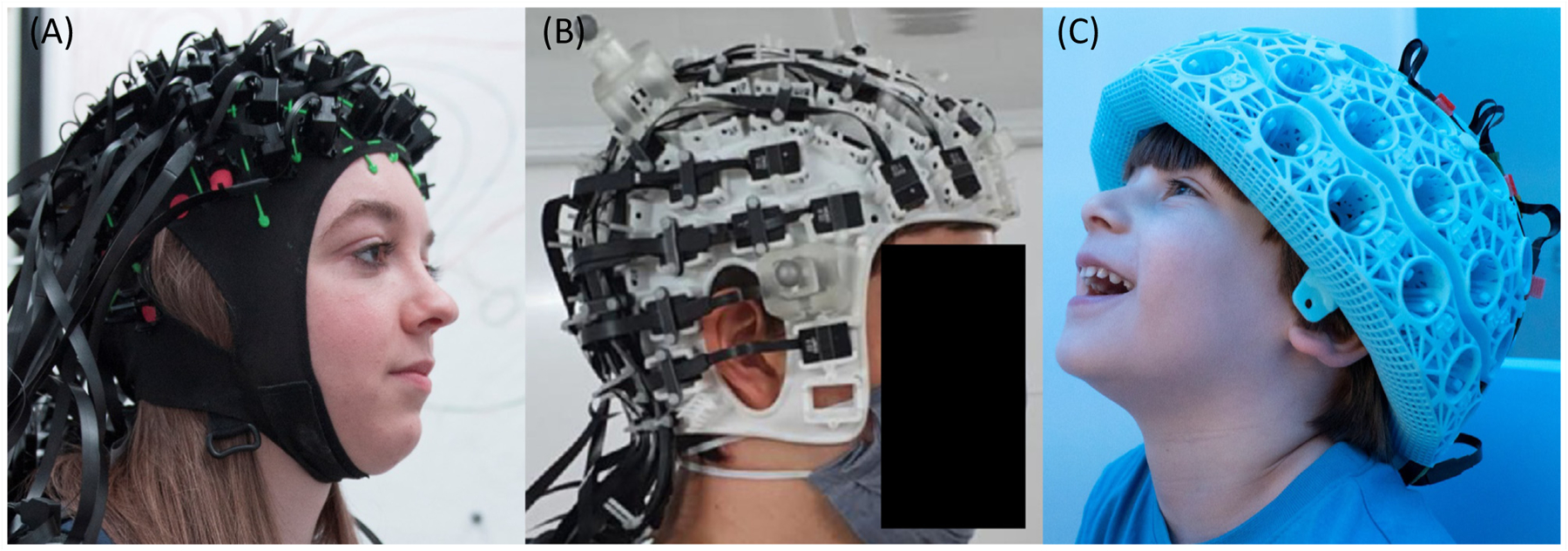
Magnetoencephalography (MEG) measures human brain function via assessment of the magnetic fields generated by electrical activity in neurons. Despite providing high-quality spatiotemporal maps of electrophysiological activity, current MEG instrumentation is limited by cumbersome field sensing technologies, resulting in major barriers to utility. Here, we review a new generation of MEG technology that is beginning to lift many of these barriers. By exploiting quantum sensors, known as optically pumped magnetometers (OPMs), 'OPM-MEG' has the potential to dramatically outperform the current state of the art, promising enhanced data quality (better sensitivity and spatial resolution), adaptability to any head size/shape (from babies to adults), motion robustness (participants can move freely during scanning), and a less complex imaging platform (without reliance on cryogenics). We discuss the current state of this emerging technique and describe its far-reaching implications for neuroscience.
脑磁图(MEG)通过评估神经元电活动产生的磁场来测量人类大脑功能。尽管可以提供高质量的电生理活动时空图谱,但当前的 MEG 仪器受到繁琐的场传感技术的限制,导致实用性存在重大障碍。在这里,我们回顾了新一代的 MEG 技术,这些技术开始克服许多这些障碍。通过利用量子传感器,即光泵磁强计(OPM),“OPM-MEG”有可能显著优于当前的技术水平,有望提高数据质量(更好的灵敏度和空间分辨率)、适应任何头部大小/形状(从婴儿到成人)、运动稳健性(参与者可以在扫描过程中自由移动)以及更简单的成像平台(无需依赖低温技术)。我们讨论了这项新兴技术的现状,并描述了它对神经科学的深远影响。