Tavares Ana Sofia R, Carolino Elisabete, Teques Pedro, Calmeiro Luis, Serpa Sidonio
H&TRC- Health & Technology Research Center, ESTeSL - Escola Superior de Tecnologia da Saúde, Instituto Politécnico de Lisboa, Lisbon, Portugal.
N2i, Polytechnic Institute of Maia, Maia, Portugal.
Front Psychol. 2024 May 30;15:1357566. doi: 10.3389/fpsyg.2024.1357566. eCollection 2024.
Currently the use of prohibited performance-enhancing substances (PES) in fitness and gym settings is a public health concern as adverse health consequences are emerging. Understanding the characteristics of gym-goers who do not use these substances could lead to an important complement to the ongoing research about risk factors for PES use. The aim of this study was to identify the profile of PES non-use in gym-goers.
In total, 453 gym-goers (mean age = 35.64 years; SD = 13.08 - measure of central tendency location and measure of absolute dispersion, respectively) completed an online survey assessing sociodemographic factors, exercise characteristics, gym modalities, peers, social influence, attitudes, subjective norms, beliefs, intentions, and self-reported use of PES.
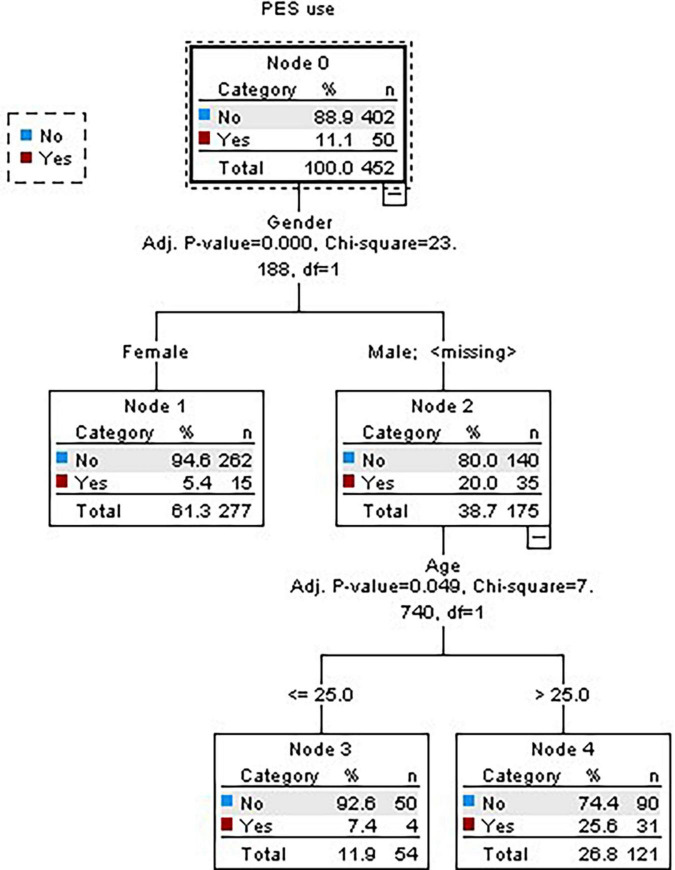
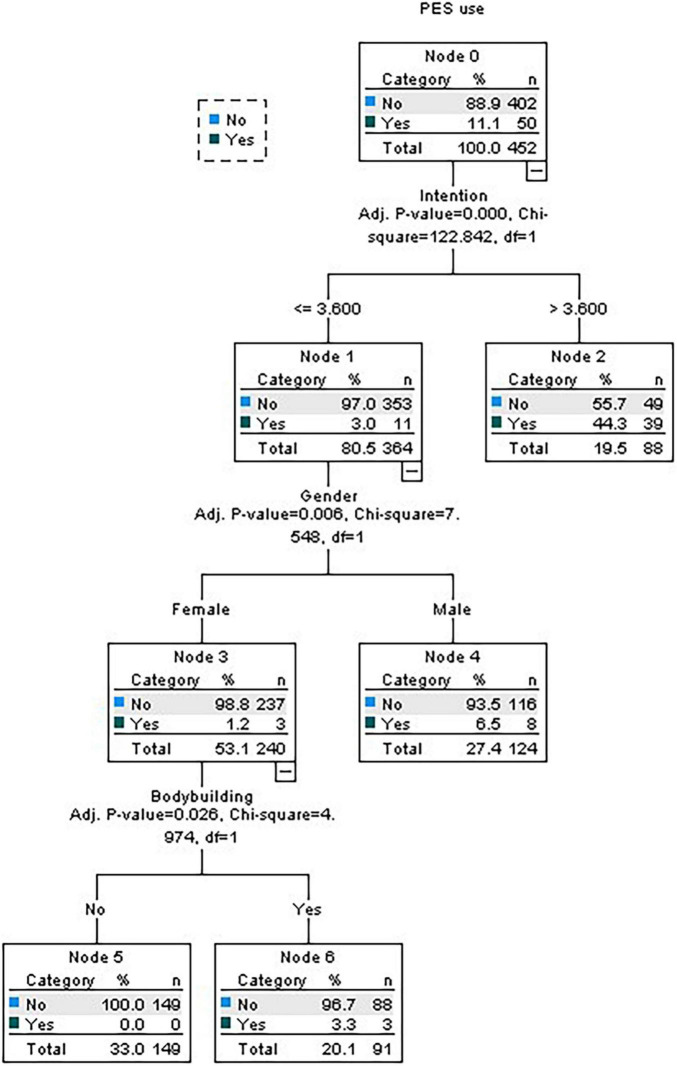
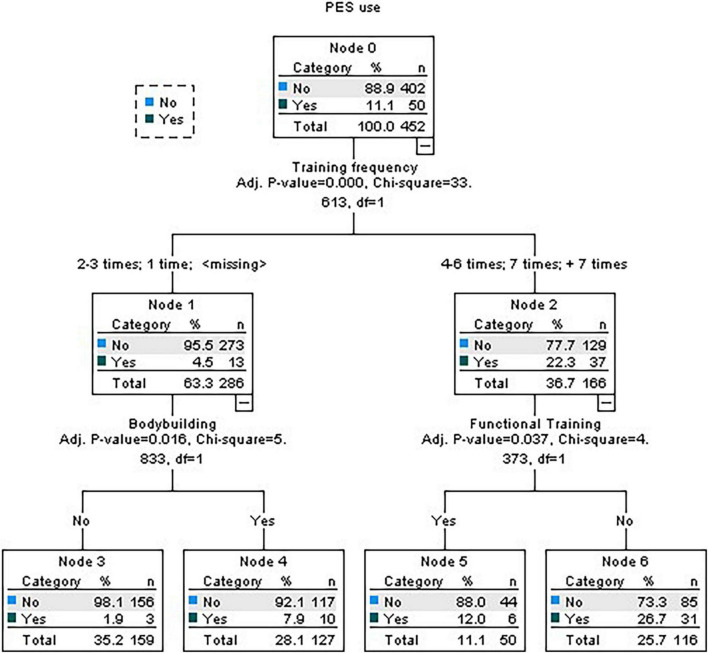
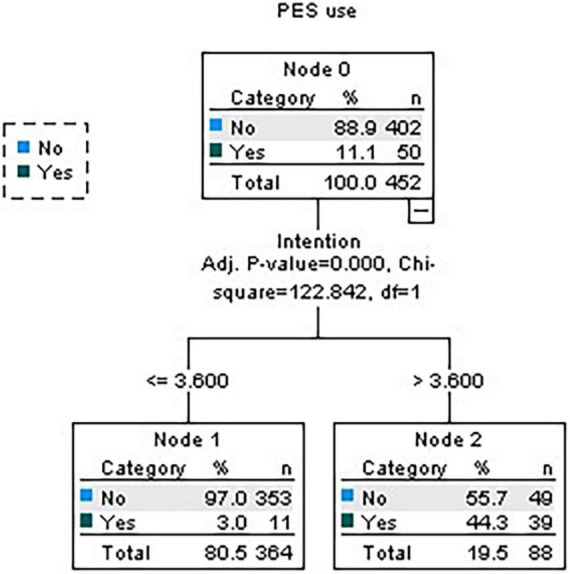
Decision Trees showed that being a woman, training less frequently, not practicing bodybuilding and having a negative intention to consume PES were identified as characteristics of non-users of PES.
These results may support evidence-based anti-doping interventions to prevent abusive use of PES in the fitness context.
目前,在健身和健身房环境中使用违禁的提高成绩物质(PES)已成为一个公共卫生问题,因为不良健康后果正在显现。了解不使用这些物质的健身房使用者的特征,可能会对正在进行的关于使用PES的风险因素的研究起到重要补充作用。本研究的目的是确定健身房使用者中不使用PES的特征。
共有453名健身房使用者(平均年龄 = 35.64岁;标准差 = 13.08——分别为集中趋势位置度量和绝对离散度量)完成了一项在线调查,该调查评估了社会人口学因素、运动特征、健身方式、同伴、社会影响、态度、主观规范、信念、意图以及自我报告的PES使用情况。
决策树显示,女性、训练频率较低、不进行健美运动以及对使用PES有负面意图被确定为不使用PES者的特征。
这些结果可能为基于证据的反兴奋剂干预措施提供支持,以防止在健身环境中滥用PES。