Department of Urology, Stanford University Medical Center, Stanford, CA, USA.
Department of Epidemiology & Population Health, Stanford University School of Medicine, Stanford, CA, USA.
Nat Commun. 2024 Jun 15;15(1):5116. doi: 10.1038/s41467-024-48857-2.
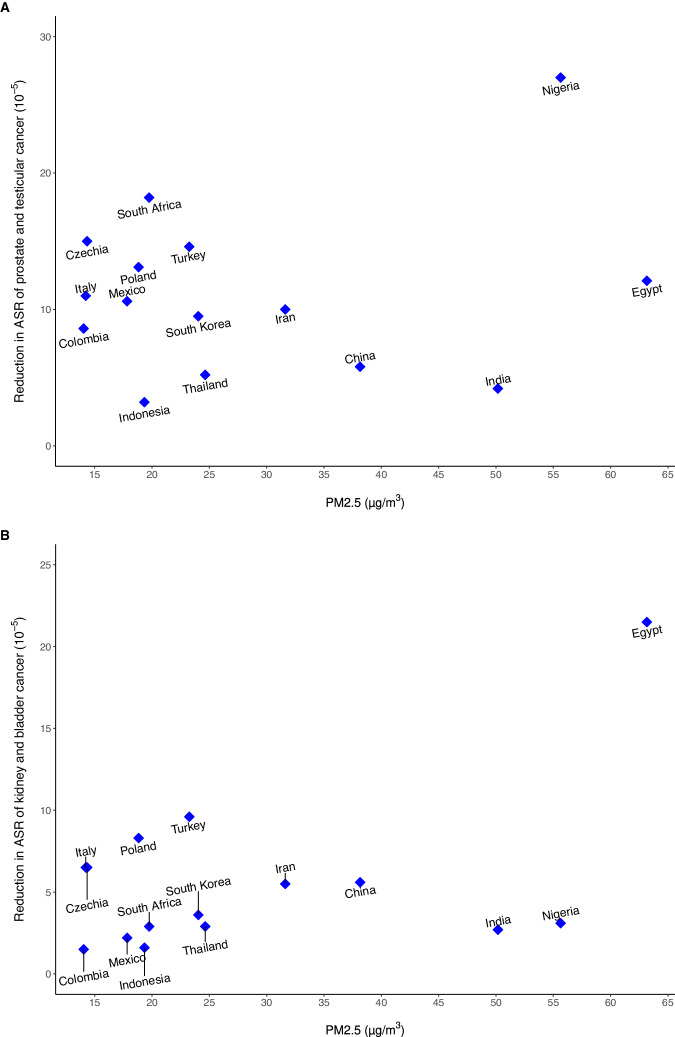
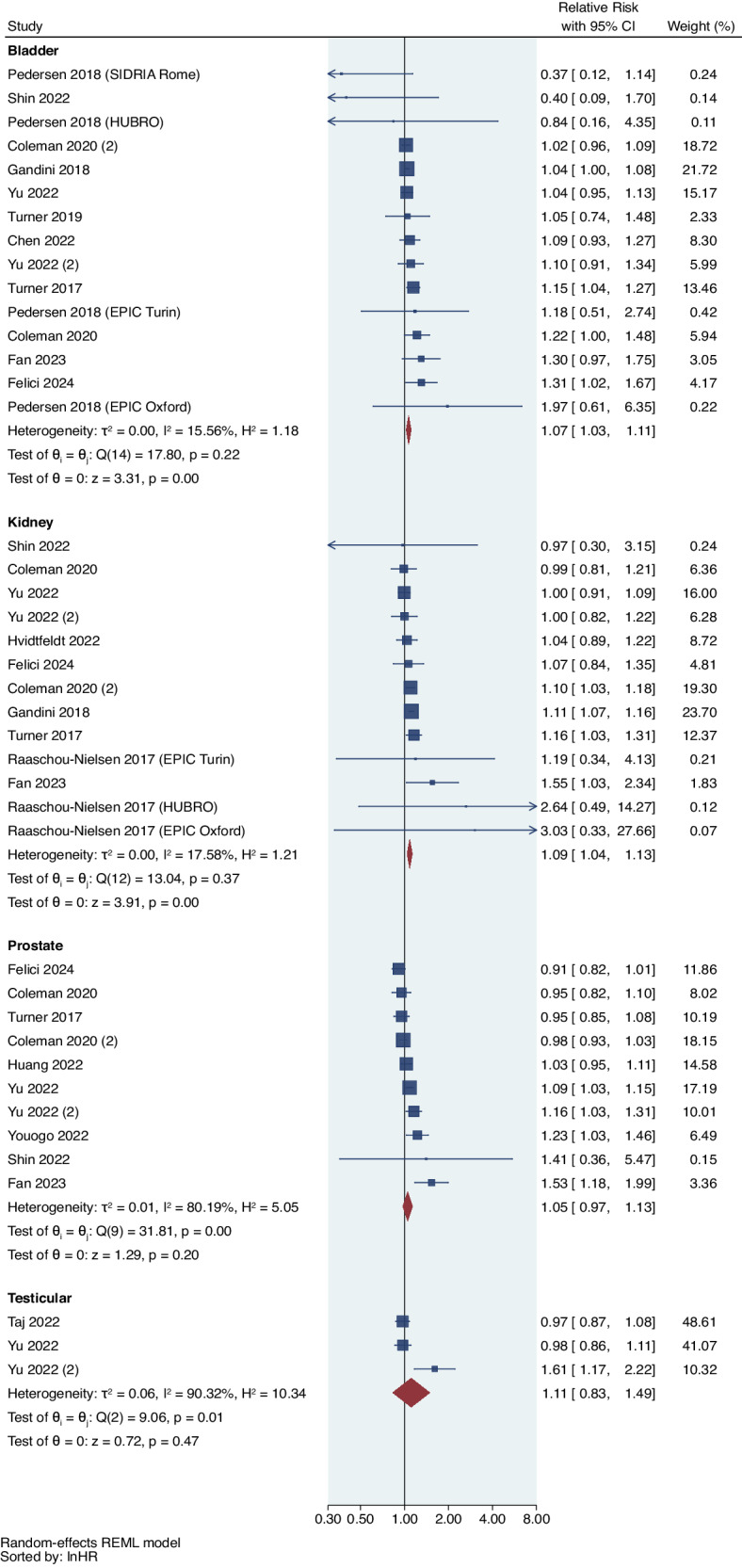
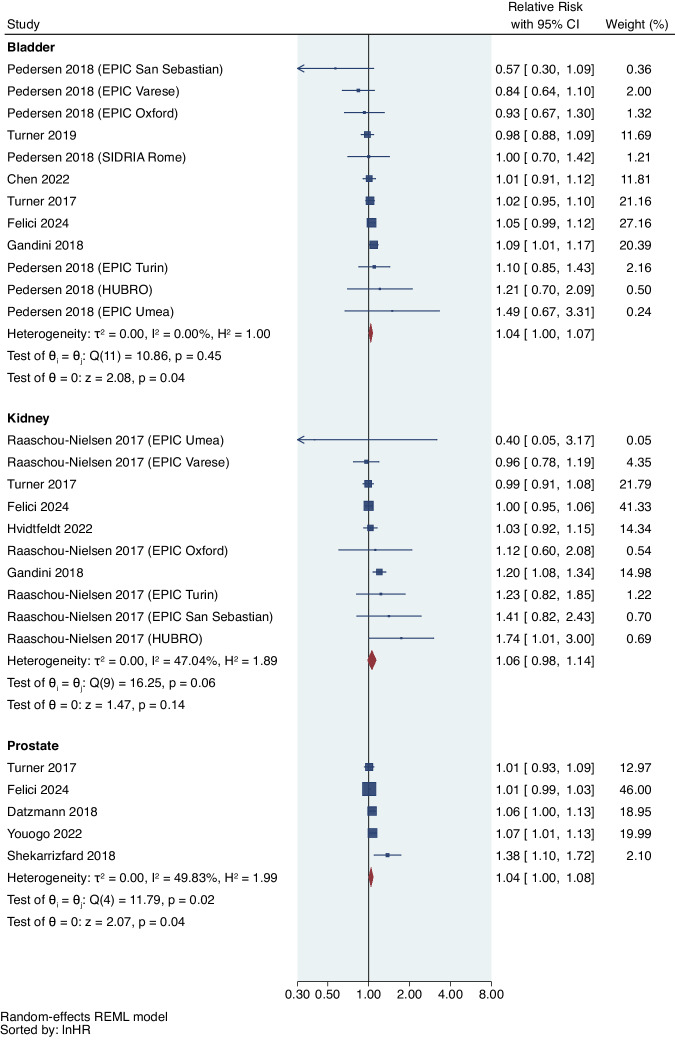
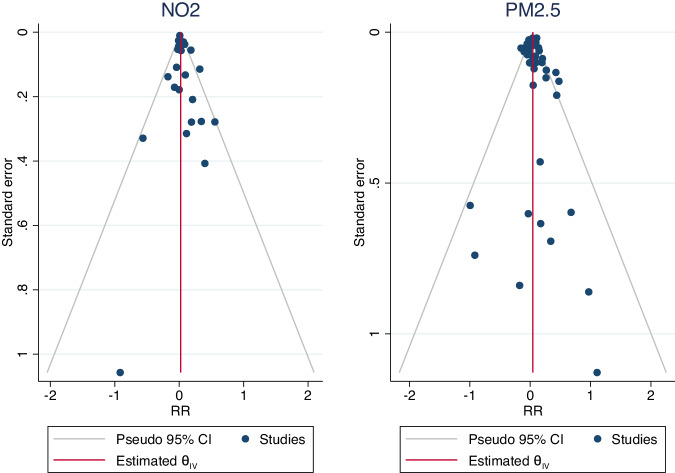
Exposure to ambient air pollution has significant adverse health effects; however, whether air pollution is associated with urological cancer is largely unknown. We conduct a systematic review and meta-analysis with epidemiological studies, showing that a 5 μg/m increase in PM exposure is associated with a 6%, 7%, and 9%, increased risk of overall urological, bladder, and kidney cancer, respectively; and a 10 μg/m increase in NO is linked to a 3%, 4%, and 4% higher risk of overall urological, bladder, and prostate cancer, respectively. Were these associations to reflect causal relationships, lowering PM levels to 5.8 μg/m could reduce the age-standardized rate of urological cancer by 1.5 ~ 27/100,000 across the 15 countries with the highest PM level from the top 30 countries with the highest urological cancer burden. Implementing global health policies that can improve air quality could potentially reduce the risk of urologic cancer and alleviate its burden.
暴露于环境空气污染会对健康产生重大不良影响;然而,空气污染是否与泌尿系统癌症有关在很大程度上尚不清楚。我们进行了一项系统评价和荟萃分析,纳入了流行病学研究,结果表明,PM 暴露每增加 5μg/m,总体泌尿系统、膀胱和肾脏癌症的风险分别增加 6%、7%和 9%;NO 每增加 10μg/m,总体泌尿系统、膀胱和前列腺癌症的风险分别增加 3%、4%和 4%。如果这些关联反映了因果关系,那么将 PM 水平降低到 5.8μg/m 可以使全球前 30 个癌症负担最高的国家中 PM 水平最高的 15 个国家的泌尿系统癌症标准化年龄发病率降低 1.5~27/100,000。实施能够改善空气质量的全球卫生政策可能会降低泌尿系统癌症的风险并减轻其负担。