Department of Behavioral and Community Health, School of Public Health, University of Maryland, College Park, MD, USA.
School of Social Work, University of Michigan, Ann Arbor, MI, USA.
Am J Mens Health. 2024 May-Jun;18(3):15579883241258318. doi: 10.1177/15579883241258318.
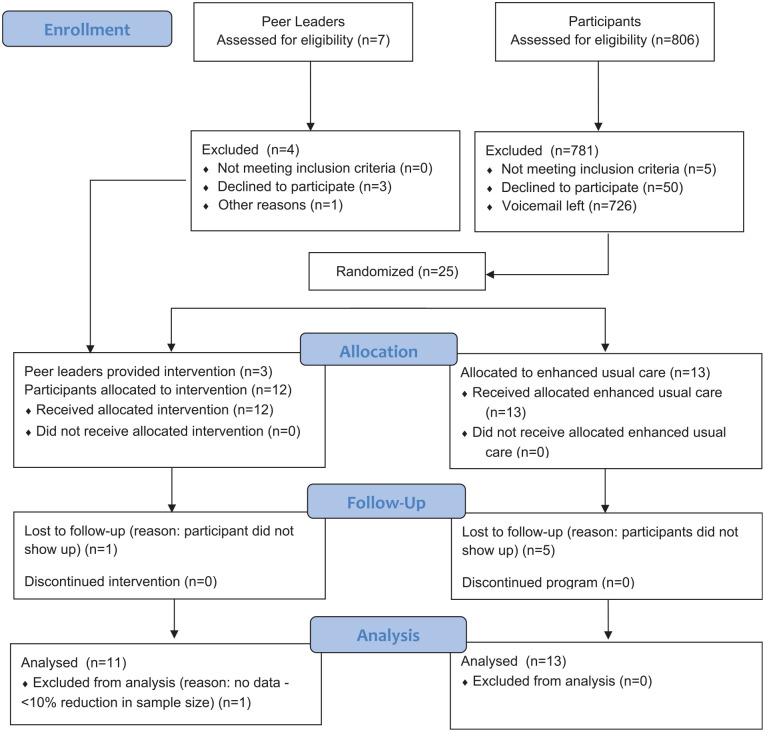
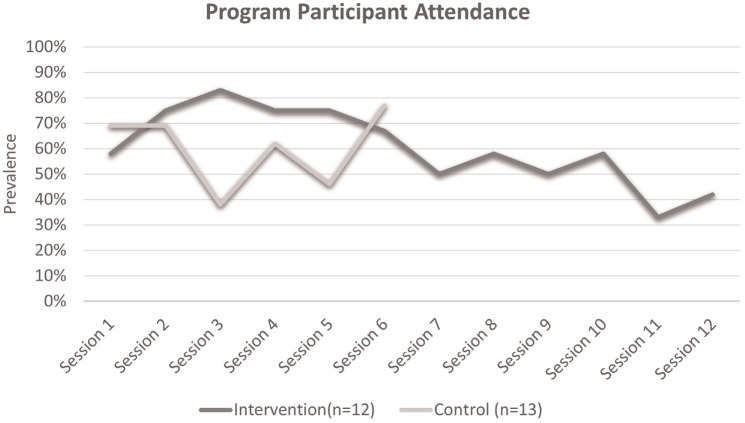
Black men are disproportionately affected by type 2 diabetes (T2D) and experience higher diabetes-related complications than non-Hispanic White men. To address the complex barriers in diabetes self-management for Black men, we implemented a 3-month peer-led and empowerment-based Diabetes Self-Management Education (DSME) and Support (DSMS) intervention in Metro Detroit. Twenty-five Black men ≥55 years of age with self-reported T2D were randomized to the intervention group (=12)-10 hr of DSME and 9 hr of DSMS-or enhanced usual care (EUC) group (=13)-10 hr of DSME. Peer leaders ( = 3) were trained by certified diabetes care and education specialists (CDCESs) to cofacilitate the support sessions. Outcomes (hemoglobin A1c [HbA1c], diabetes self-care activities, and diabetes distress) were assessed preintervention and postintervention. In the intervention and EUC groups, mean HbA1c decreased by 0.20% ( = .52, = 0.99) and 0.13% ( = .68), respectively. General diet ( = .03, change: 1.32, = 1.71) and blood glucose monitoring ( < .05, change: 0.50, = 0.74) scores improved among those in the intervention group. General diet scores also improved in the EUC group: mean change: 1.77, = .08, although changes were not statistically significant. Changes in diabetes distress scores differed based on the number of sessions attended, with a significant decrease in those attending 7 to 12 sessions ( = 7), >50%, ( = .003, change: -5.71, = 3.20). Implementing a peer-led DSMS program for Black men was feasible, adopted, and led to positive changes in outcomes. Scaling up the intervention and assessing sustainability is warranted.
黑人男性受 2 型糖尿病(T2D)的影响不成比例,比非西班牙裔白人男性经历更高的糖尿病相关并发症。为了解决黑人男性糖尿病自我管理中的复杂障碍,我们在底特律大都市区实施了一项为期 3 个月的以同伴为基础和赋权为基础的糖尿病自我管理教育(DSME)和支持(DSMS)干预。25 名年龄在 55 岁及以上、自我报告患有 T2D 的黑人男性被随机分配到干预组(=12)-10 小时的 DSME 和 9 小时的 DSMS-或强化常规护理(EUC)组(=13)-10 小时的 DSME。同伴领袖(=3)由经过认证的糖尿病护理和教育专家(CDCES)培训,以共同促进支持会议。在干预和 EUC 组中,HbA1c(血红蛋白 A1c)、糖尿病自我护理活动和糖尿病困扰的结局在干预前和干预后进行了评估。在干预组和 EUC 组中,HbA1c 分别降低了 0.20%(=0.52,=0.99)和 0.13%(=0.68)。一般饮食(=0.03,变化:1.32,=1.71)和血糖监测(<0.05,变化:0.50,=0.74)评分在干预组中有所改善。EUC 组中一般饮食评分也有所提高:平均变化:1.77,=0.08,尽管变化没有统计学意义。糖尿病困扰评分的变化取决于参加的课程数量,参加 7 到 12 节课的人有显著下降(=7),>50%,(=0.003,变化:-5.71,=3.20)。为黑人男性实施以同伴为基础的 DSMS 计划是可行的、被采纳的,并导致了结果的积极变化。扩大干预范围并评估可持续性是必要的。