Vinyagamoorthy Sneha, Sivalingam Azhagu Madhavan, Alex Arockia, Brahma Neha
Natural Products and Nanobiotechnology Research Lab, Department of Community Medicine, Saveetha Medical College and Hospital, Saveetha Institute of Medical and Technical Sciences (SIMATS), (Saveetha Deemed to be University), Thandalam, Chennai, Tamil Nadu, India.
Department of Biochemistry, Saveetha Medical College and Hospital, Saveetha Institute of Medical and Technical Sciences (SIMATS), (Saveetha Deemed to be University), Thandalam, Chennai, Tamil Nadu, India.
J Pharm Bioallied Sci. 2024 Apr;16(Suppl 2):S1263-S1269. doi: 10.4103/jpbs.jpbs_567_23. Epub 2024 Apr 16.
Nonessential heavy metals pose a significant threat to human health due to their toxicity. Mercury, in particular, is identified as a hazardous metal. The study aims to detect mercury using colorimetric analysis with Murraya koenigii, emphasizing the eco-friendliness of the method.
The primary objective is to detect mercury using a colorimetric analysis method employing Murraya koenigii. Additionally, the study aims to investigate the eco-friendliness of this detection method.
Colorimetric analysis was conducted using Murraya koenigii to detect mercury. Ultraviolet-visible (UV-vis) spectroscopy was employed to detect the formation of silver nanoparticles (AgNPs), with a characteristic surface plasmon resonance (SPR) band observed. X-ray diffraction (XRD) data analysis was performed to determine the crystalline nature and size of AgNPs. Scanning electron microscopy (SEM) was utilized to visualize the morphology of AgNPs. Fourier transform infrared (FTIR) spectroscopy was employed to identify functional groups involved in reducing silver ions. Antibacterial properties of synthesized AgNPs were tested against various microorganisms, including Escherichia coli, Staphylococcus aureus, Streptococcus mutans, and Enterococcus faecalis.
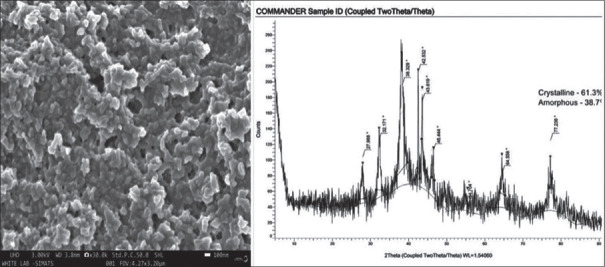
Mercury was successfully detected using colorimetric analysis with Murraya koenigii. Formation of AgNPs was confirmed by UV-vis spectroscopy, with a characteristic SPR band at 418 nm. AgNPs were found to be crystalline with an average size of 5.20 nm, as determined by XRD analysis. SEM images revealed spherical and polycrystalline AgNPs. FTIR spectra indicated the involvement of the -OH group of compounds in the extract in reducing silver ions. Synthesized AgNPs exhibited antibacterial properties against various microorganisms.
A sustainable and eco-friendly method for synthesizing AgNPs using Murraya koenigii extract was successfully developed. This method not only detected mercury but also demonstrated antibacterial properties against various microorganisms. The study underscores the health implications of nonessential heavy metals, emphasizing the importance of eco-friendly detection and mitigation methods.
非必需重金属因其毒性对人类健康构成重大威胁。特别是汞,被认定为一种有害金属。本研究旨在利用九里香进行比色分析来检测汞,强调该方法的生态友好性。
主要目标是采用利用九里香的比色分析方法检测汞。此外,本研究旨在探究这种检测方法的生态友好性。
使用九里香进行比色分析以检测汞。采用紫外可见(UV-vis)光谱法检测银纳米颗粒(AgNPs)的形成,观察到特征性的表面等离子体共振(SPR)带。进行X射线衍射(XRD)数据分析以确定AgNPs的晶体性质和尺寸。利用扫描电子显微镜(SEM)观察AgNPs的形态。采用傅里叶变换红外(FTIR)光谱法鉴定参与还原银离子的官能团。测试合成的AgNPs对包括大肠杆菌、金黄色葡萄球菌、变形链球菌和粪肠球菌在内的各种微生物的抗菌性能。
利用九里香通过比色分析成功检测到汞。UV-vis光谱法证实了AgNPs的形成,在418 nm处有特征性的SPR带。XRD分析确定AgNPs为晶体,平均尺寸为5.20 nm。SEM图像显示为球形和多晶的AgNPs。FTIR光谱表明提取物中化合物的 -OH基团参与了银离子的还原。合成的AgNPs对各种微生物表现出抗菌性能。
成功开发了一种利用九里香叶提取物合成AgNPs的可持续且生态友好的方法。该方法不仅能检测汞,还对各种微生物具有抗菌性能。本研究强调了非必需重金属对健康的影响,突出了生态友好检测和缓解方法的重要性。