• 文献检索
  • 文档翻译
  • 深度研究
  • 学术资讯
  • Suppr Zotero 插件Zotero 插件
  • 邀请有礼
  • 套餐&价格
  • 历史记录
应用&插件
Suppr Zotero 插件Zotero 插件浏览器插件Mac 客户端Windows 客户端微信小程序
定价
高级版会员购买积分包购买API积分包
服务
文献检索文档翻译深度研究API 文档MCP 服务
关于我们
关于 Suppr公司介绍联系我们用户协议隐私条款
关注我们

Suppr 超能文献

核心技术专利:CN118964589B侵权必究
粤ICP备2023148730 号-1Suppr @ 2026

文献检索

告别复杂PubMed语法,用中文像聊天一样搜索,搜遍4000万医学文献。AI智能推荐,让科研检索更轻松。

立即免费搜索

文件翻译

保留排版,准确专业,支持PDF/Word/PPT等文件格式,支持 12+语言互译。

免费翻译文档

深度研究

AI帮你快速写综述,25分钟生成高质量综述,智能提取关键信息,辅助科研写作。

立即免费体验

大麻二酚的抗癌和抗增殖潜力:细胞和分子视角。

Anti-Cancer and Anti-Proliferative Potential of Cannabidiol: A Cellular and Molecular Perspective.

机构信息

Department of Biochemistry, Faculty of Science, University of Johannesburg, Auckland Park Kingsway, P.O. Box 524, Johannesburg 2006, South Africa.

出版信息

Int J Mol Sci. 2024 May 23;25(11):5659. doi: 10.3390/ijms25115659.

DOI:10.3390/ijms25115659
PMID:38891847
原文链接:https://pmc.ncbi.nlm.nih.gov/articles/PMC11171526/
Abstract

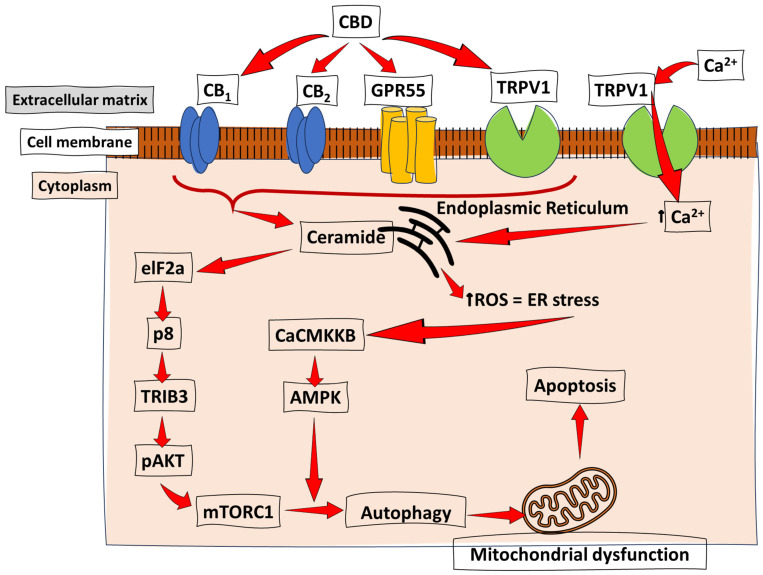
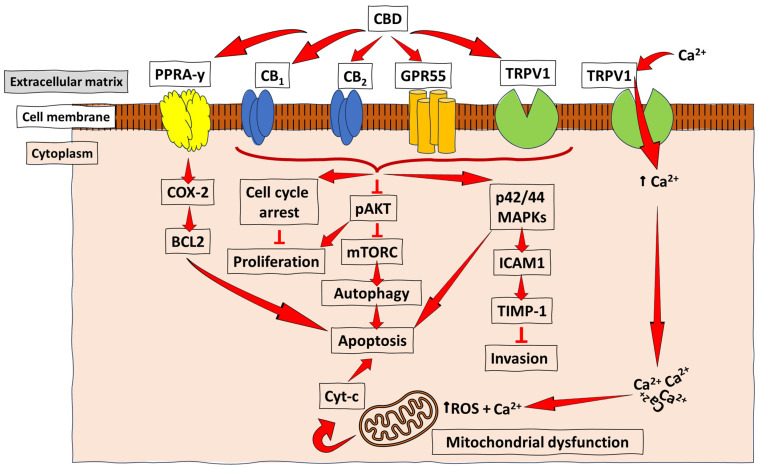
Cannabinoids, the bioactive compounds found in , have been used for medicinal purposes for centuries, with early discoveries dating back to the BC era (BCE). However, the increased recreational use of cannabis has led to a negative perception of its medicinal and food applications, resulting in legal restrictions in many regions worldwide. Recently, cannabinoids, notably Δ-tetrahydrocannabinol (THC) and cannabidiol (CBD), have gained renewed interest in the medical field due to their anti-cancer properties. These properties include the inhibition of tumour growth and cell invasion, anti-inflammatory effects, and the induction of autophagy and apoptosis. As a result, the use of cannabinoids to treat chemotherapy-associated side effects, like nausea, vomiting, and pain, has increased, and there have been suggestions to implement the large-scale use of cannabinoids in cancer therapy. However, these compounds' cellular and molecular mechanisms of action still need to be fully understood. This review explores the recent evidence of CBD's efficacy as an anti-cancer agent, which is of interest due to its non-psychoactive properties. The current review will also provide an understanding of CBD's common cellular and molecular mechanisms in different cancers. Studies have shown that CBD's anti-cancer activity can be receptor-dependent (CB1, CB2, TRPV, and PPARs) or receptor-independent and can be induced through molecular mechanisms, such as ceramide biosynthesis, the induction of ER stress, and subsequent autophagy and apoptosis. It is projected that these molecular mechanisms will form the basis for the therapeutic applications of CBD. Therefore, it is essential to understand these mechanisms for developing and optimizing pre-clinical CBD-based therapies.

摘要

大麻素是在大麻中发现的生物活性化合物,几个世纪以来一直被用于医疗目的,最早的发现可以追溯到公元前时期(公元前)。然而,大麻的娱乐性使用增加导致人们对其药用和食品应用产生了负面看法,从而导致全球许多地区的法律限制。最近,大麻素,特别是Δ-四氢大麻酚(THC)和大麻二酚(CBD),由于其抗癌特性在医学领域重新引起了人们的兴趣。这些特性包括抑制肿瘤生长和细胞侵袭、抗炎作用以及诱导自噬和细胞凋亡。因此,大麻素在治疗化疗相关副作用(如恶心、呕吐和疼痛)方面的使用有所增加,并且有人建议在癌症治疗中大规模使用大麻素。然而,这些化合物的细胞和分子作用机制仍有待充分了解。本综述探讨了 CBD 作为抗癌剂的最新有效性证据,由于其非精神活性特性,这一点很有趣。目前的综述还将了解 CBD 在不同癌症中的常见细胞和分子机制。研究表明,CBD 的抗癌活性可以依赖于受体(CB1、CB2、TRPV 和 PPARs)或不依赖于受体,并且可以通过分子机制诱导,如神经酰胺生物合成、内质网应激的诱导以及随后的自噬和细胞凋亡。预计这些分子机制将成为 CBD 治疗应用的基础。因此,了解这些机制对于开发和优化基于 CBD 的临床前治疗方法至关重要。
https://cdn.ncbi.nlm.nih.gov/pmc/blobs/ccaf/11171526/4859099f7aae/ijms-25-05659-g004.jpg
https://cdn.ncbi.nlm.nih.gov/pmc/blobs/ccaf/11171526/3ffbcbdef7d2/ijms-25-05659-g001.jpg
https://cdn.ncbi.nlm.nih.gov/pmc/blobs/ccaf/11171526/3e76a99f05e0/ijms-25-05659-g002.jpg
https://cdn.ncbi.nlm.nih.gov/pmc/blobs/ccaf/11171526/0a0aeefa81c9/ijms-25-05659-g003.jpg
https://cdn.ncbi.nlm.nih.gov/pmc/blobs/ccaf/11171526/4859099f7aae/ijms-25-05659-g004.jpg
https://cdn.ncbi.nlm.nih.gov/pmc/blobs/ccaf/11171526/3ffbcbdef7d2/ijms-25-05659-g001.jpg
https://cdn.ncbi.nlm.nih.gov/pmc/blobs/ccaf/11171526/3e76a99f05e0/ijms-25-05659-g002.jpg
https://cdn.ncbi.nlm.nih.gov/pmc/blobs/ccaf/11171526/0a0aeefa81c9/ijms-25-05659-g003.jpg
https://cdn.ncbi.nlm.nih.gov/pmc/blobs/ccaf/11171526/4859099f7aae/ijms-25-05659-g004.jpg

相似文献

1
Anti-Cancer and Anti-Proliferative Potential of Cannabidiol: A Cellular and Molecular Perspective.大麻二酚的抗癌和抗增殖潜力:细胞和分子视角。
Int J Mol Sci. 2024 May 23;25(11):5659. doi: 10.3390/ijms25115659.
2
Unveiling the mechanism of action behind the anti-cancer properties of cannabinoids in ER breast cancer cells: Impact on aromatase and steroid receptors.揭示大麻素在 ER 乳腺癌细胞中抗癌特性背后的作用机制:对芳香酶和类固醇受体的影响。
J Steroid Biochem Mol Biol. 2021 Jun;210:105876. doi: 10.1016/j.jsbmb.2021.105876. Epub 2021 Mar 17.
3
L. and Nonpsychoactive Cannabinoids: Their Chemistry and Role against Oxidative Stress, Inflammation, and Cancer.大麻素及其非精神活性类似物:它们的化学性质及其在对抗氧化应激、炎症和癌症中的作用。
Biomed Res Int. 2018 Dec 4;2018:1691428. doi: 10.1155/2018/1691428. eCollection 2018.
4
Current Cannabidiol Safety: A Review.当前大麻二酚的安全性:综述。
Curr Drug Saf. 2023;18(4):465-473. doi: 10.2174/1574886317666220902100511.
5
The effect of cannabidiol on canine neoplastic cell proliferation and mitogen-activated protein kinase activation during autophagy and apoptosis.大麻二酚对犬肿瘤细胞增殖和有丝分裂原激活蛋白激酶激活的影响:自噬和凋亡过程中的作用。
Vet Comp Oncol. 2021 Jun;19(2):253-265. doi: 10.1111/vco.12669. Epub 2021 Jan 14.
6
Cannabidiol for Oral Health: A New Promising Therapeutical Tool in Dentistry.口腔健康中的大麻二酚:牙科领域有前景的新治疗工具。
Int J Mol Sci. 2023 Jun 2;24(11):9693. doi: 10.3390/ijms24119693.
7
Cannabidiol Exerts Anticonvulsant Effects Alone and in Combination with Δ-THC through the 5-HT1A Receptor in the Neocortex of Mice.大麻二酚通过 5-HT1A 受体在小鼠新皮层中单独和与 Δ-THC 联合发挥抗惊厥作用。
Cells. 2024 Mar 7;13(6):466. doi: 10.3390/cells13060466.
8
Pharmacology of Medical Cannabis.医用大麻的药理学。
Adv Exp Med Biol. 2019;1162:151-165. doi: 10.1007/978-3-030-21737-2_8.
9
Cannabidiol for Pain Treatment: Focus on Pharmacology and Mechanism of Action.大麻二酚治疗疼痛:聚焦药理学和作用机制。
Int J Mol Sci. 2020 Nov 23;21(22):8870. doi: 10.3390/ijms21228870.
10
A narrative review of molecular mechanism and therapeutic effect of cannabidiol (CBD).大麻二酚(CBD)分子机制与治疗效果的叙述性综述
Basic Clin Pharmacol Toxicol. 2022 Apr;130(4):439-456. doi: 10.1111/bcpt.13710. Epub 2022 Feb 6.

引用本文的文献

1
Formulation and Functional Characterization of a Cannabidiol-Loaded Nanoemulsion in Canine Mammary Carcinoma Cells.犬乳腺癌细胞中载有大麻二酚的纳米乳剂的配方及功能表征
Pharmaceutics. 2025 Jul 26;17(8):970. doi: 10.3390/pharmaceutics17080970.
2
Cannabidiol Enhances Stress-Induced Cellular Damage: Potential Contribution of Kv2.1 Inhibition.大麻二酚加剧应激诱导的细胞损伤:Kv2.1抑制的潜在作用
J Mol Neurosci. 2025 Aug 14;75(3):107. doi: 10.1007/s12031-025-02396-7.
3
Molecular Mechanisms of the Endocannabinoid System with a Focus on Reproductive Physiology and the Cannabinoid Impact on Fertility.

本文引用的文献

1
Molecular and Cellular Mechanisms of Action of Cannabidiol.大麻素的分子和细胞作用机制。
Molecules. 2023 Aug 9;28(16):5980. doi: 10.3390/molecules28165980.
2
Bioinformatics for wet-lab scientists: practical application in sequencing analysis.生物信息学在湿实验科学家中的应用:测序分析中的实际应用。
BMC Genomics. 2023 Jul 7;24(1):382. doi: 10.1186/s12864-023-09454-7.
3
Cannabinoids Reduce Melanoma Cell Viability and Do Not Interfere with Commonly Used Targeted Therapy in Metastatic Melanoma In Vivo and In Vitro.大麻素可降低黑色素瘤细胞活力,且在体内和体外均不干扰转移性黑色素瘤中常用的靶向治疗。
以生殖生理学为重点的内源性大麻素系统的分子机制以及大麻素对生育能力的影响。
Int J Mol Sci. 2025 Jul 23;26(15):7095. doi: 10.3390/ijms26157095.
4
The Role of the Endocannabinoid System in Oncology and the Potential Use of Cannabis Derivatives for Cancer Management in Companion Animals.内源性大麻素系统在肿瘤学中的作用以及大麻衍生物在伴侣动物癌症管理中的潜在应用。
Animals (Basel). 2025 Jul 24;15(15):2185. doi: 10.3390/ani15152185.
5
Cannabidiol (CBD) and Colorectal Tumorigenesis: Potential Dual Modulatory Roles via the Serotonergic Pathway.大麻二酚(CBD)与结直肠癌发生:通过5-羟色胺能途径发挥潜在的双重调节作用
Curr Oncol. 2025 Jun 26;32(7):375. doi: 10.3390/curroncol32070375.
6
Unveiling the Antioxidant Role of Hemp Oils in Cancer Prevention and Treatment.揭示大麻油在癌症预防和治疗中的抗氧化作用。
Cancers (Basel). 2025 Jun 25;17(13):2128. doi: 10.3390/cancers17132128.
7
Transcriptomic analysis of wild Cannabis sativa: insights into tissue- and stage-specific expression and secondary metabolic regulation.野生大麻的转录组分析:对组织和阶段特异性表达以及次生代谢调控的见解。
BMC Genomics. 2025 May 26;26(1):528. doi: 10.1186/s12864-025-11697-5.
8
Cannabidiol as a novel therapeutic agent in breast cancer: evidence from literature.大麻二酚作为乳腺癌的一种新型治疗药物:来自文献的证据。
BMC Cancer. 2025 Apr 24;25(1):772. doi: 10.1186/s12885-025-14175-z.
9
Research mapping of cannabinoids and endocannabinoid system in cancer over the past three decades: insights from bibliometric analysis.过去三十年癌症中大麻素与内源性大麻素系统的研究图谱:文献计量分析的见解
Front Pharmacol. 2025 Apr 2;16:1540619. doi: 10.3389/fphar.2025.1540619. eCollection 2025.
10
Cannabinoids as Promising Inhibitors of HER2-Tyrosine Kinase: A Novel Strategy for Targeting HER2-Positive Ovarian Cancer.大麻素作为HER2酪氨酸激酶的潜在抑制剂:一种靶向HER2阳性卵巢癌的新策略。
ACS Omega. 2025 Feb 8;10(6):6191-6200. doi: 10.1021/acsomega.4c11108. eCollection 2025 Feb 18.
Biology (Basel). 2023 May 12;12(5):706. doi: 10.3390/biology12050706.
4
Cannabidiol and Cannabis Sativa as a potential treatment in vitro prostate cancer cells silenced with RBBp6 and PC3 xenograft.大麻二酚和大麻素作为一种潜在的治疗方法,可用于体外沉默 RBBP6 和 PC3 异种移植的前列腺癌细胞。
Mol Biol Rep. 2023 May;50(5):4039-4047. doi: 10.1007/s11033-022-08197-0. Epub 2023 Feb 28.
5
Mechanisms of Cannabidiol (CBD) in Cancer Treatment: A Review.大麻二酚(CBD)在癌症治疗中的作用机制:综述
Biology (Basel). 2022 May 26;11(6):817. doi: 10.3390/biology11060817.
6
A real-world evidence study of nabiximols in multiple sclerosis patients with resistant spasticity: Analysis in relation to the newly described 'spasticity-plus syndrome'.一项关于纳比昔单抗治疗多发性硬化症伴难治性痉挛患者的真实世界证据研究:与新描述的“痉挛伴多种症状”相关的分析。
Eur J Neurol. 2022 Sep;29(9):2744-2753. doi: 10.1111/ene.15412. Epub 2022 Jun 7.
7
Impact of Cannabinoid Compounds on Skin Cancer.大麻素化合物对皮肤癌的影响。
Cancers (Basel). 2022 Mar 31;14(7):1769. doi: 10.3390/cancers14071769.
8
Interplay between the Cannabinoid System and microRNAs in Cancer.大麻素系统与微小RNA在癌症中的相互作用
ACS Omega. 2022 Mar 14;7(12):9995-10000. doi: 10.1021/acsomega.2c00635. eCollection 2022 Mar 29.
9
Cannabinoids as anticancer drugs: current status of preclinical research.大麻素类药物作为抗癌药物:临床前研究的现状。
Br J Cancer. 2022 Jul;127(1):1-13. doi: 10.1038/s41416-022-01727-4. Epub 2022 Mar 11.
10
Cannabidiol (CBD) in Cancer Management.大麻二酚(CBD)在癌症治疗中的应用
Cancers (Basel). 2022 Feb 10;14(4):885. doi: 10.3390/cancers14040885.