Faculty of Veterinary Medicine, Okayama University of Science, Imabari 794-8555, Ehime, Japan.
Laboratory of Biometabolic Chemistry, School of Health Sciences, University of the Ryukyus, Nishihara 903-0215, Okinawa, Japan.
Int J Mol Sci. 2024 May 30;25(11):5986. doi: 10.3390/ijms25115986.
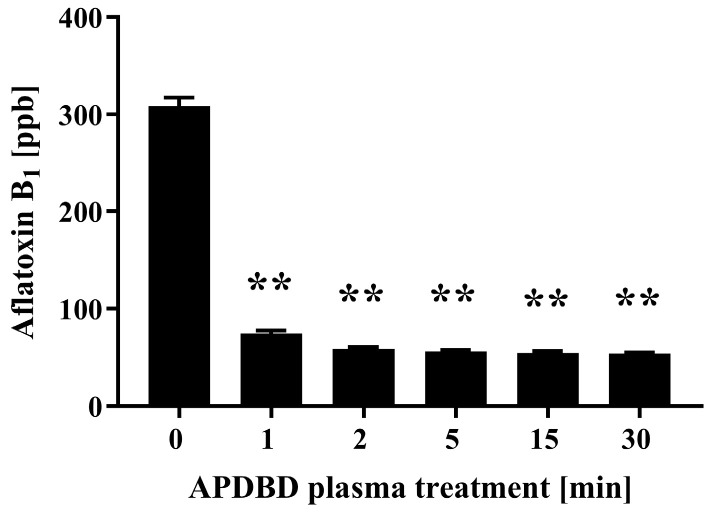
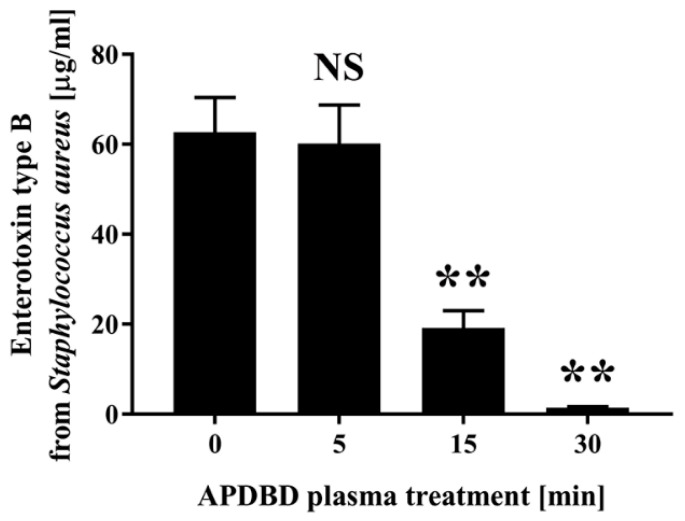
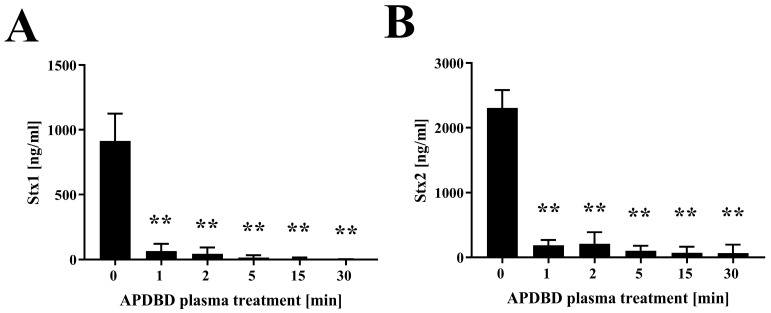
Foodborne diseases can be attributed not only to contamination with bacterial or fungal pathogens but also their associated toxins. Thus, to maintain food safety, innovative decontamination techniques for toxins are required. We previously demonstrated that an atmospheric-pressure dielectric-barrier discharge (APDBD) plasma generated by a roller conveyer plasma device is effective at inactivating bacteria and fungi in foods. Here, we have further examined whether the roller conveyer plasma device can be used to degrade toxins produced by foodborne bacterial pathogens, including aflatoxin, Shiga toxins (Stx1 and Stx2), enterotoxin B and cereulide. Each toxin was spotted onto an aluminum plate, allowed to dry, and then treated with APDBD plasma applied by the roller conveyer plasma device for different time periods. Assessments were conducted using a competitive enzyme-linked immunosorbent assay (ELISA) and liquid chromatography-tandem mass spectrometry (LC-MS/MS). The results demonstrate a significant time-dependent decrease in the levels of these toxins. ELISA showed that aflatoxin B concentrations were reduced from 308.6 µg/mL to 74.4 µg/mL within 1 min. For Shiga toxins, Stx1 decreased from 913.8 µg/mL to 65.1 µg/mL, and Stx2 from 2309.0 µg/mL to 187.6 µg/mL within the same time frame (1 min). Enterotoxin B levels dropped from 62.67 µg/mL to 1.74 µg/mL at 15 min, and 1.43 µg/mL at 30 min, but did not display a significant decrease within 5 min. LC-MS/MS analysis verified that cereulide was reduced to below the detection limit following 30 min of APDBD plasma treatment. Taken together, these findings highlight that a range of foodborne toxins can be degraded by a relatively short exposure to plasma generated by an APDBD using a roller conveyer device. This technology offers promising advancements in food safety, providing a novel method to alleviate toxin contamination in the food processing industry.
食源性疾病不仅归因于细菌或真菌病原体的污染,还归因于它们相关的毒素。因此,为了维护食品安全,需要创新的毒素脱除技术。我们之前已经证明,由滚子输送机等离子体装置产生的大气压介质阻挡放电(APDBD)等离子体在灭活食品中的细菌和真菌方面非常有效。在这里,我们进一步研究了滚子输送机等离子体装置是否可用于降解食源性细菌病原体产生的毒素,包括黄曲霉毒素、志贺毒素(Stx1 和 Stx2)、肠毒素 B 和玉米赤霉烯酮。将每种毒素斑点到铝板上,使其干燥,然后用滚子输送机等离子体装置施加 APDBD 等离子体进行不同时间的处理。使用竞争性酶联免疫吸附测定(ELISA)和液相色谱-串联质谱(LC-MS/MS)进行评估。结果表明,这些毒素的水平随时间显著降低。ELISA 显示黄曲霉毒素 B 的浓度在 1 分钟内从 308.6 µg/mL 降低到 74.4 µg/mL。对于志贺毒素,Stx1 在同一时间内从 913.8 µg/mL 降低到 65.1 µg/mL,Stx2 从 2309.0 µg/mL 降低到 187.6 µg/mL(1 分钟)。肠毒素 B 的水平在 15 分钟时从 62.67 µg/mL 降至 1.74 µg/mL,30 分钟时降至 1.43 µg/mL,但在 5 分钟内没有明显下降。LC-MS/MS 分析证实,玉米赤霉烯酮在 30 分钟的 APDBD 等离子体处理后被降低到检测限以下。总之,这些发现表明,通过使用滚子输送机装置产生的 APDBD 等离子体,相对较短时间的暴露可以降解多种食源性毒素。这项技术在食品安全方面提供了有前景的进展,为减轻食品加工行业中的毒素污染提供了一种新方法。