Conceição Jacilara A, Carneiro Pedro P, Dórea Andreza S, Oliveira Walker N, Muniz Aline C, Carvalho Edgar M, Wilson Mary E, Bacellar Olívia
Department of Internal Medicine, University of Iowa, Iowa City.
Serviço de Imunologia, Hospital Universitário Prof. Edgard Santos, Universidade Federal da Bahia, Salvador, Brazil.
J Infect Dis. 2024 Dec 16;230(6):e1385-e1393. doi: 10.1093/infdis/jiae317.
The mechanisms that mediate immune protection in individuals with subclinical (SC) or asymptomatic infection with Leishmania braziliensis are largely unknown. Neutrophils (polymorphonuclear leukocytes [PMNs]) have been implicated in progressive symptomatic cutaneous leishmaniasis (CL), but their potential participation in maintenance of subclinical infection is unexplored. The aim of this study was to compare the phenotypic and functional profiles of PMNs in individuals with SC infection versus patients with symptomatic CL due to L braziliensis.
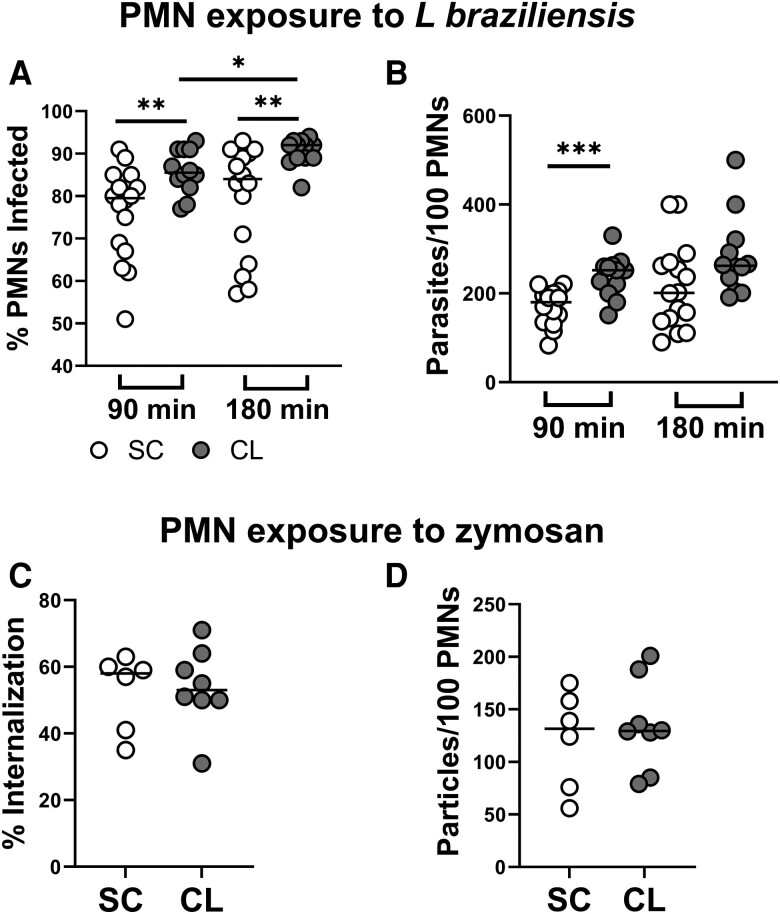
Subjects were recruited in the endemic region of Corte de Pedra, Bahia, Brazil. Surface markers to define activation status were characterized by flow cytometry. Functional responses of PMNs including phagocytic capacity, production of oxidative species, and oxidative killing of intracellular parasites were studied in vitro.
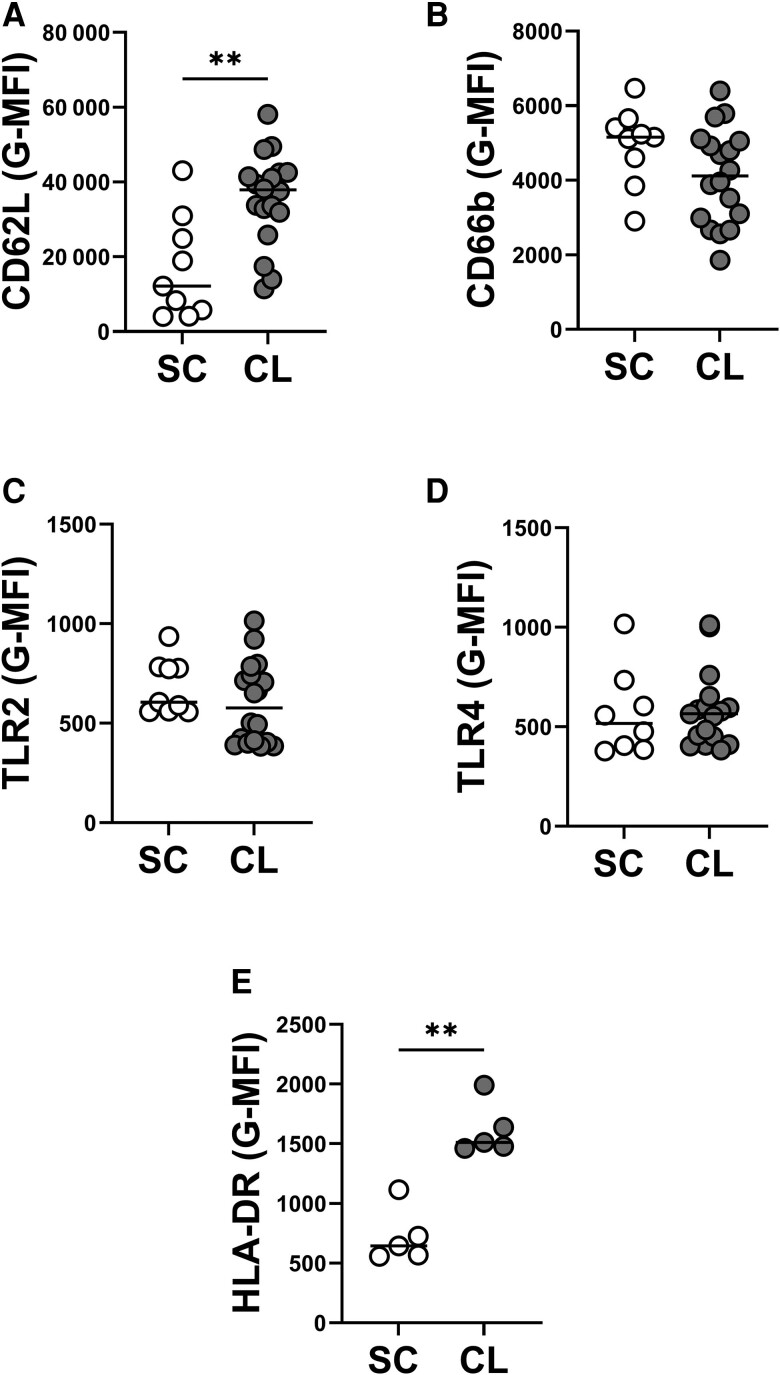
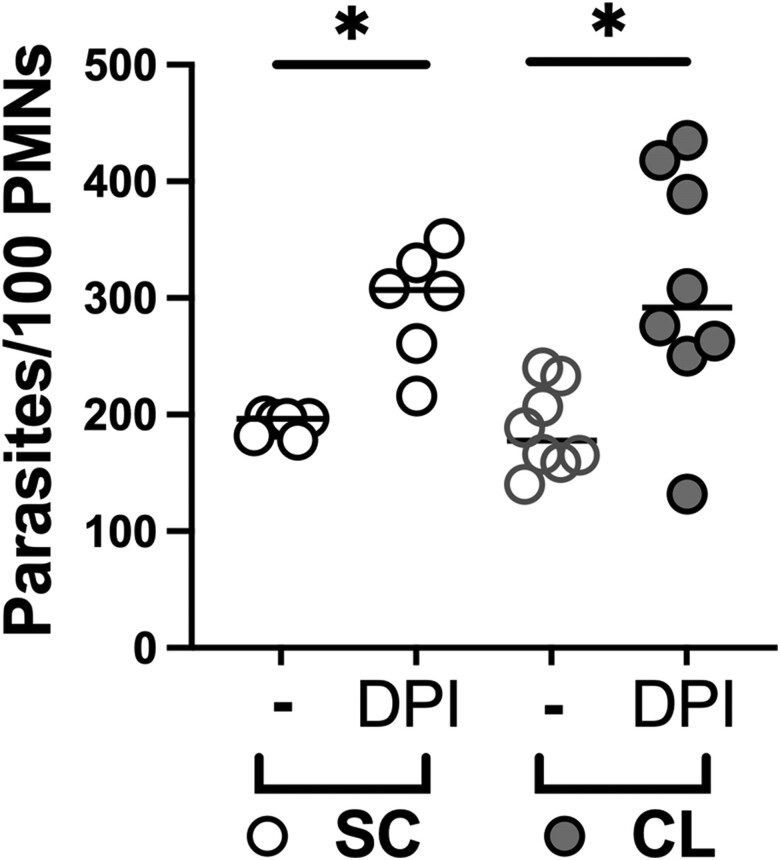
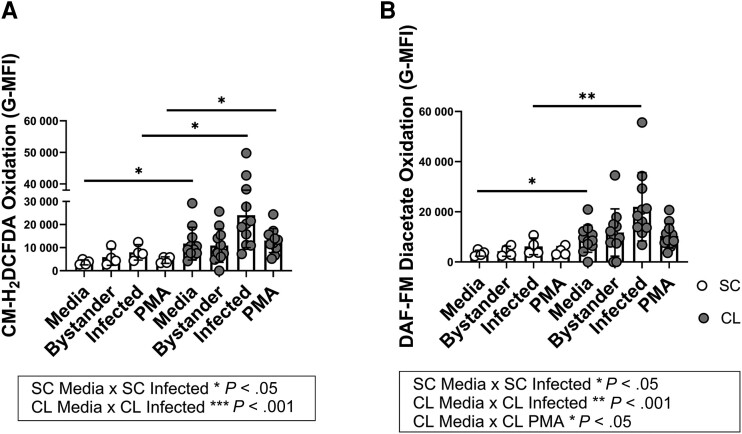
PMNs from individuals with SC infection displayed a more activated phenotype and greater ability to control the infection than PMNs from patients with CL. In contrast, PMNs from patients with CL exhibited higher expression of HLA-DR and higher production of oxidative species than PMNs from subjects with SC infection.
PMNs from individuals with SC infection can control the infection more efficiently than PMNs from patients with CL, despite the lower production of oxidants. Our observations suggest that L braziliensis may evade microbicidal mechanisms of PMNs from patients with CL, contributing to parasite dissemination and the establishment of disease.
在亚临床(SC)或无症状感染巴西利什曼原虫的个体中,介导免疫保护的机制在很大程度上尚不清楚。中性粒细胞(多形核白细胞[PMN])已被证明与进行性症状性皮肤利什曼病(CL)有关,但其在维持亚临床感染中的潜在作用尚未得到探索。本研究的目的是比较SC感染个体与巴西利什曼原虫引起的症状性CL患者的PMN的表型和功能特征。
在巴西巴伊亚州科尔特德佩德拉的流行地区招募受试者。通过流式细胞术对定义激活状态的表面标志物进行表征。体外研究了PMN的功能反应,包括吞噬能力、活性氧的产生以及细胞内寄生虫的氧化杀伤。
与CL患者的PMN相比,SC感染个体的PMN表现出更活化的表型和更强的控制感染能力。相比之下,CL患者的PMN比SC感染个体的PMN表现出更高的HLA-DR表达和更高的活性氧产生。
尽管氧化剂产生较少,但SC感染个体的PMN比CL患者的PMN能更有效地控制感染。我们的观察结果表明,巴西利什曼原虫可能逃避CL患者PMN的杀菌机制,从而促进寄生虫传播和疾病的发生。