Division of Epidemiology, College of Public Heath, The Ohio State University, Columbus, Ohio, United States of America.
Rollins School of Public Health, Emory University, Atlanta, Georgia, United States of America.
PLoS One. 2024 Jun 24;19(6):e0301638. doi: 10.1371/journal.pone.0301638. eCollection 2024.
Low-and-middle-income countries (LMICs) bear a disproportionate burden of communicable diseases. Social interaction data inform infectious disease models and disease prevention strategies. The variations in demographics and contact patterns across ages, cultures, and locations significantly impact infectious disease dynamics and pathogen transmission. LMICs lack sufficient social interaction data for infectious disease modeling.
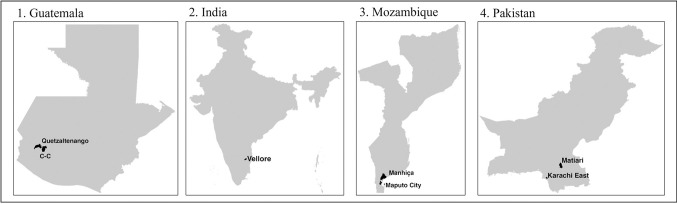
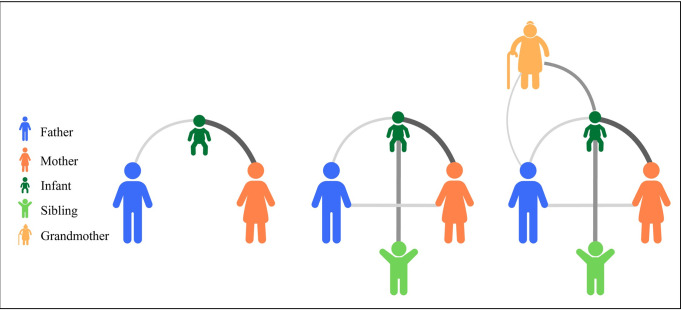
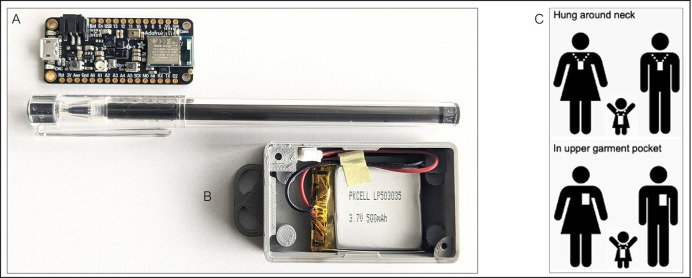
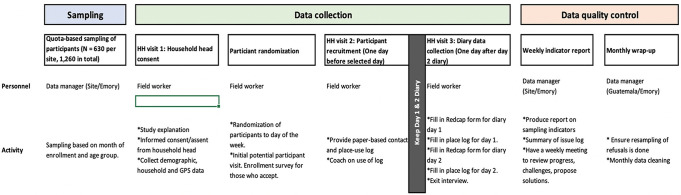
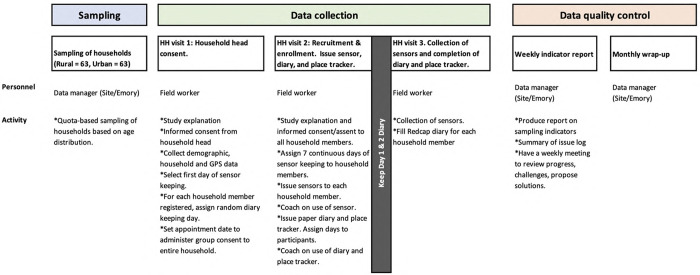
To address this gap, we will collect qualitative and quantitative data from eight study sites (encompassing both rural and urban settings) across Guatemala, India, Pakistan, and Mozambique. We will conduct focus group discussions and cognitive interviews to assess the feasibility and acceptability of our data collection tools at each site. Thematic and rapid analyses will help to identify key themes and categories through coding, guiding the design of quantitative data collection tools (enrollment survey, contact diaries, exit survey, and wearable proximity sensors) and the implementation of study procedures. We will create three age-specific contact matrices (physical, nonphysical, and both) at each study site using data from standardized contact diaries to characterize the patterns of social mixing. Regression analysis will be conducted to identify key drivers of contacts. We will comprehensively profile the frequency, duration, and intensity of infants' interactions with household members using high resolution data from the proximity sensors and calculating infants' proximity score (fraction of time spent by each household member in proximity with the infant, over the total infant contact time) for each household member.
Our qualitative data yielded insights into the perceptions and acceptability of contact diaries and wearable proximity sensors for collecting social mixing data in LMICs. The quantitative data will allow a more accurate representation of human interactions that lead to the transmission of pathogens through close contact in LMICs. Our findings will provide more appropriate social mixing data for parameterizing mathematical models of LMIC populations. Our study tools could be adapted for other studies.
中低收入国家(LMICs)承担着不成比例的传染病负担。社会互动数据为传染病模型和疾病预防策略提供信息。年龄、文化和地理位置的人口统计学和接触模式的变化对传染病动态和病原体传播有重大影响。LMICs 缺乏足够的社会互动数据来进行传染病建模。
为了解决这一差距,我们将从危地马拉、印度、巴基斯坦和莫桑比克的八个研究地点(包括农村和城市环境)收集定性和定量数据。我们将在每个地点进行焦点小组讨论和认知访谈,以评估我们的数据收集工具的可行性和可接受性。主题和快速分析将通过编码帮助确定关键主题和类别,指导定量数据收集工具(登记调查、接触日记、退出调查和可穿戴式接近传感器)的设计和研究程序的实施。我们将使用标准化接触日记的数据,在每个研究地点创建三个年龄特定的接触矩阵(身体、非身体和两者),以描述社会混合的模式。回归分析将用于确定接触的关键驱动因素。我们将使用接近传感器的高分辨率数据全面描述婴儿与家庭成员之间互动的频率、持续时间和强度,并计算每个家庭成员的婴儿接近得分(每个家庭成员在接近婴儿的时间内所占的时间分数,在婴儿总接触时间内)。
我们的定性数据提供了关于接触日记和可穿戴式接近传感器在 LMICs 中收集社会混合数据的看法和可接受性的见解。定量数据将更准确地代表导致病原体通过密切接触在 LMICs 中传播的人际互动。我们的发现将为参数化 LMIC 人群数学模型提供更合适的社会混合数据。我们的研究工具可以为其他研究改编。