Kennedy Uttara, Paterson Mandy Bryce Allan, Magalhaes Ricardo Soares, Callaghan Thomas, Clark Nicholas
UQ School of Veterinary Science, The University of Queensland, Gatton, QSD 4343, Australia.
RSPCA Queensland, Animal Care Campus, Wacol, QSD 4076, Australia.
Vet Sci. 2024 May 22;11(6):232. doi: 10.3390/vetsci11060232.
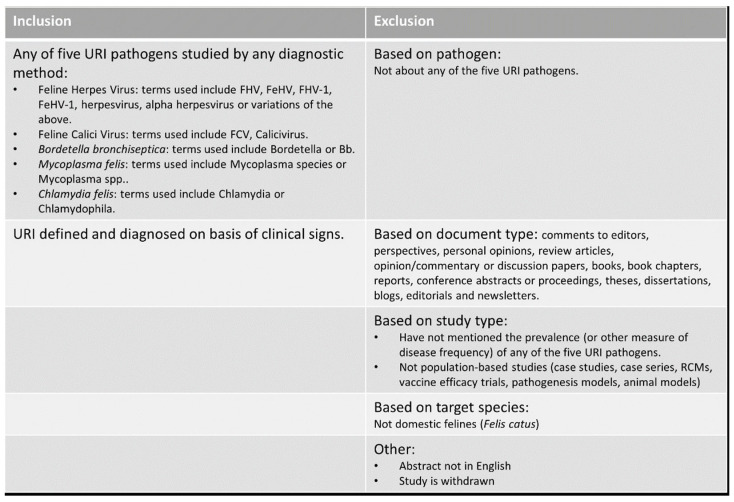
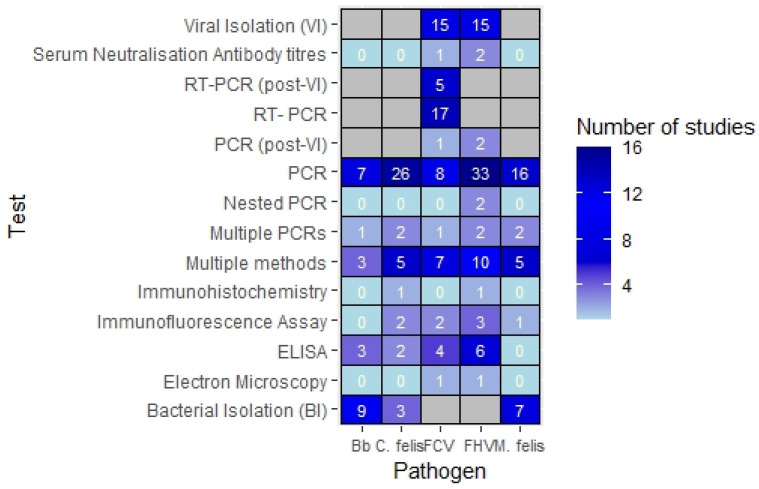
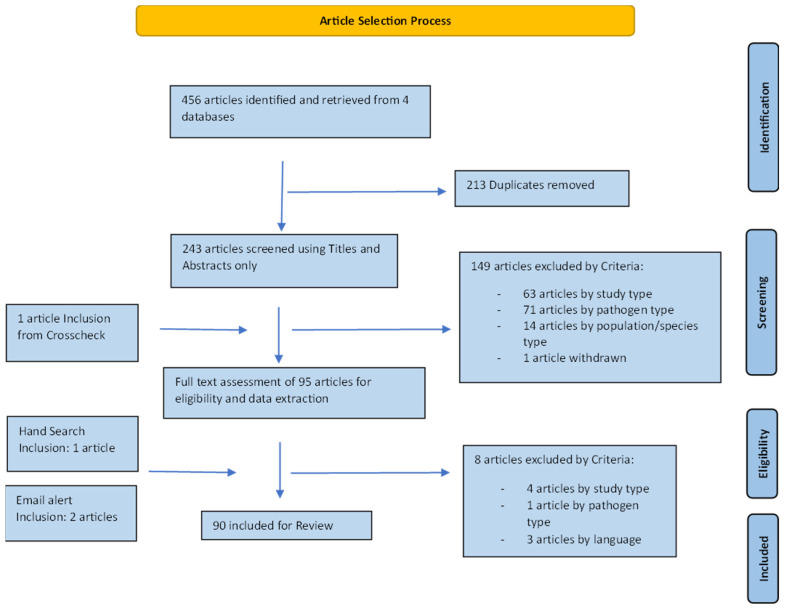
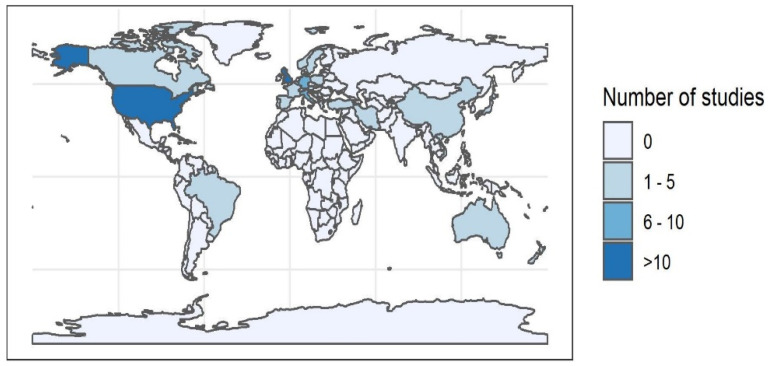
Feline upper respiratory tract infections (URI) are of concern, especially in animal shelters. This scoping review identifies epidemiological literature on URI as caused by feline herpesvirus (FHV), feline calicivirus (FCV), , and . Four databases were searched, studies were screened, and data were extracted on a standardised template. We described patterns in spatial locations of the studies, the range of pathogens and diagnostic tests, cohort characteristics and the findings of risk factor analyses. A total of 90 articles were selected for final data extraction. There was diversity in sampling methods, precluding quantitative meta-analysis of prevalence reports. FHV was most frequently studied ( = 57/90). The most popular sampling site was conjunctival swabbing ( = 43). Most studies ( = 57) used polymerase chain reaction (PCR) to confirm diagnosis. Approximately one-third ( = 32/90) of the studies included sheltered felines. This review explores the current state of knowledge on the epidemiology and risk factors of feline URI. Assessing the impact of risk factors has the potential to alleviate the severity of disease, especially in shelters; however, the results were not easily pooled as the studies used inconsistent approaches. We present recommendations for ongoing epidemiological research on feline URI to provide a more structured framework and define research questions for future systematic reviews.
猫上呼吸道感染(URI)令人担忧,尤其是在动物收容所。本范围综述确定了关于由猫疱疹病毒(FHV)、猫杯状病毒(FCV)以及[此处原文缺失两种病原体名称]引起的URI的流行病学文献。检索了四个数据库,筛选了研究,并在标准化模板上提取了数据。我们描述了研究的空间位置模式、病原体和诊断测试的范围、队列特征以及风险因素分析的结果。总共选择了90篇文章进行最终数据提取。抽样方法存在多样性,排除了对患病率报告进行定量荟萃分析的可能性。FHV是研究最频繁的(=57/90)。最常用的抽样部位是结膜拭子(=43)。大多数研究(=57)使用聚合酶链反应(PCR)来确诊。大约三分之一(=32/90)的研究纳入了收容所的猫。本综述探讨了猫URI流行病学和风险因素的当前知识状态。评估风险因素的影响有可能减轻疾病的严重程度,尤其是在收容所;然而,由于研究采用的方法不一致,结果不易汇总。我们提出了关于猫URI持续流行病学研究的建议,以提供一个更结构化的框架,并为未来的系统评价确定研究问题。