Haight Joseph A, Koppenhafer Stacia L, Geary Elizabeth L, Gordon David J
Carver College of Medicine, University of Iowa, Iowa City, IA, United States.
Department of Pediatrics, Division of Pediatric Hematology/Oncology, University of Iowa, Iowa City, IA, United States.
Front Oncol. 2024 Jun 12;14:1394653. doi: 10.3389/fonc.2024.1394653. eCollection 2024.
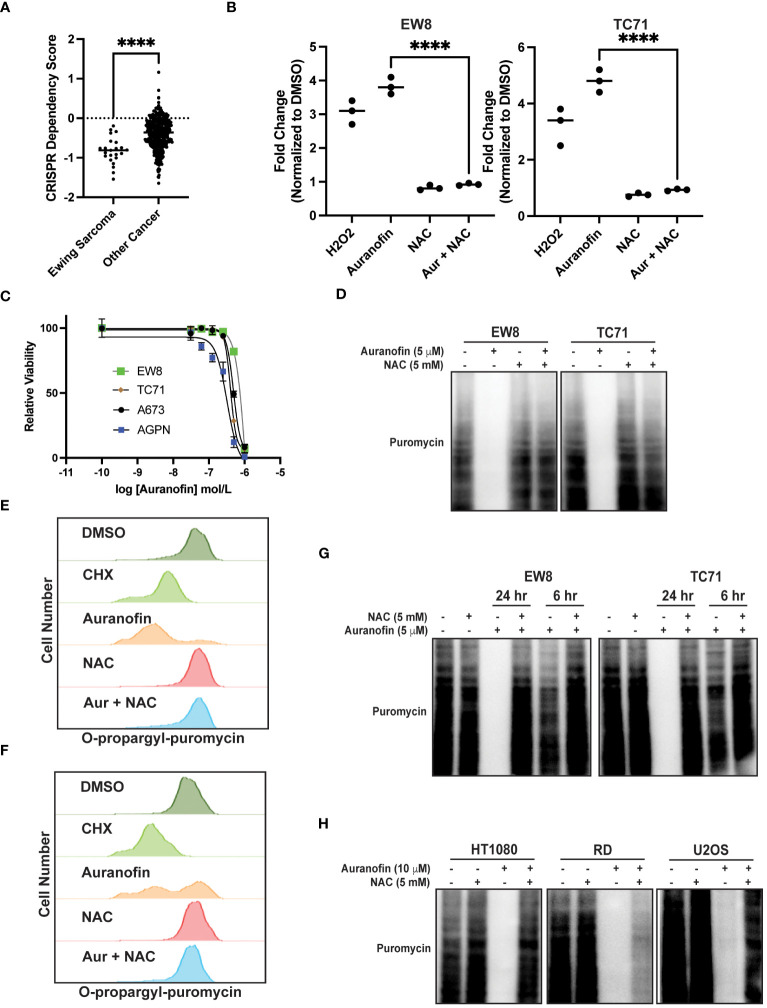
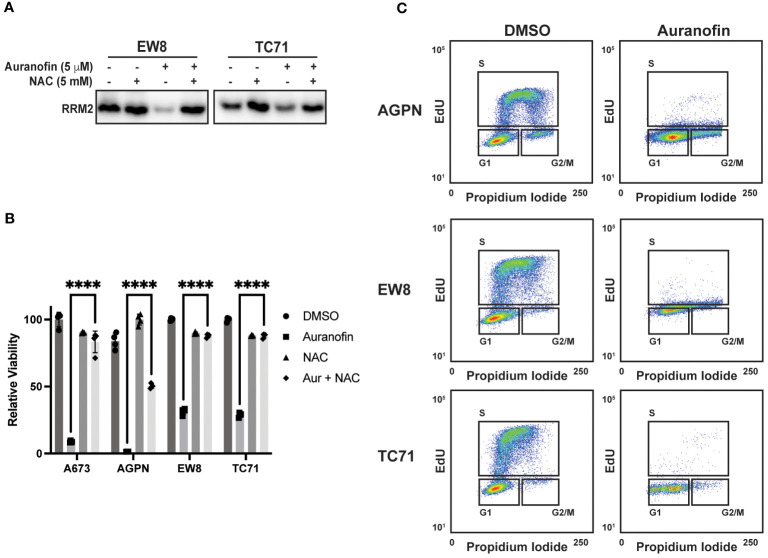
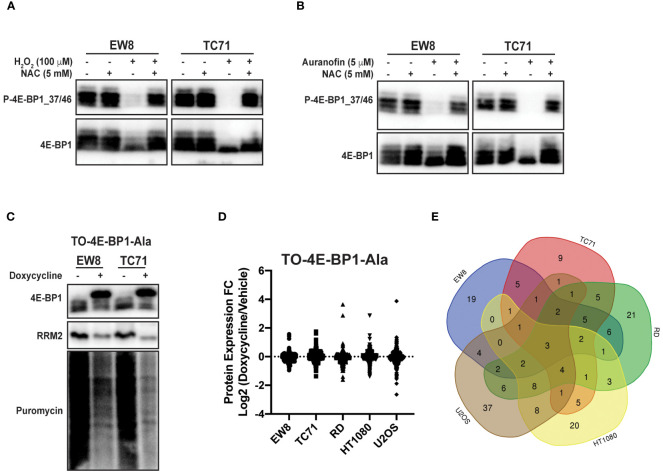
Novel therapeutic approaches are needed for the treatment of Ewing sarcoma tumors. We previously identified that Ewing sarcoma cell lines are sensitive to drugs that inhibit protein translation. However, translational and therapeutic approaches to inhibit protein synthesis in tumors are limited. In this work, we identified that reactive oxygen species, which are generated by a wide range of chemotherapy and other drugs, inhibit protein synthesis and reduce the level of critical proteins that support tumorigenesis in Ewing sarcoma cells. In particular, we identified that both hydrogen peroxide and auranofin, an inhibitor of thioredoxin reductase and regulator of oxidative stress and reactive oxygen species, activate the repressor of protein translation 4E-BP1 and reduce the levels of the oncogenic proteins RRM2 and PLK1 in Ewing and other sarcoma cell lines. These results provide novel insight into the mechanism of how ROS-inducing drugs target cancer cells via inhibition of protein translation and identify a mechanistic link between ROS and the DNA replication (RRM2) and cell cycle regulatory (PLK1) pathways.
尤因肉瘤肿瘤的治疗需要新的治疗方法。我们之前发现尤因肉瘤细胞系对抑制蛋白质翻译的药物敏感。然而,抑制肿瘤中蛋白质合成的翻译和治疗方法有限。在这项研究中,我们发现由多种化疗药物和其他药物产生的活性氧会抑制蛋白质合成,并降低支持尤因肉瘤细胞肿瘤发生的关键蛋白水平。特别是,我们发现过氧化氢和金诺芬(一种硫氧还蛋白还原酶抑制剂以及氧化应激和活性氧的调节剂)均可激活蛋白质翻译抑制因子4E-BP1,并降低尤因肉瘤细胞系和其他肉瘤细胞系中致癌蛋白RRM2和PLK1的水平。这些结果为活性氧诱导药物如何通过抑制蛋白质翻译靶向癌细胞的机制提供了新的见解,并确定了活性氧与DNA复制(RRM2)和细胞周期调节(PLK1)途径之间的机制联系。