Alonso Francisco, Esteban Cristina, Faus Mireia, Useche Sergio A
INTRAS (Research Institute on Traffic and Road Safety), University of Valencia, Spain.
Heliyon. 2024 Jun 4;10(11):e32363. doi: 10.1016/j.heliyon.2024.e32363. eCollection 2024 Jun 15.
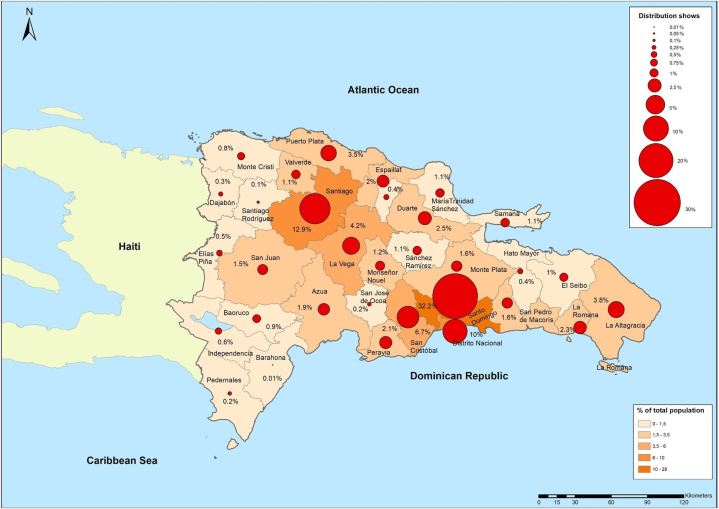
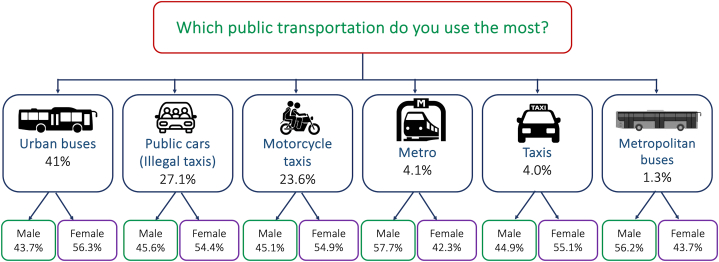
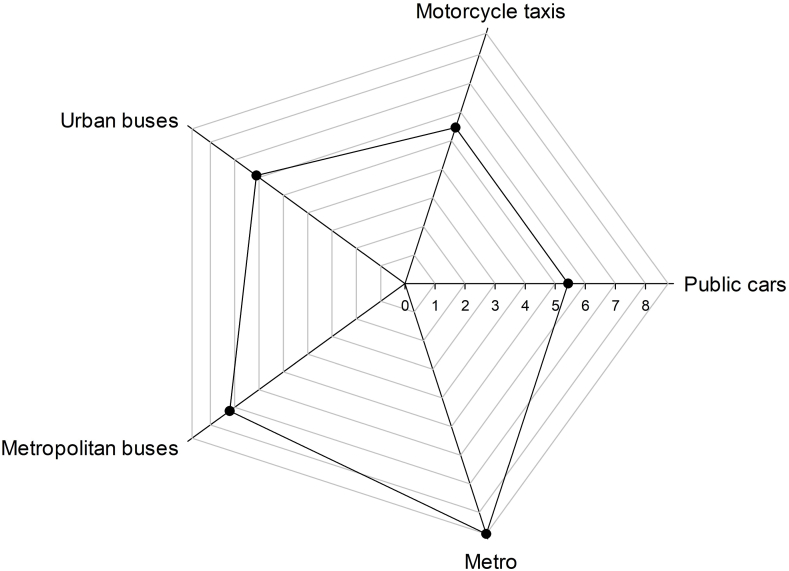
and middle-income countries, key constraints such as dense traffic flows, jams, and pollution constitute frequent issues that potentially explain many negative consequences in terms of (e.g.) efficiency, sustainability, and mobility safety. In this regard, recent evidence supports the idea that fostering public transportation is crucial to offering solutions for this difficult panorama. However, transport mode-related choices and shifts have been proven to depend highly on key perceptions and needs of potential users. The aim of this study was to analyze a set of key users' perceptions, usage, and perceived quality of public transportation in the Dominican Republic, as well as to explore the most relevant features for Dominicans from the "desired quality" paradigm. For this research at a national level, data retrieved from a nationwide sample of 1254 inhabitants of the Dominican Republic was used, proportional to the ONE census in terms of sex, age, habitat, and region. Overall, the results show that the general quality of transportation is 6.70 points out of 10. The use of public transportation in the Dominican Republic has a medium-low rating and is very focused on urban buses (41 %) and public cars (27.1 %). Nonetheless, the metro remains the most highly rated means of transport ( = 8.75). Concerning the quality variables analyzed, the highest scores are for accessibility ( = 7.08) and frequency of service ( = 6.99). Further, Dominicans focus on improving comfort, vehicle conditions, and safety. This study constitutes a first approximation to the desired quality of public transportation for Dominican Citizens, which may help policymakers scope user-based needs in public transportation systems and encourage a more frequent (and friendlier) public transport use in the country.
在中等收入国家,诸如密集的交通流量、拥堵和污染等关键制约因素构成了常见问题,这些问题可能在效率、可持续性和出行安全等方面解释许多负面后果。在这方面,最近的证据支持了这样一种观点,即促进公共交通对于解决这一棘手局面至关重要。然而,已证明与交通方式相关的选择和转变高度依赖潜在用户的关键认知和需求。本研究的目的是分析多米尼加共和国一组关键用户对公共交通的认知、使用情况和感知质量,并从“期望质量”范式中探索对多米尼加人最相关的特征。对于这项全国性研究,使用了从多米尼加共和国1254名居民的全国性样本中检索到的数据,这些数据在性别、年龄、居住环境和地区方面与国家统计局的普查成比例。总体而言,结果表明交通总体质量在10分制中为6.70分。多米尼加共和国公共交通的使用率评级为中低水平,并且非常集中在城市公交车(41%)和公共汽车(27.1%)上。尽管如此,地铁仍然是评分最高的交通方式(=8.75)。关于所分析的质量变量,得分最高的是可达性(=7.08)和服务频率(=6.99)。此外,多米尼加人注重提高舒适度、车辆状况和安全性。本研究首次大致了解了多米尼加公民对公共交通的期望质量,这可能有助于政策制定者确定公共交通系统中基于用户的需求,并鼓励该国更频繁(且更友好)地使用公共交通。