Millennium Institute on Immunology and Immunotherapy, Santiago, Chile.
Departamento de Ciencias Biológicas, Facultad de Ciencias de La Vida, Universidad Andrés Bello, Santiago, Chile.
Commun Biol. 2024 Jul 4;7(1):811. doi: 10.1038/s42003-024-06486-x.
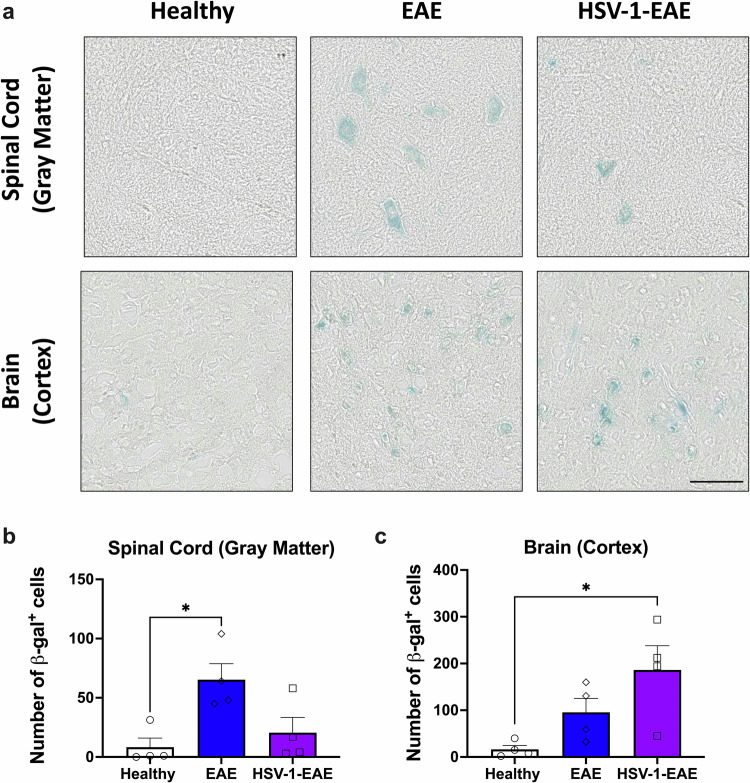
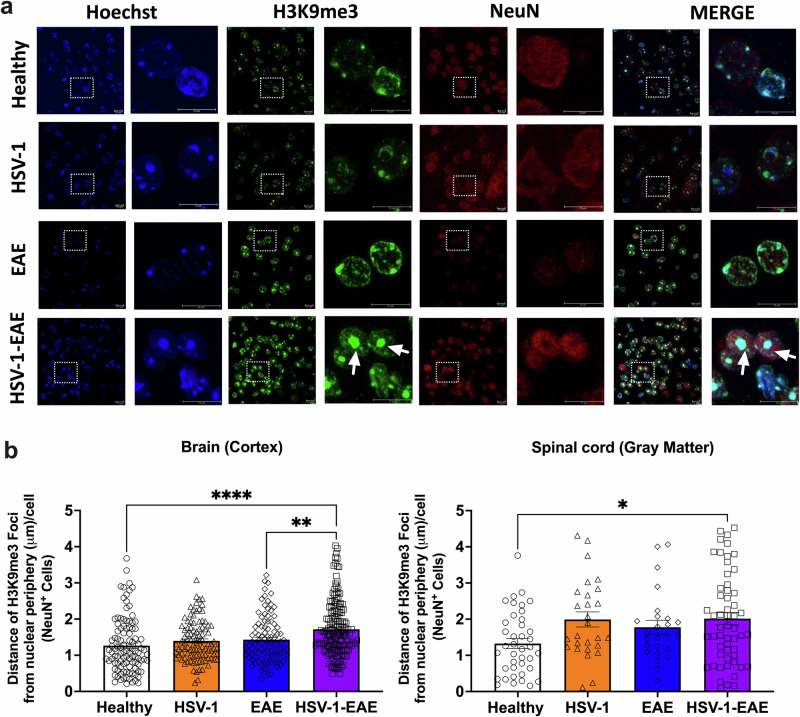
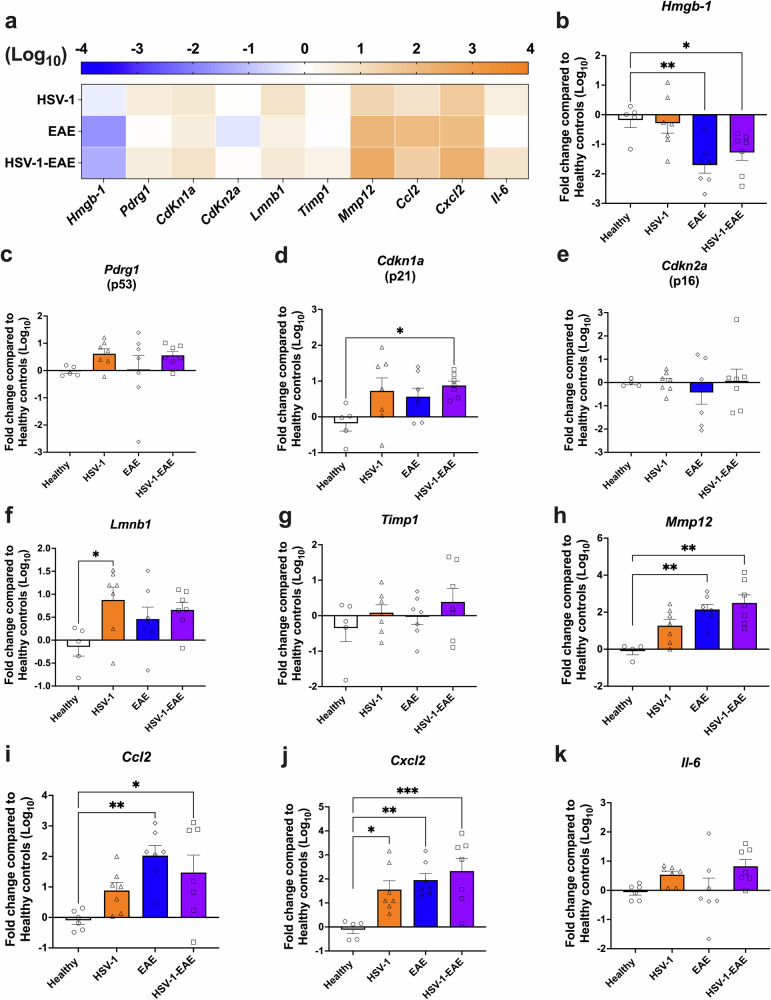
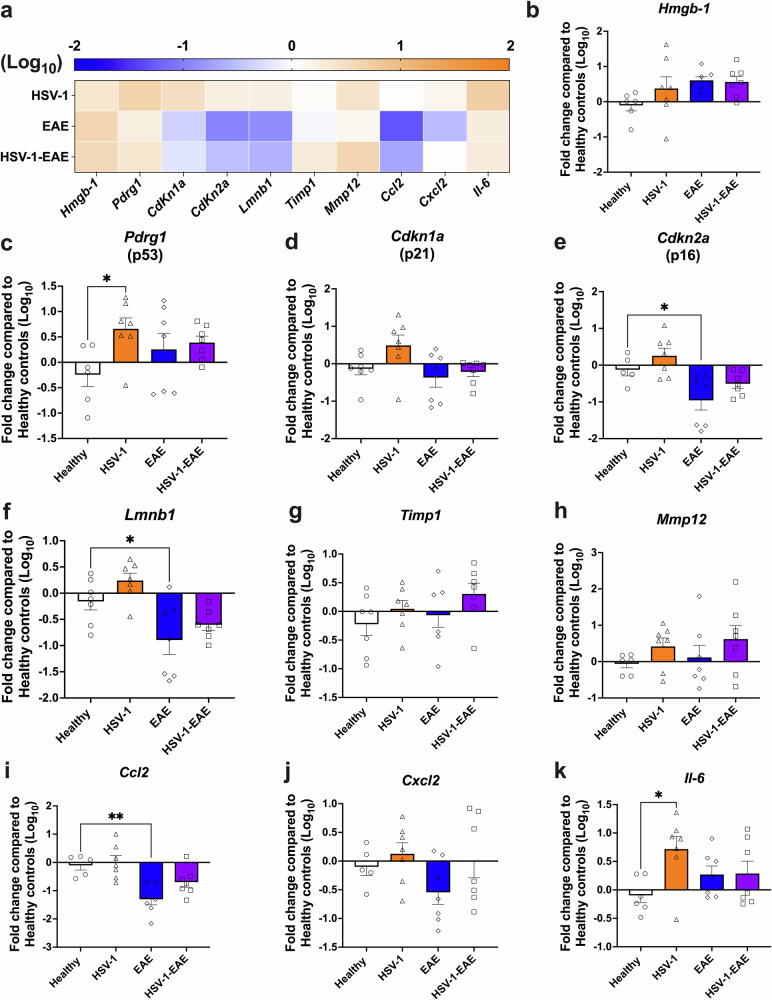
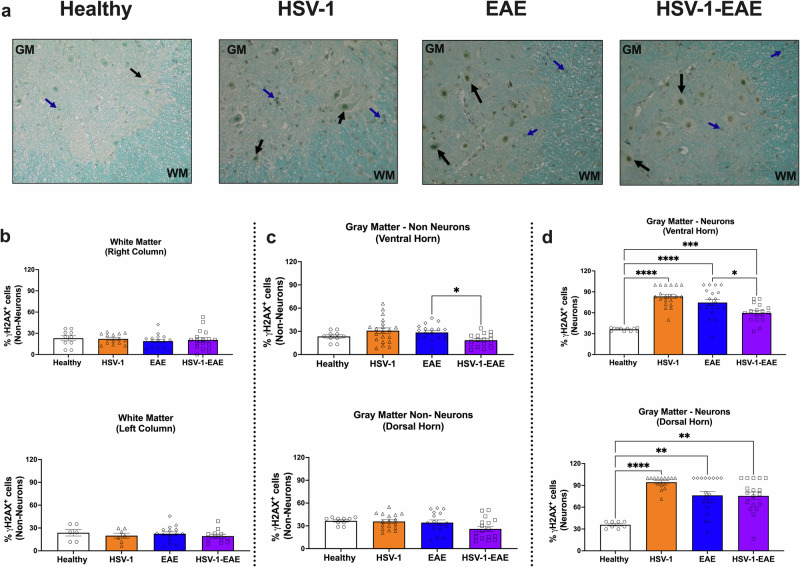
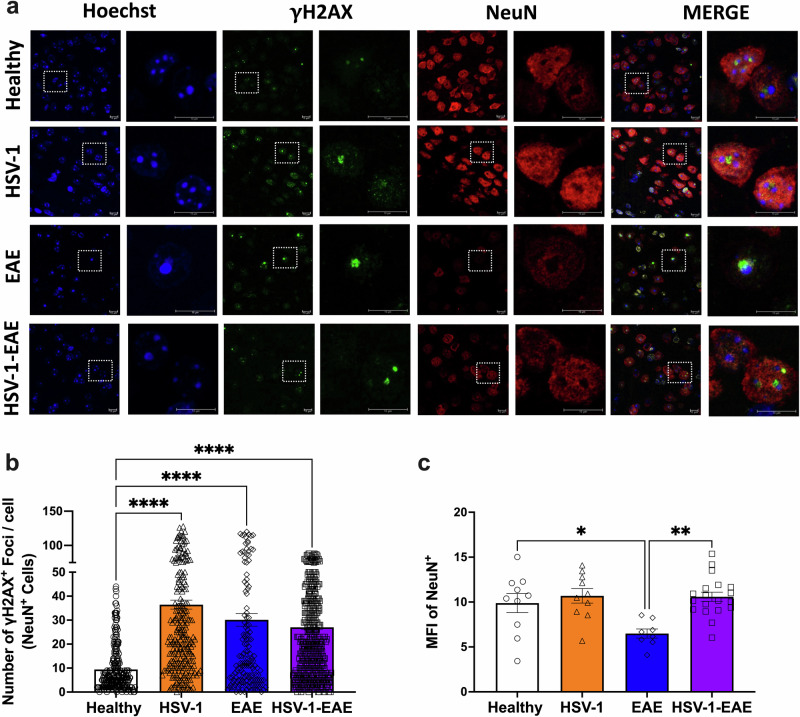
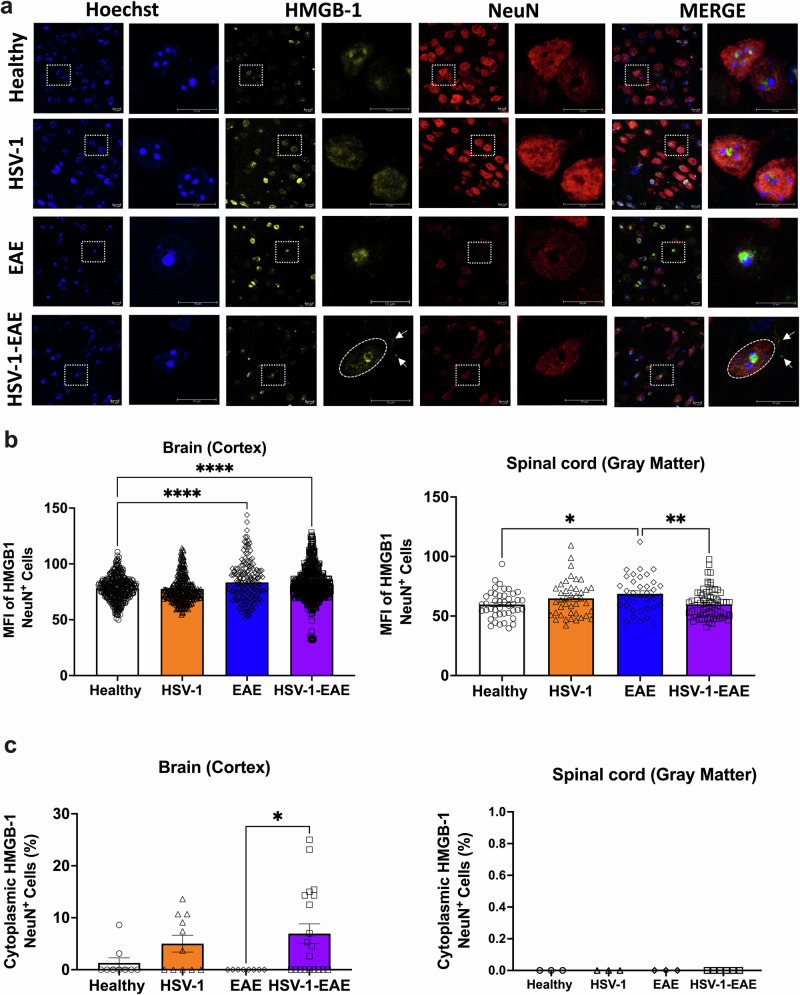
Experimental autoimmune encephalomyelitis (EAE) is a demyelinating disease affecting the central nervous system (CNS) in animals that parallels several clinical and molecular traits of multiple sclerosis in humans. Herpes simplex virus type 1 (HSV-1) infection mainly causes cold sores and eye diseases, yet eventually, it can also reach the CNS, leading to acute encephalitis. Notably, a significant proportion of healthy individuals are likely to have asymptomatic HSV-1 brain infection with chronic brain inflammation due to persistent latent infection in neurons. Because cellular senescence is suggested as a potential factor contributing to the development of various neurodegenerative disorders, including multiple sclerosis, and viral infections may induce a premature senescence state in the CNS, potentially increasing susceptibility to such disorders, here we examine the presence of senescence-related markers in the brains and spinal cords of mice with asymptomatic HSV-1 brain infection, EAE, and both conditions. Across all scenarios, we find a significant increases of senescence biomarkers in the CNS with some differences depending on the analyzed group. Notably, some senescence biomarkers are exclusively observed in mice with the combined conditions. These results indicate that asymptomatic HSV-1 brain infection and EAE associate with a significant expression of senescence biomarkers in the CNS.
实验性自身免疫性脑脊髓炎(EAE)是一种影响动物中枢神经系统(CNS)的脱髓鞘疾病,与人类多发性硬化症的若干临床和分子特征相似。单纯疱疹病毒 1 型(HSV-1)感染主要引起唇疱疹和眼病,但最终也可能累及中枢神经系统,导致急性脑炎。值得注意的是,由于神经元持续潜伏感染,相当一部分健康个体可能存在无症状的 HSV-1 脑感染和慢性脑炎症。由于细胞衰老被认为是导致多种神经退行性疾病(包括多发性硬化症)发展的潜在因素,并且病毒感染可能导致中枢神经系统提前进入衰老状态,从而增加患此类疾病的易感性,因此,我们在此研究了无症状 HSV-1 脑感染、EAE 以及这两种情况的小鼠大脑和脊髓中与衰老相关的标志物的存在情况。在所有情况下,我们都发现 CNS 中的衰老生物标志物显著增加,并且根据分析的组别存在一些差异。值得注意的是,一些衰老生物标志物仅在同时存在两种情况的小鼠中观察到。这些结果表明,无症状 HSV-1 脑感染和 EAE 与 CNS 中衰老生物标志物的显著表达有关。