
人体头颈部模型及其应用阈值:一篇叙述性综述。
Human head-neck model and its application thresholds: a narrative review.
作者信息
Liang Ziyang, Wu Ke, Tian Tengfei, Mo Fuhao
机构信息
State Key Laboratory of Advanced Design and Manufacturing Technology for Vehicle, Hunan University.
Xiangjiang Laboratory, Changsha, Hunan.
出版信息
Int J Surg. 2025 Jan 1;111(1):1042-1070. doi: 10.1097/JS9.0000000000001941.
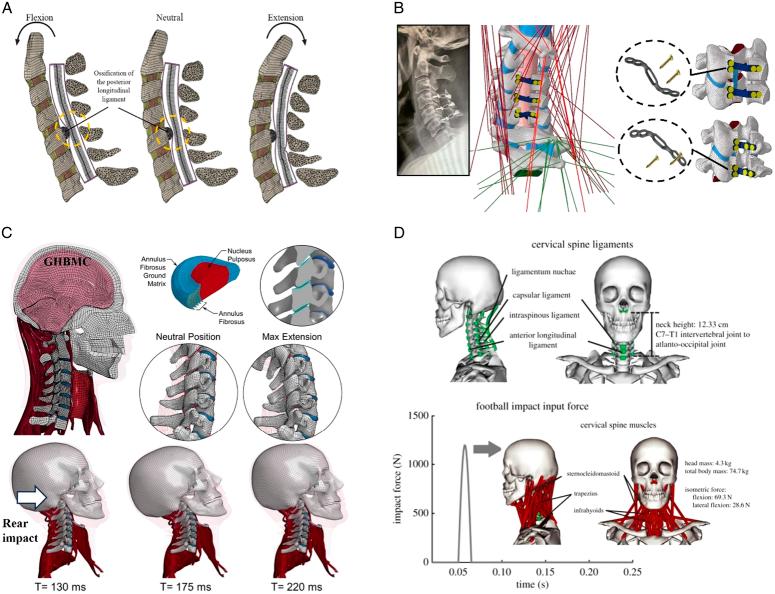
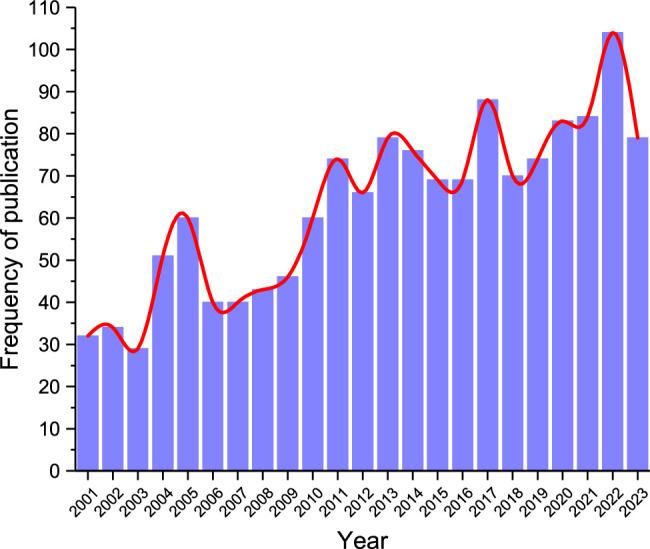
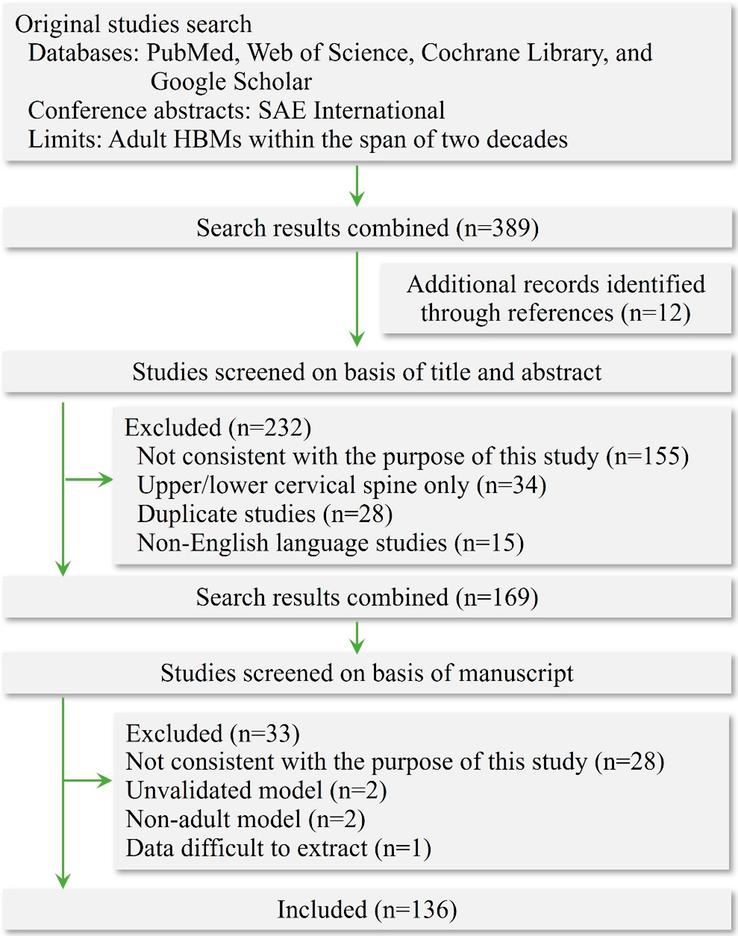
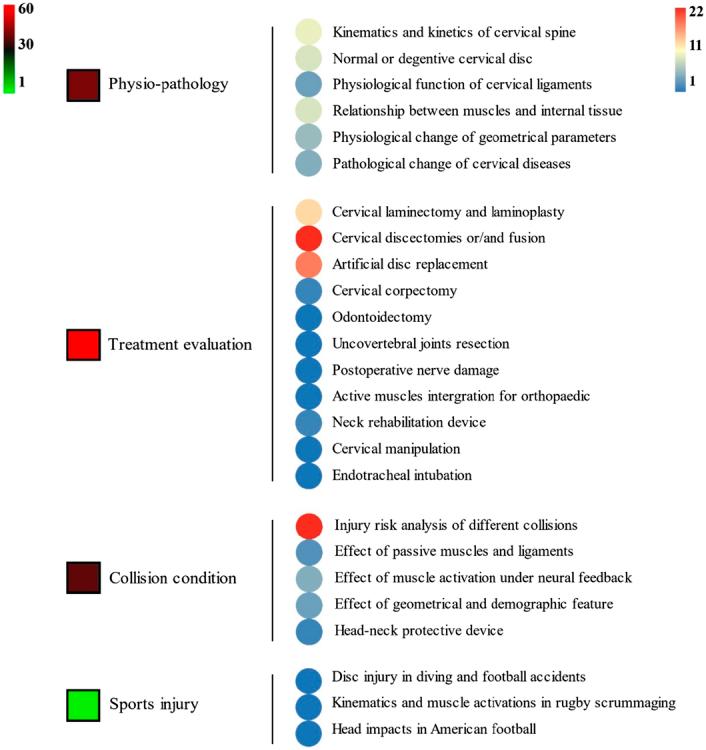
There have been many studies on human head-neck biomechanical models in the last two decades, and the associated modelling techniques were constantly evolving at the same time. Computational approaches have been widely leveraged, in parallel to conventional physical tests, to investigate biomechanics and injuries of the head-neck system in fields like the automotive industry, orthopedic, sports medicine, etc. The purpose of this manuscript is to provide a global review of the existing knowledge related to the modelling approaches, structural and biomechanical characteristics, validation, and application of the present head-neck models. This endeavor aims to support further enhancements and validations in modelling practices, particularly addressing the lack of data for model validation, as well as to prospect future advances in terms of the topics. Seventy-four models subject to the proposed selection criteria are considered. Based on previously established and validated head-neck computational models, most of the studies performed in-depth investigations of included cases, which revolved around four specific subjects: physiopathology, treatment evaluation, collision condition, and sports injury. Through the review of the recent 20 years of research, the summarized modelling information indicated existing deficiencies and future research topics, as well as provided references for subsequent head-neck model development and application.
在过去二十年里,已经有许多关于人体头颈部生物力学模型的研究,与此同时,相关的建模技术也在不断发展。与传统物理测试并行,计算方法已被广泛用于研究汽车工业、骨科、运动医学等领域中头颈部系统的生物力学和损伤情况。本手稿的目的是对与当前头颈部模型的建模方法、结构和生物力学特性、验证及应用相关的现有知识进行全面综述。这一努力旨在支持建模实践中的进一步改进和验证,特别是解决模型验证数据不足的问题,并展望该主题未来的进展。考虑了74个符合所提出选择标准的模型。基于先前建立并验证的头颈部计算模型,大多数研究对纳入的案例进行了深入研究,这些案例围绕四个特定主题展开:病理生理学、治疗评估、碰撞情况和运动损伤。通过回顾最近20年的研究,总结的建模信息指出了现有不足和未来研究主题,同时为后续头颈部模型的开发和应用提供了参考。
 Zotero 插件