Varga Marton Kristof, Moshammer Hanns, Atanyazova Oral
ZPH, Department of Environmental Health, Medical University of Vienna, ZPH, Kinderspitalgasse 15, 1090, Vienna, Austria.
Karakalpakstan Medical Institute, 230100, Nukus, Uzbekistan.
Wien Klin Wochenschr. 2025 Feb;137(3-4):79-88. doi: 10.1007/s00508-024-02396-4. Epub 2024 Jul 11.
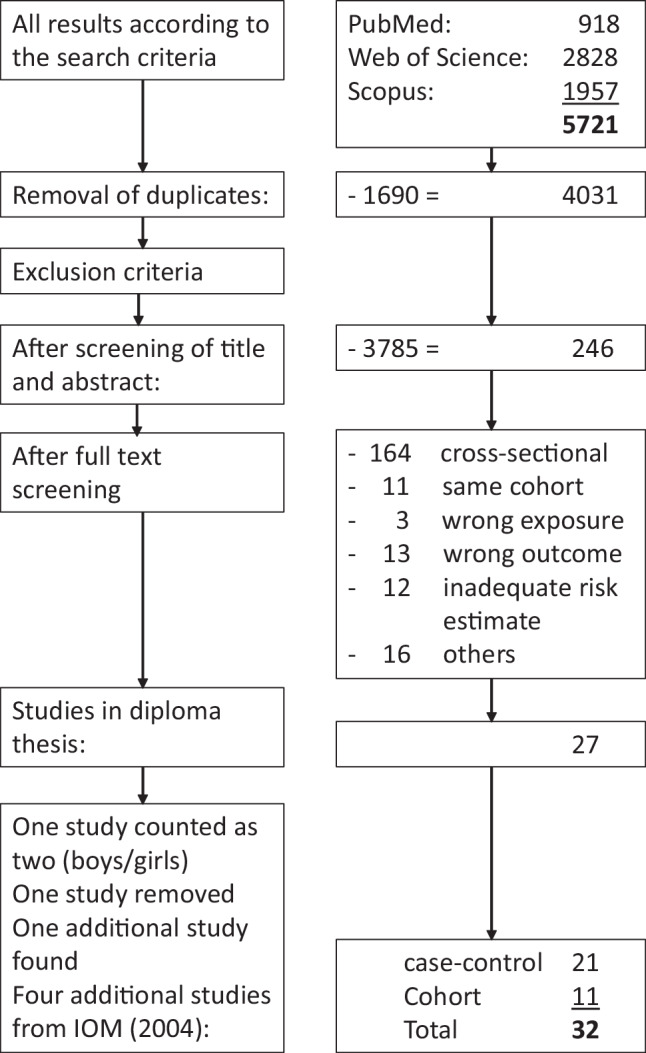
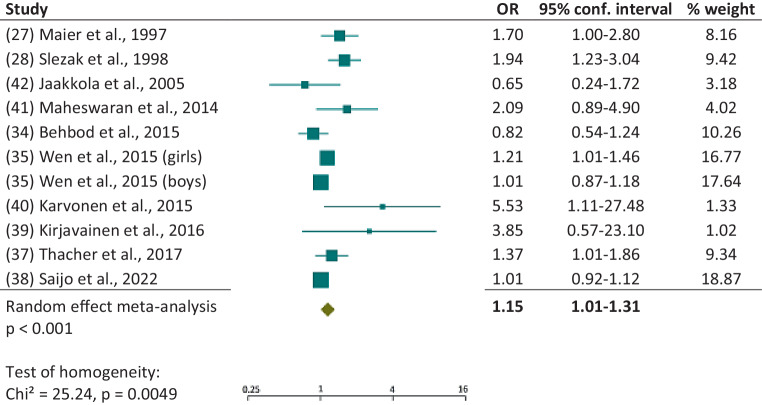
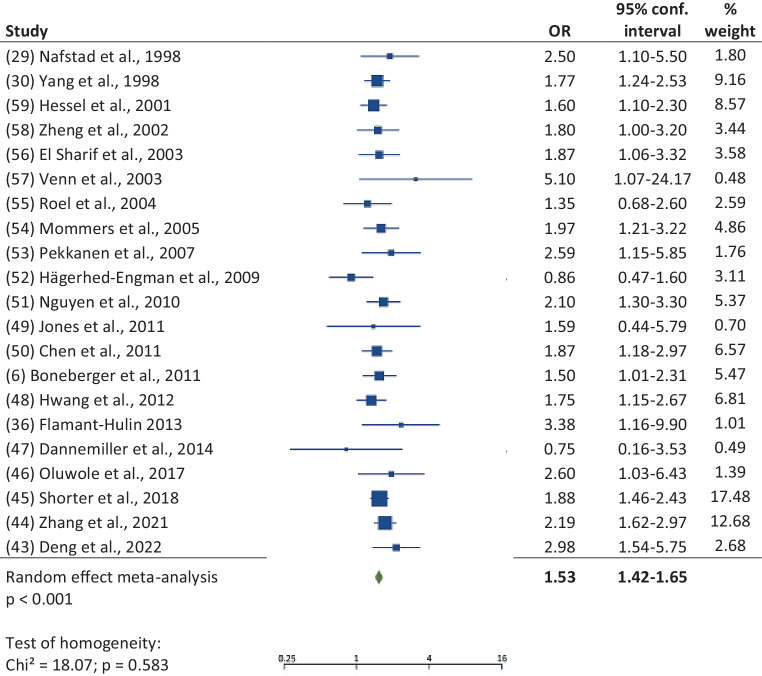
Asthma is a multifaceted and multicausal disease. Childhood asthma is strongly influenced by genetic traits and is characterized by hyperreactivity of the airways so that also unspecific triggers including moulds can trigger an asthma attack. Therefore, it is undisputed that moulds in the home can cause asthma attacks in asthmatic children. It is, however, unclear if mould in homes also induce the development of asthma. Because more and more severe attacks in asthmatic children living in mouldy homes might speed up the diagnosis of asthma, cross-sectional studies are not well-suited to differentiate between mould as a causative or only as a precipitating factor. Cross-sectional studies show an increased asthma risk and poorer lung function in children living in mouldy homes. To better understand the causal role of mould in homes, a systematic review was performed with random effects meta-analysis focusing on cohort and case-control studies only.We found 21 case-control and 11 cohort studies examining the association between mould at home and later advent of childhood asthma. According to the case-control studies, mouldy homes increase the risk of asthma by 53% (95 confidence interval [CI]: 42-65%) with no evidence of heterogeneity or publication bias. Risk estimates based on cohort studies were smaller with 15% (1-31%). The cohort studies also showed no publication bias but substantial heterogeneity (I = 60.5, p = 0.005). Heterogeneity could be partly explained by percentage of male children, age of participants, and publication year, but was not affected by study quality.In conclusion, living in mouldy homes during childhood seems to increase the risk of later developing bronchial asthma.
哮喘是一种多方面、多病因的疾病。儿童哮喘受遗传特征的影响很大,其特征是气道反应过度,因此包括霉菌在内的非特异性触发因素都可能引发哮喘发作。因此,家庭中的霉菌会引发哮喘儿童的哮喘发作这一点是毋庸置疑的。然而,家庭中的霉菌是否也会诱发哮喘的发生尚不清楚。由于生活在有霉菌家庭中的哮喘儿童发作越来越严重可能会加快哮喘的诊断,横断面研究不太适合区分霉菌是致病因素还是仅仅是诱发因素。横断面研究表明,生活在有霉菌家庭中的儿童患哮喘的风险增加,肺功能较差。为了更好地了解家庭中霉菌的因果作用,我们进行了一项系统评价,并采用随机效应荟萃分析方法,仅关注队列研究和病例对照研究。我们发现有21项病例对照研究和11项队列研究探讨了家庭霉菌与儿童哮喘后期发病之间的关联。根据病例对照研究,有霉菌的家庭使哮喘风险增加53%(95%置信区间[CI]:42 - 65%),没有异质性或发表偏倚的证据。基于队列研究的风险估计较小,为15%(1 - 31%)。队列研究也没有显示出发表偏倚,但存在显著异质性(I = 60.5,p = 0.005)。异质性部分可以由男童比例、参与者年龄和发表年份来解释,但不受研究质量的影响。总之,如果儿童时期生活在有霉菌的家庭中,后期患支气管哮喘的风险似乎会增加。