Division of Pharmacology and Toxicology, The University of Texas at Austin, Austin, TX 78712, USA.
Int J Mol Sci. 2024 Jun 23;25(13):6887. doi: 10.3390/ijms25136887.
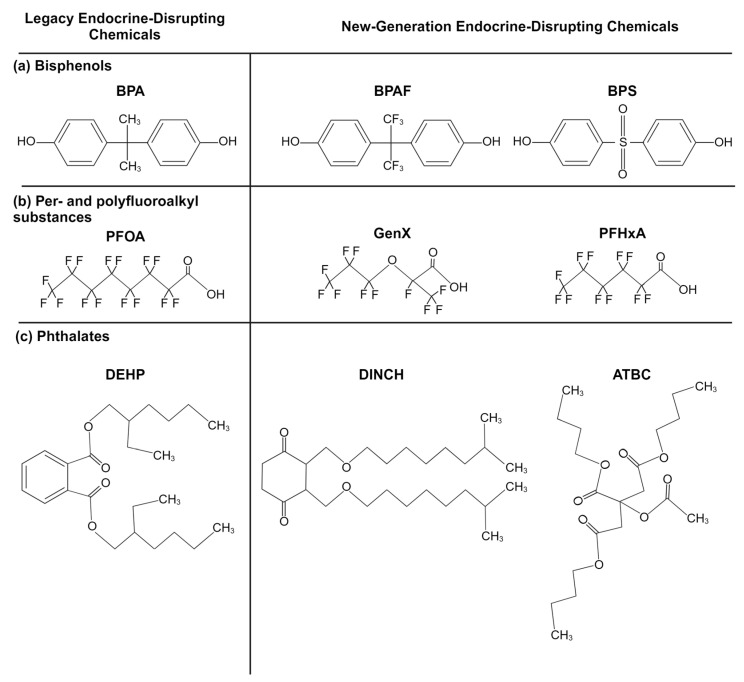
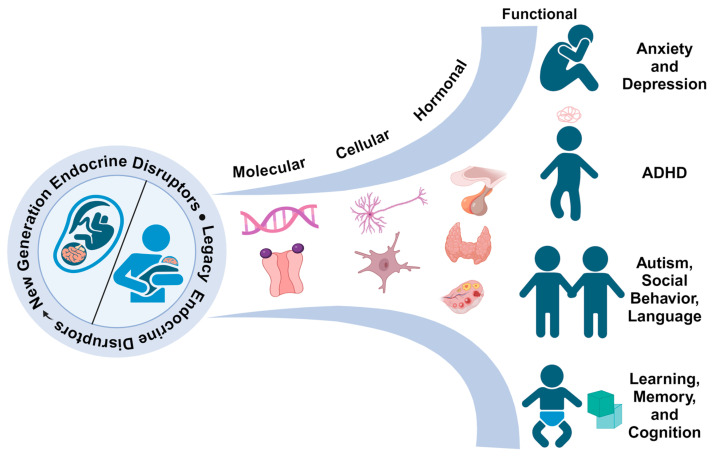
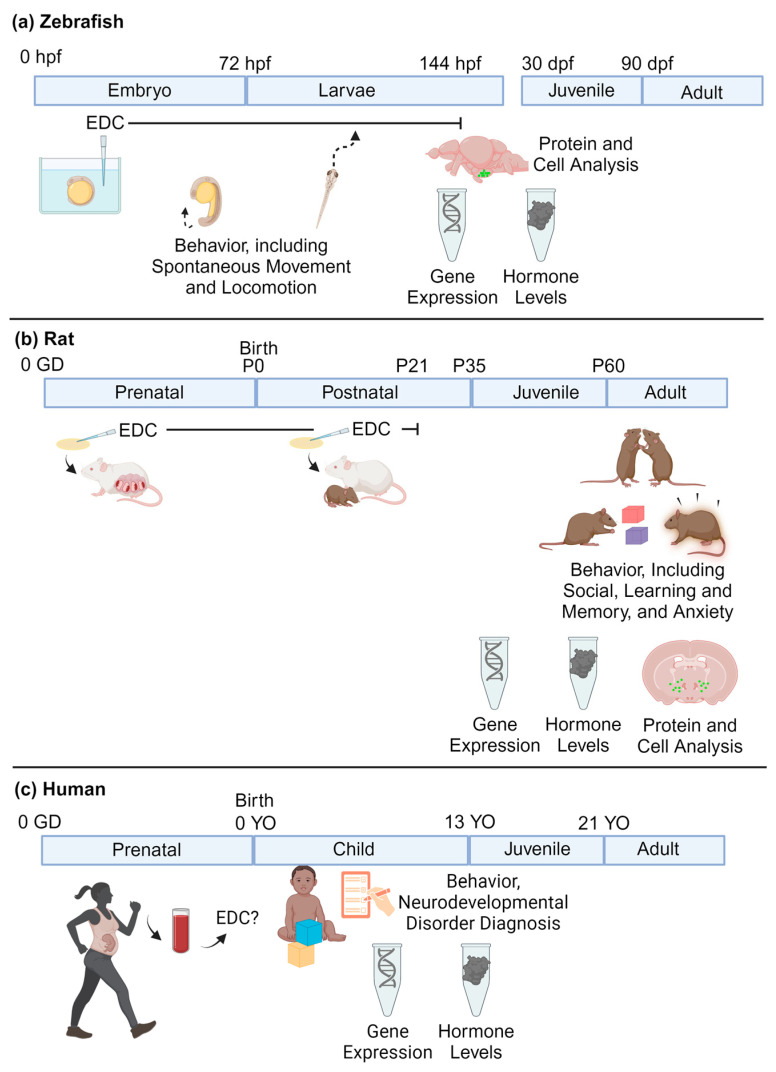
In recent decades, emerging evidence has identified endocrine and neurologic health concerns related to exposure to endocrine-disrupting chemicals (EDCs), including bisphenol A (BPA), certain per- and polyfluoroalkyl compounds (PFASs), and phthalates. This has resulted in consumer pressure to remove these chemicals from the market, especially in food-contact materials and personal care products, driving their replacement with structurally or functionally similar substitutes. However, these "new-generation" chemicals may be just as or more harmful than their predecessors and some have not received adequate testing. This review discusses the research on early-life exposures to new-generation bisphenols, PFASs, and phthalates and their links to neurodevelopmental and behavioral alterations in zebrafish, rodents, and humans. As a whole, the evidence suggests that BPA alternatives, especially BPAF, and newer PFASs, such as GenX, can have significant effects on neurodevelopment. The need for further research, especially regarding phthalate replacements and bio-based alternatives, is briefly discussed.
近几十年来,越来越多的证据表明,接触内分泌干扰化学物质(EDCs)会对内分泌和神经系统健康造成影响,这些化学物质包括双酚 A(BPA)、某些全氟和多氟烷基物质(PFASs)以及邻苯二甲酸酯。这导致消费者强烈要求将这些化学物质从市场上移除,尤其是在食品接触材料和个人护理产品中,这促使它们被结构或功能相似的替代品所取代。然而,这些“新一代”化学物质可能与它们的前身一样或更具危害性,而且有些化学物质还没有经过充分的测试。本综述讨论了关于新一代双酚、PFASs 和邻苯二甲酸酯在斑马鱼、啮齿动物和人类中的早期暴露及其与神经发育和行为改变的关系的研究。总的来说,证据表明 BPA 的替代品,尤其是 BPAF,以及更新的 PFASs,如 GenX,可能对神经发育有重大影响。简要讨论了进一步研究的必要性,特别是关于邻苯二甲酸酯替代品和基于生物的替代品的研究。