Technology and Medical Imaging Laboratory, Faculty of Medicine Monastir, University of Monastir, Monastir 5019, Tunisia.
National Engineering School of Sousse, University of Sousse, BP 264 Erriyadh, Sousse 4023, Tunisia.
Sensors (Basel). 2024 Jun 30;24(13):4256. doi: 10.3390/s24134256.
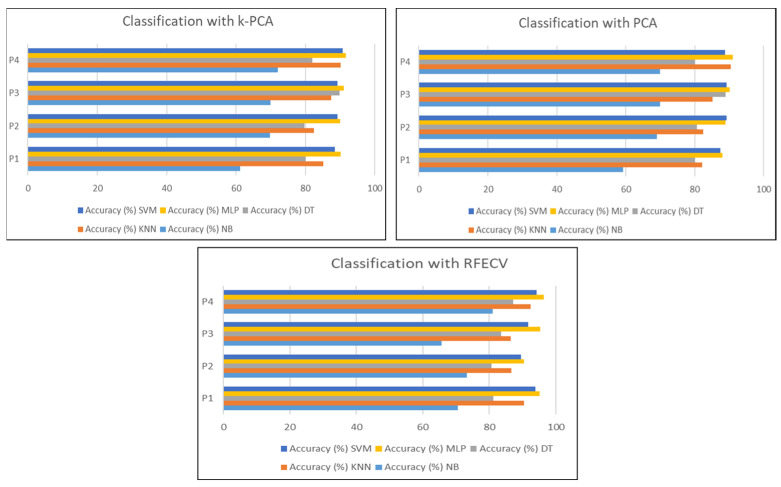
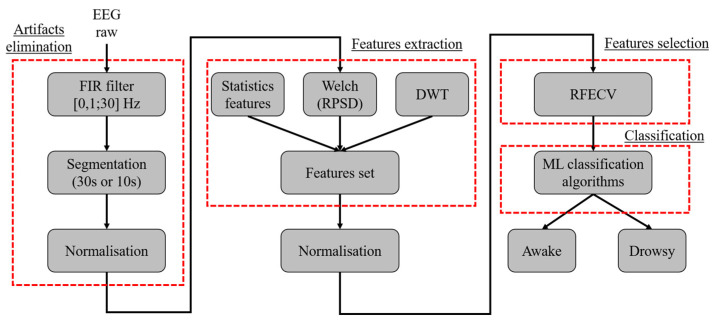
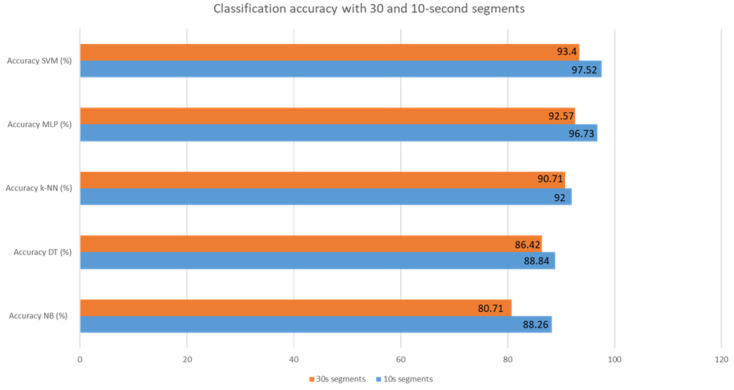
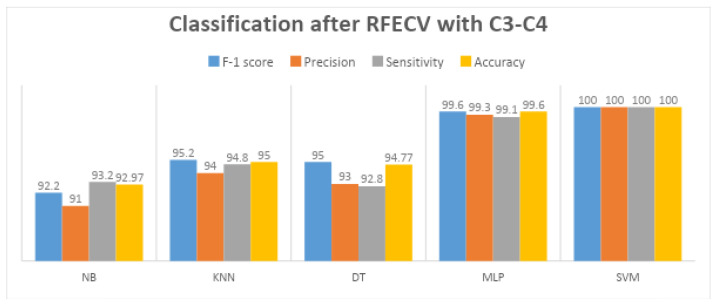
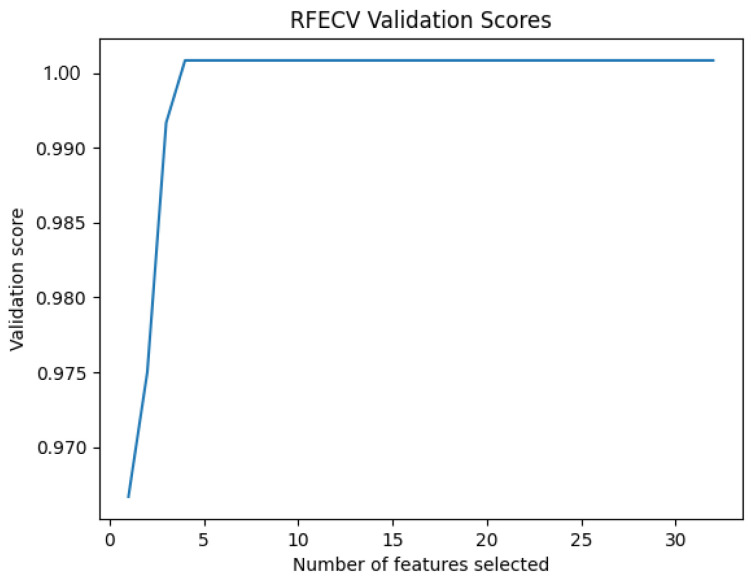
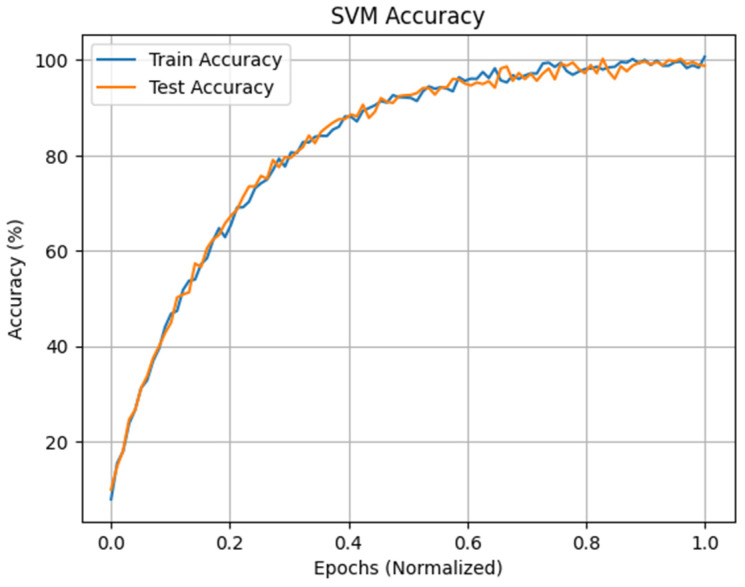
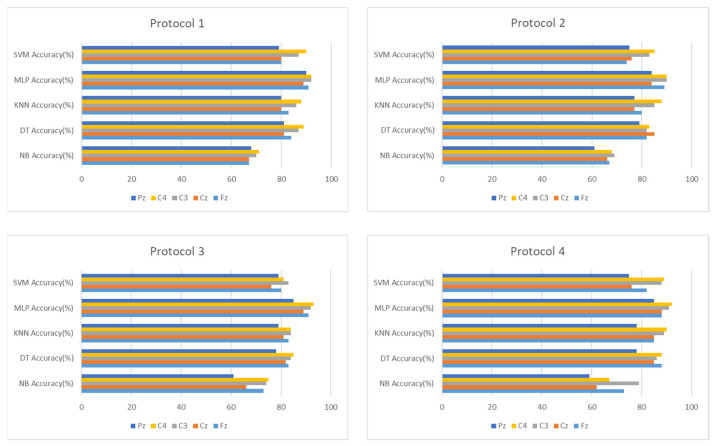
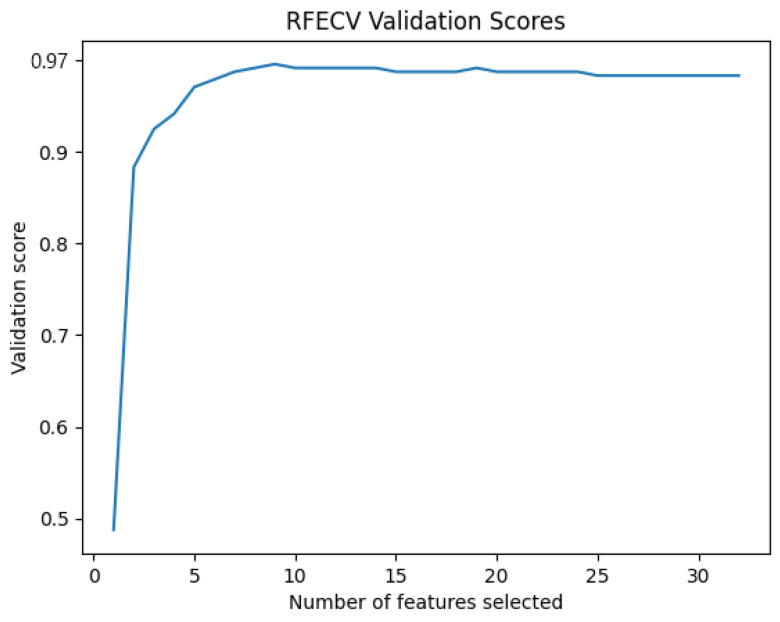
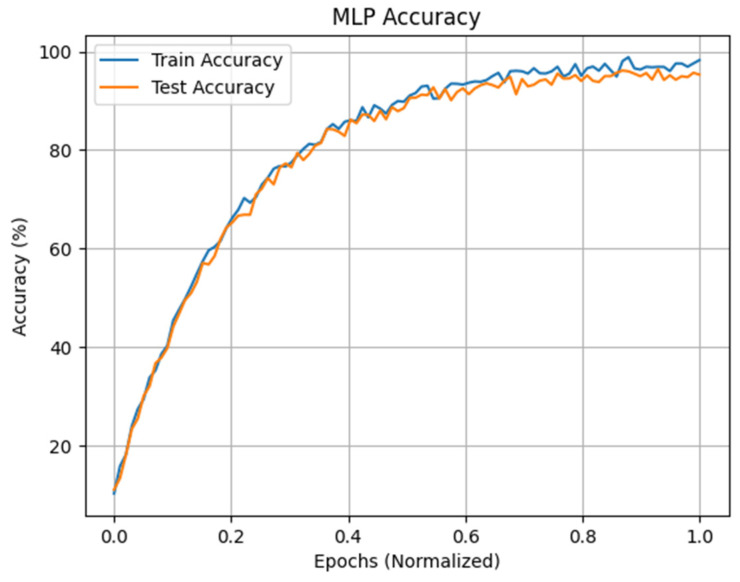
Drowsiness is a main factor for various costly defects, even fatal accidents in areas such as construction, transportation, industry and medicine, due to the lack of monitoring vigilance in the mentioned areas. The implementation of a drowsiness detection system can greatly help to reduce the defects and accident rates by alerting individuals when they enter a drowsy state. This research proposes an electroencephalography (EEG)-based approach for detecting drowsiness. EEG signals are passed through a preprocessing chain composed of artifact removal and segmentation to ensure accurate detection followed by different feature extraction methods to extract the different features related to drowsiness. This work explores the use of various machine learning algorithms such as Support Vector Machine (SVM), the K nearest neighbor (KNN), the Naive Bayes (NB), the Decision Tree (DT), and the Multilayer Perceptron (MLP) to analyze EEG signals sourced from the DROZY database, carefully labeled into two distinct states of alertness (awake and drowsy). Segmentation into 10 s intervals ensures precise detection, while a relevant feature selection layer enhances accuracy and generalizability. The proposed approach achieves high accuracy rates of 99.84% and 96.4% for intra (subject by subject) and inter (cross-subject) modes, respectively. SVM emerges as the most effective model for drowsiness detection in the intra mode, while MLP demonstrates superior accuracy in the inter mode. This research offers a promising avenue for implementing proactive drowsiness detection systems to enhance occupational safety across various industries.
困倦是导致建筑、交通、工业和医疗等领域各种代价高昂的缺陷甚至致命事故的主要因素,因为这些领域缺乏监测警觉性。实施困倦检测系统可以通过在个体进入困倦状态时发出警报,极大地有助于降低缺陷和事故率。本研究提出了一种基于脑电图(EEG)的困倦检测方法。EEG 信号通过预处理链(包括去除伪影和分段)进行处理,以确保准确检测,然后采用不同的特征提取方法提取与困倦相关的不同特征。这项工作探索了使用各种机器学习算法,如支持向量机(SVM)、K 最近邻(KNN)、朴素贝叶斯(NB)、决策树(DT)和多层感知机(MLP),来分析源自 DROZY 数据库的 EEG 信号,这些信号被仔细标记为两种不同的警觉状态(清醒和困倦)。将信号分段为 10 秒的间隔可确保精确检测,而相关的特征选择层可提高准确性和通用性。所提出的方法在内部(个体内)和外部(跨个体)模式下分别实现了 99.84%和 96.4%的高准确率。SVM 是内部模式下困倦检测最有效的模型,而 MLP 在外部模式下表现出更高的准确性。本研究为实施主动困倦检测系统提供了有前途的途径,可提高各个行业的职业安全水平。