Burke Andrew F, Zhao Jingyuan, Miller Marshall R, Fulton Lewis M
Institute of Transportation Studies, University of California Davis, Davis, CA, USA.
Heliyon. 2024 Jun 16;10(12):e32823. doi: 10.1016/j.heliyon.2024.e32823. eCollection 2024 Jun 30.
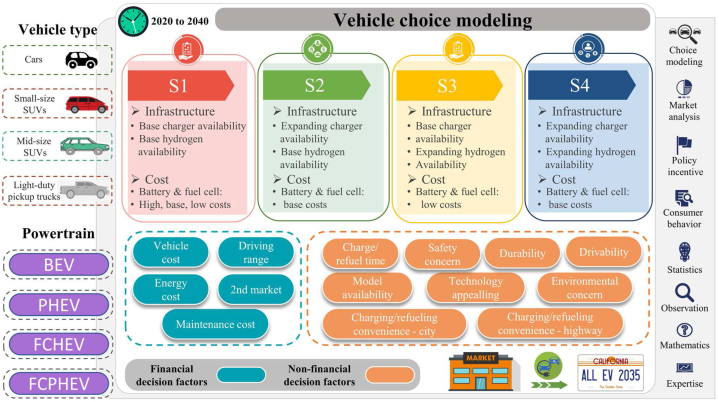
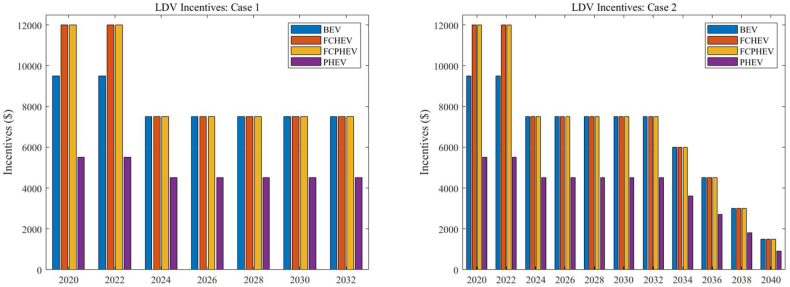
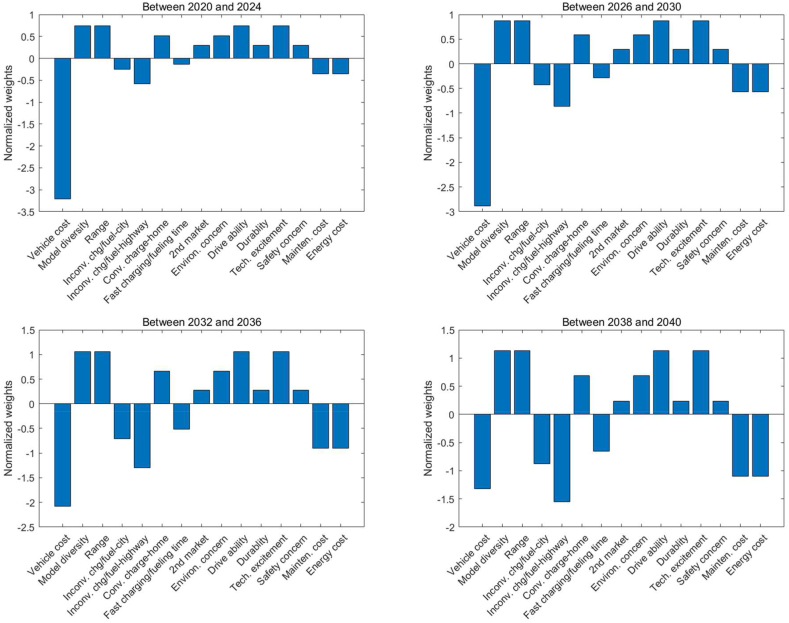
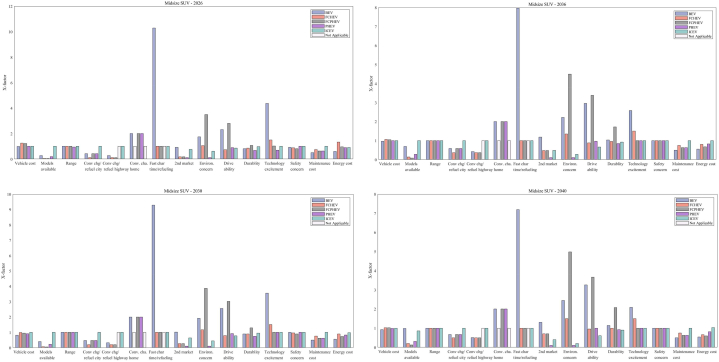
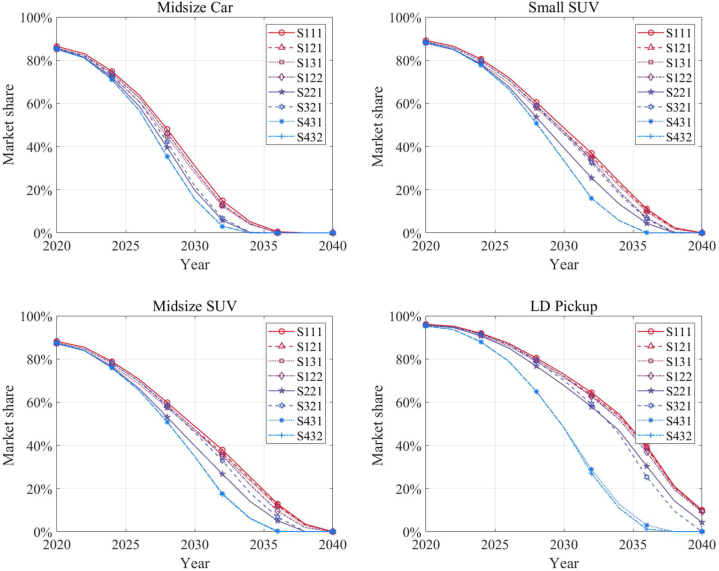
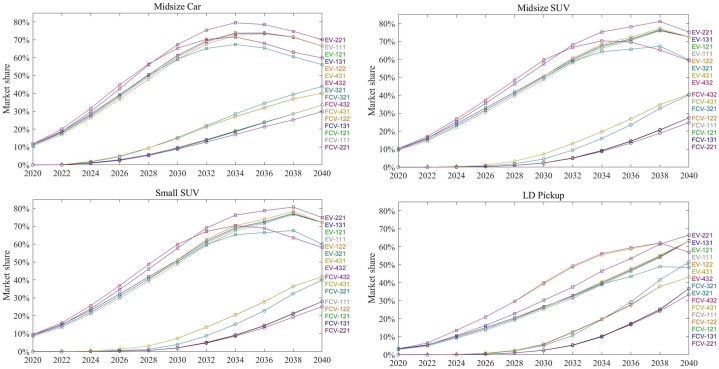
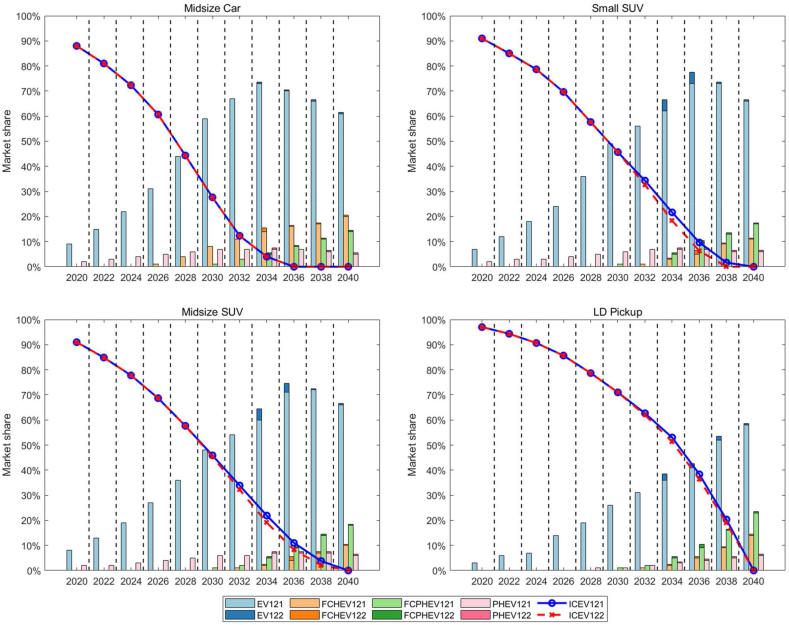
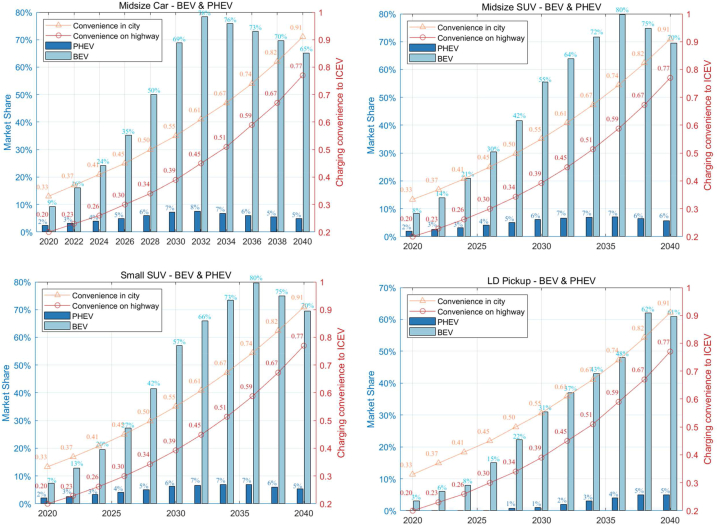
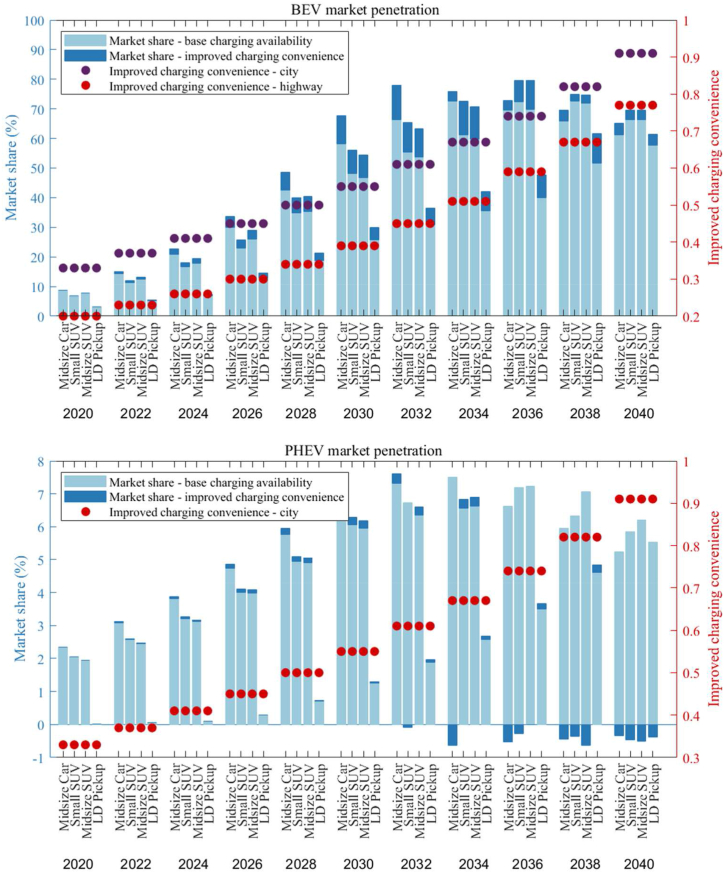
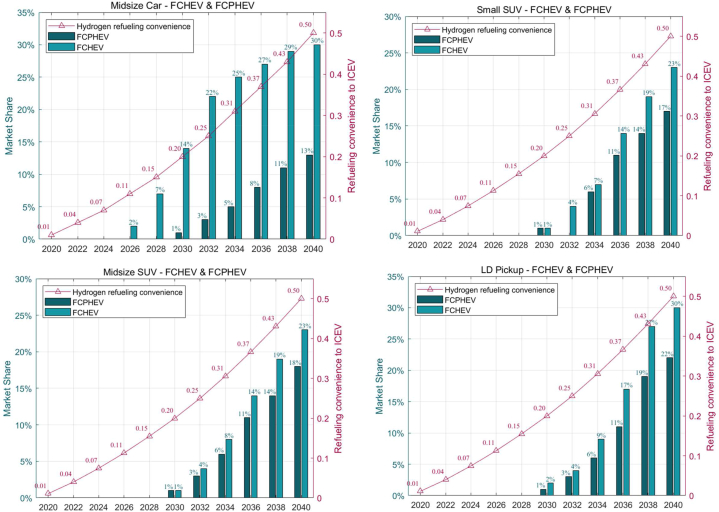
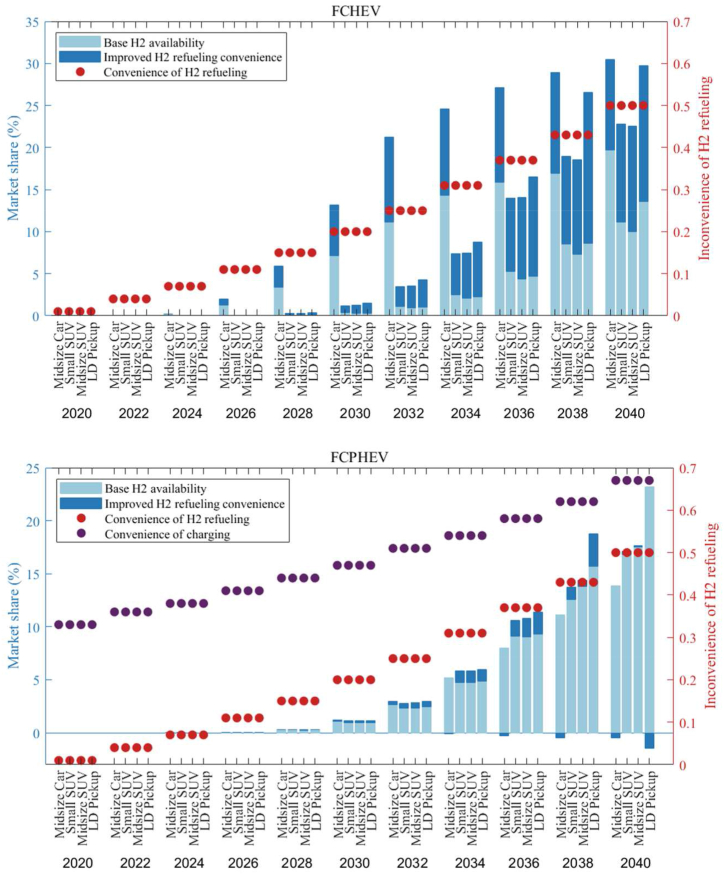
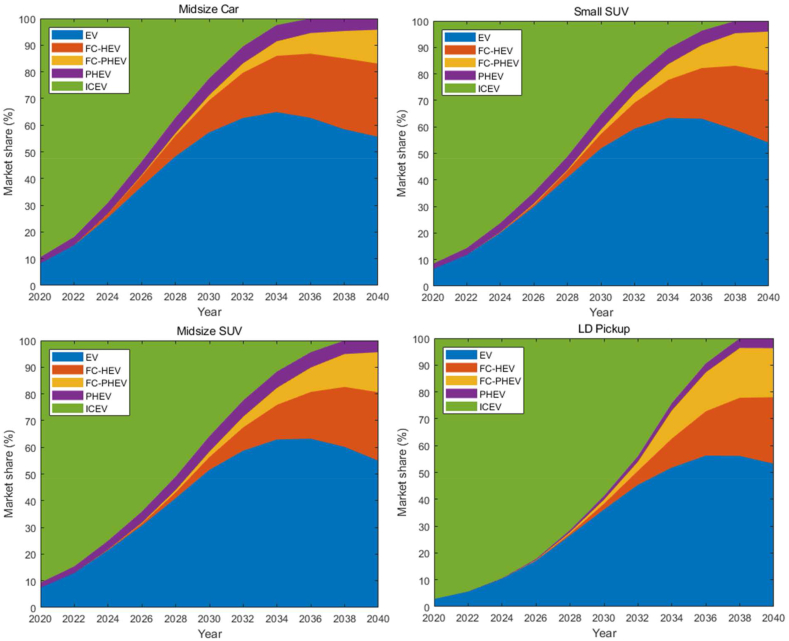
To predict the market dynamics of various zero-emission vehicle (ZEV) technologies, this study introduces a dynamic discrete vehicle choice model (VCM) that investigates the probabilities associated with 14 decision factors, applying these to the purchase of ZEVs from 2020 to 2040. Market share and penetration results are presented under eight scenarios, that vary by vehicle costs infrastructure development and incentive strategies. The findings suggest that in the early years, incentives alone may not generate significant market penetration of ZEVs before the infrastructure meets the basic convenience for daily use, especially for fuel cell vehicles (FCVs). However, in later years, incentives play a more important role in the market penetration of ZEVs under well-defined infrastructure networks. By 2040, battery electric vehicles (BEVs) are projected to dominate the market in California. Plug-in hybrid electric vehicles (PHEVs) and FCVs may experience a decline in market share due to improved charging convenience, which benefits the market penetration of BEVs. However, fuel cell plug-in hybrid electric vehicles (FC-PHEVs) could still be beneficial if accessible models are available, considering the limited availability of hydrogen refueling stations. The goal set by the California Air Resources Board (CARB) is achievable, but it requires a sustained combination of measures; no single effort can achieve it. These measures include technological improvements to reduce the cost of ZEVs, a wider range of models available for consumers to choose from based on their desired performance, the establishment of infrastructure (battery chargers and hydrogen dispensers), and attractive incentives aimed at promoting ZEV adoption. The proposed methodology can be adapted for other regions in the United States and globally by carefully examining the inputs for each decision factor at the desired scale.
为预测各种零排放车辆(ZEV)技术的市场动态,本研究引入了一种动态离散车辆选择模型(VCM),该模型调查了与14个决策因素相关的概率,并将其应用于2020年至2040年零排放车辆的购买情况。在八种情景下呈现了市场份额和渗透率结果,这些情景因车辆成本、基础设施发展和激励策略而异。研究结果表明,在早期,在基础设施满足日常使用的基本便利性之前,仅靠激励措施可能无法使零排放车辆实现显著的市场渗透率,特别是对于燃料电池汽车(FCV)而言。然而,在后期,在完善的基础设施网络下,激励措施在零排放车辆的市场渗透率方面发挥着更重要的作用。到2040年,预计纯电动汽车(BEV)将在加利福尼亚州占据市场主导地位。插电式混合动力汽车(PHEV)和燃料电池汽车(FCV)的市场份额可能会因充电便利性的提高而下降,这有利于纯电动汽车的市场渗透。然而,考虑到加氢站数量有限,如果有可使用的车型,燃料电池插电式混合动力汽车(FC - PHEV)仍可能有益。加利福尼亚空气资源委员会(CARB)设定的目标是可以实现的,但这需要一系列持续的措施相结合;任何单一的努力都无法实现这一目标。这些措施包括通过技术改进降低零排放车辆的成本、提供更广泛的车型供消费者根据其期望的性能进行选择、建立基础设施(电池充电器和加氢站)以及出台有吸引力的激励措施以促进零排放车辆的采用。通过在期望的规模上仔细审查每个决策因素的输入,所提出的方法可以适用于美国的其他地区以及全球。