Kiernan Elizabeth, Zelnick Leila R, Khader Ayesha, Coston Taylor D, Bailey Zoie A, Speckmaier Sarah, Lo Jordan, Sathe Neha, Kestenbaum Bryan R, Himmelfarb Jonathan, Johnson Nicholas, Shapiro Nathan, Douglas Ivor S, Hough Catherine, Bhatraju Pavan
UW: University of Washington.
University of Washington.
Res Sq. 2024 Jul 2:rs.3.rs-4523416. doi: 10.21203/rs.3.rs-4523416/v1.
Previous work has identified two AKI sub-phenotypes (SP1 and SP2) characterized by differences in inflammation and endothelial dysfunction. Here we identify these sub-phenotypes using biospecimens collected in the emergency department and test for differential response to restrictive versus liberal fluid strategy in sepsis-induced hypotension in the CLOVERS trial.
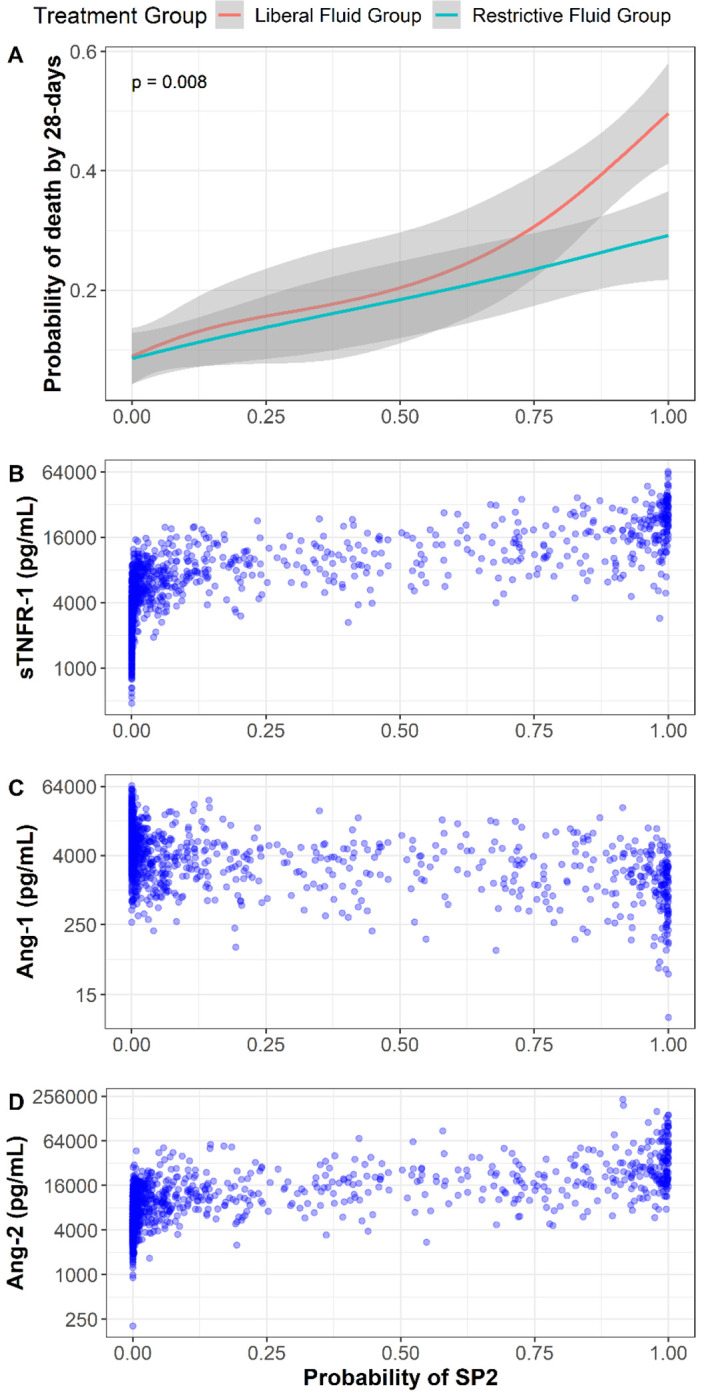
We applied a previously validated 3-biomarker model using plasma angiopietin-1 and 2, and soluble tumor necrosis factor receptor-1 to classify sub-phenotypes in patients with kidney dysfunction (AKI or end-stage kidney disease [ESKD]). We also compared a de novo latent class analysis (LCA) to the 3-biomarker based sub-phenotypes. Kaplan-Meier estimates were used to test for differences in outcomes and sub-phenotype by treatment interaction.
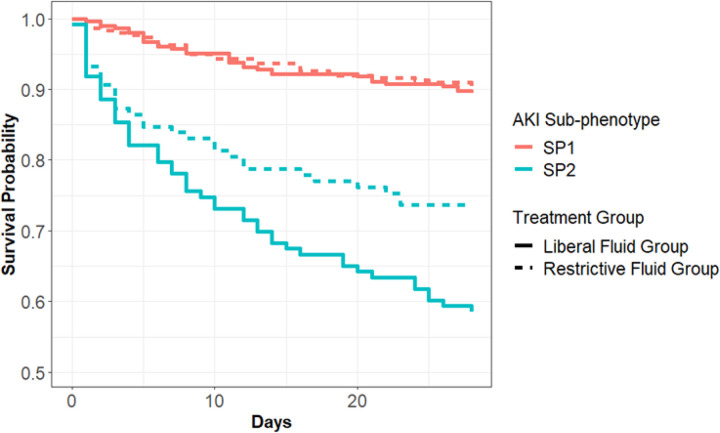
Among 1289 patients, 846 had kidney dysfunction on enrollment and the 3-variable prediction model identified 605 as SP1 and 241 as SP2. The optimal LCA model identified two sub-phenotypes with high correlation with the 3-biomarker model (Cohen's Kappa 0.8). The risk of 28 and 90-day mortality was greater in SP2 relative to SP1 independent of AKI stage and SOFA scores. Patients with SP2, characterized by more severe endothelial injury and inflammation, had a reduction in 28-day mortality with a restrictive fluid strategy versus a liberal fluid strategy (26% vs 41%), while patients with SP1 had no difference in 28-day mortality (10% vs 11%) ( = 0.03).
Sub-phenotypes can be identified in the emergency department that respond differently to fluid strategy in sepsis. Identification of these sub-phenotypes could inform a precision-guided therapeutic approach for patients with sepsis-induced hypotension and kidney injury.
先前的研究已确定了两种急性肾损伤亚表型(SP1和SP2),其特征在于炎症和内皮功能障碍存在差异。在此,我们使用在急诊科收集的生物样本识别这些亚表型,并在CLOVERS试验中测试脓毒症诱导的低血压患者对限制性与开放性液体策略的不同反应。
我们应用先前验证的三生物标志物模型,使用血浆血管生成素-1和-2以及可溶性肿瘤坏死因子受体-1对肾功能不全(急性肾损伤或终末期肾病[ESKD])患者的亚表型进行分类。我们还将一种全新的潜在类别分析(LCA)与基于三生物标志物的亚表型进行了比较。采用Kaplan-Meier估计法通过治疗交互作用来测试结局和亚表型的差异。
在1289例患者中,846例在入组时存在肾功能不全,三变量预测模型将605例识别为SP1,241例识别为SP2。最佳LCA模型识别出两种与三生物标志物模型高度相关的亚表型(Cohen's Kappa 0.8)。与SP1相比,SP2的28天和90天死亡率风险更高,且与急性肾损伤阶段和序贯器官衰竭评估(SOFA)评分无关。以更严重的内皮损伤和炎症为特征的SP2患者,采用限制性液体策略时28天死亡率降低,而采用开放性液体策略时死亡率为41%,而SP1患者的28天死亡率无差异(10%对11%)(P = 0.03)。
在急诊科可识别出对脓毒症液体策略反应不同的亚表型。识别这些亚表型可为脓毒症诱导的低血压和肾损伤患者提供精准指导的治疗方法。