Minch Benjamin, Chakraborty Morgan, Purkis Sam, Rodrigue Mattie, Moniruzzaman Mohammad
Department of Marine Biology and Ecology, Rosenstiel School of Marine, Atmospheric, and Earth Science, University of Miami, Miami, FL 33149, United States.
Department of Marine Geosciences, Rosenstiel School of Marine, Atmospheric, and Earth Science, University of Miami, Miami, FL 33149, United States.
ISME Commun. 2024 Jun 14;4(1):ycae084. doi: 10.1093/ismeco/ycae084. eCollection 2024 Jan.
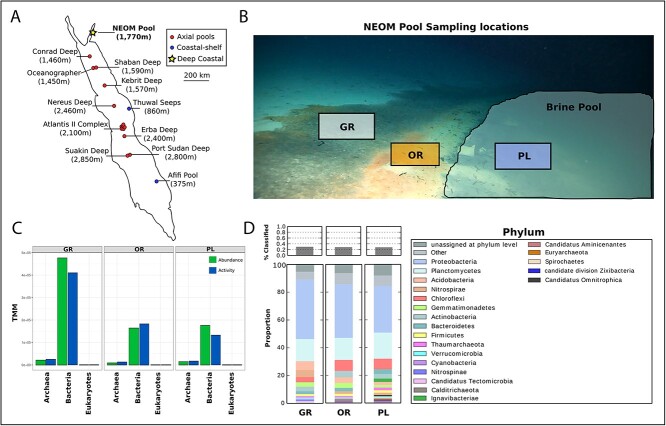
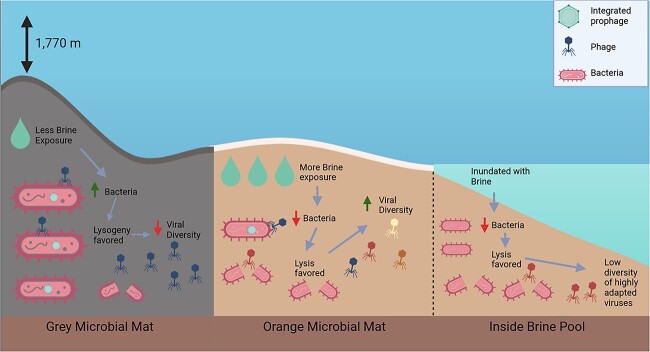
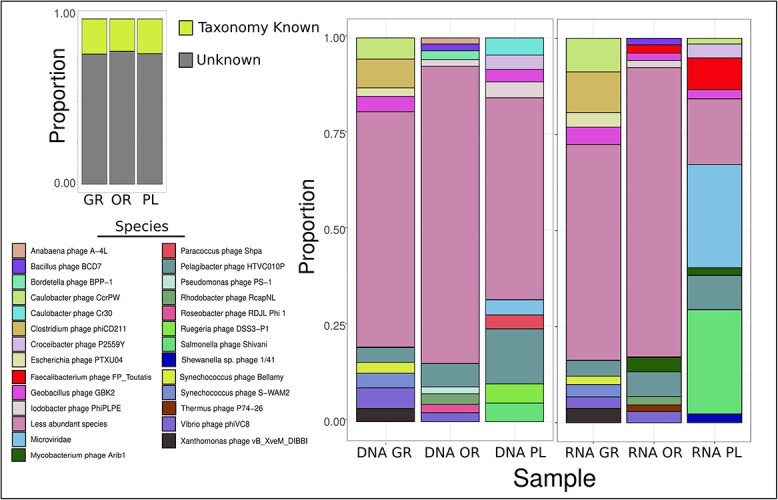
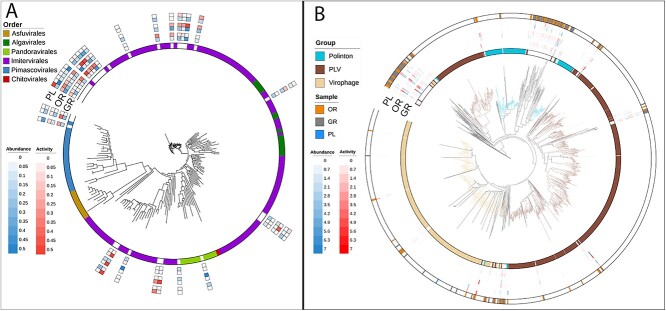
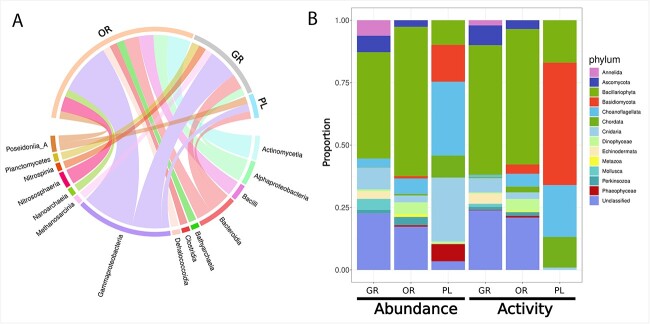
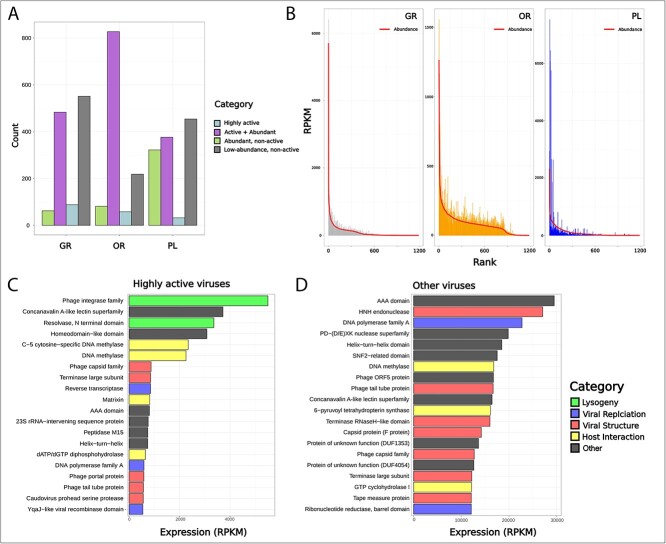
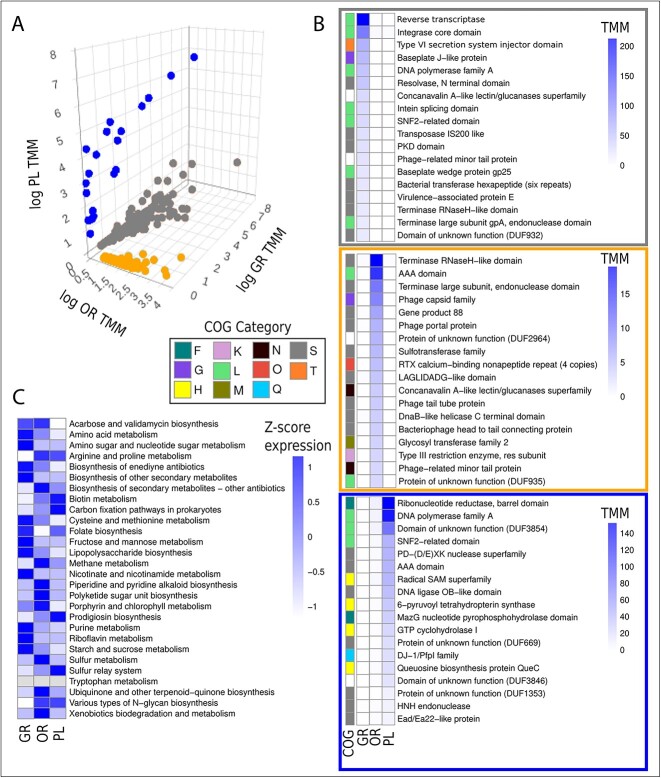
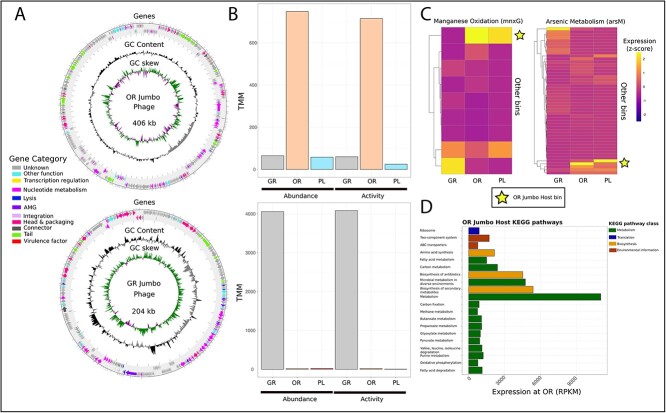
Deep-sea brine pools represent rare, extreme environments, providing unique insight into the limits of life on Earth, and by analogy, the plausibility of life beyond it. A distinguishing feature of many brine pools is presence of thick microbial mats that develop at the brine-seawater interface. While these bacterial and archaeal communities have received moderate attention, viruses and their host interactions in these environments remain underexplored. To bridge this knowledge gap, we leveraged metagenomic and metatranscriptomic data from three distinct zones within the NEOM brine pool system (Gulf of Aqaba) to reveal the active viral ecology around the pools. We report a remarkable diversity and activity of viruses infecting microbial hosts in this environment, including giant viruses, RNA viruses, jumbo phages, and Polinton-like viruses. Many of these form distinct clades-suggesting presence of untapped viral diversity in this ecosystem. Brine pool viral communities exhibit zone-specific differences in infection strategy-with lysogeny dominating the bacterial mat further away from the pool's center. We linked viruses to metabolically important prokaryotes-including association between a jumbo phage and a key manganese-oxidizing and arsenic-metabolizing bacterium. These foundational results illuminate the role of viruses in modulating brine pool microbial communities and biogeochemistry through revealing novel viral diversity, host associations, and spatial heterogeneity in viral dynamics.
深海盐水池代表着罕见的极端环境,为深入了解地球上生命的极限以及类推地球之外生命的可能性提供了独特视角。许多盐水池的一个显著特征是在盐水与海水的界面处形成了厚厚的微生物垫。虽然这些细菌和古菌群落已受到一定关注,但这些环境中病毒及其与宿主的相互作用仍未得到充分探索。为了填补这一知识空白,我们利用了来自红海亚喀巴湾NEOM盐水池系统三个不同区域的宏基因组和宏转录组数据,以揭示盐水池周围活跃的病毒生态。我们报告了在这种环境中感染微生物宿主的病毒具有显著的多样性和活性,包括巨型病毒、RNA病毒、巨型噬菌体和类Polinton病毒。其中许多形成了独特的进化枝,表明该生态系统中存在尚未开发的病毒多样性。盐水池病毒群落的感染策略存在区域特异性差异,溶源性在远离池中心的细菌垫中占主导地位。我们将病毒与具有重要代谢作用的原核生物联系起来,包括一种巨型噬菌体与一种关键的锰氧化和砷代谢细菌之间的关联。这些基础性结果通过揭示新的病毒多样性、宿主关联以及病毒动态中的空间异质性,阐明了病毒在调节盐水池微生物群落和生物地球化学方面的作用。