Key Laboratory of Marine Genetic Resources, Third Institute of Oceanography, Ministry of Natural Resources, Xiamen, China.
State Key Laboratory Breeding Base of Marine Genetic Resource, Fujian Key Laboratory of Marine Genetic Resources, Xiamen, 361005, China.
Microbiome. 2022 Dec 24;10(1):235. doi: 10.1186/s40168-022-01441-6.
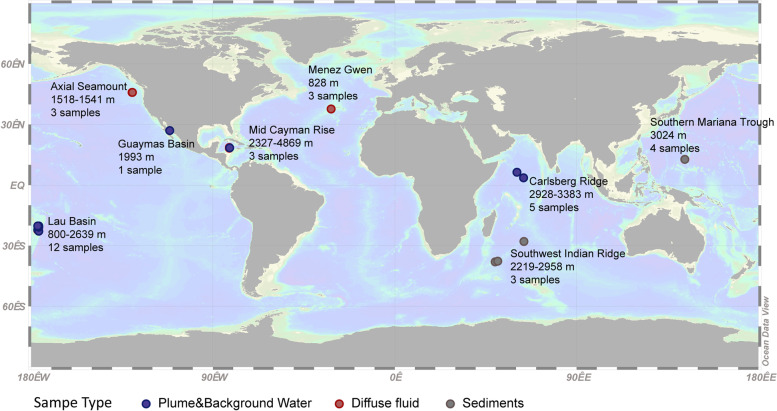
The deep sea harbors many viruses, yet their diversity and interactions with hosts in hydrothermal ecosystems are largely unknown. Here, we analyzed the viral composition, distribution, host preference, and metabolic potential in different habitats of global hydrothermal vents, including vent plumes, background seawater, diffuse fluids, and sediments.
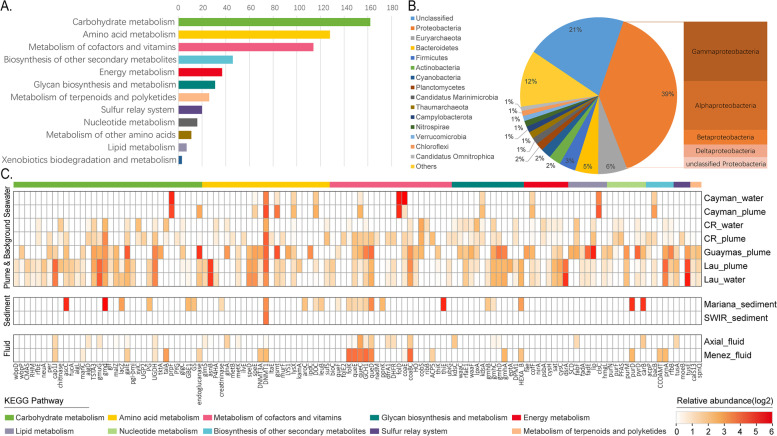
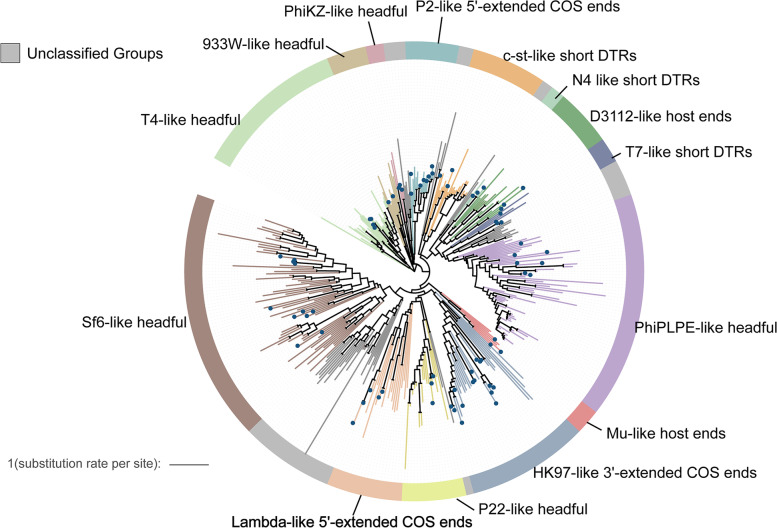
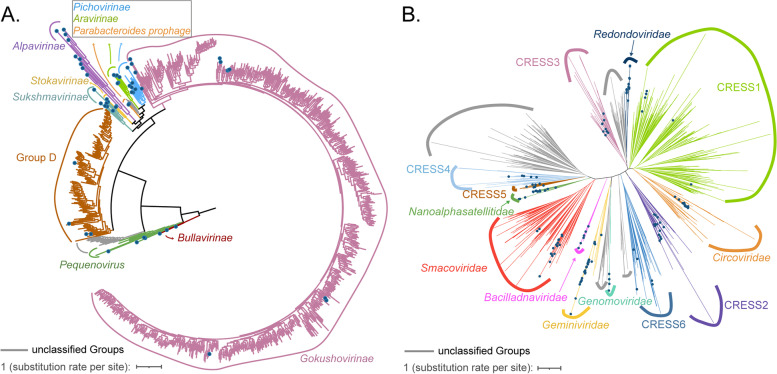
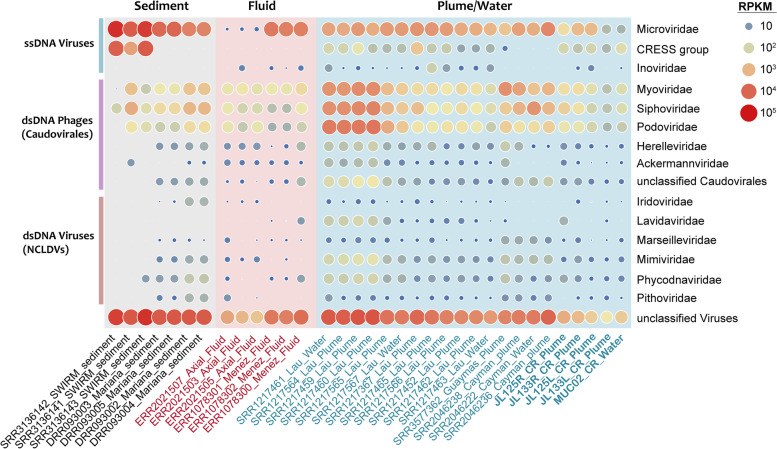
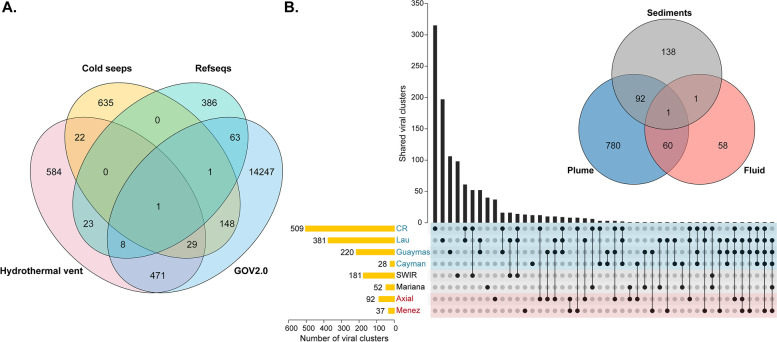
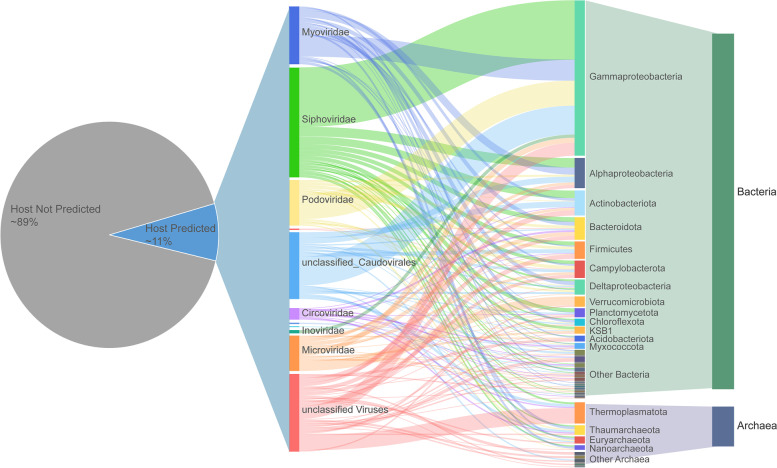
From 34 samples collected at eight vent sites, a total of 4662 viral populations (vOTUs) were recovered from the metagenome assemblies, encompassing diverse phylogenetic groups and defining many novel lineages. Apart from the abundant unclassified viruses, tailed phages are most predominant across the global hydrothermal vents, while single-stranded DNA viruses, including Microviridae and small eukaryotic viruses, also constitute a significant part of the viromes. As revealed by protein-sharing network analysis, hydrothermal vent viruses formed many novel genus-level viral clusters and are highly endemic to specific vent sites and habitat types. Only 11% of the vOTUs can be linked to hosts, which are the key microbial taxa of hydrothermal habitats, such as Gammaproteobacteria and Campylobacterota. Intriguingly, vent viromes share some common metabolic features in that they encode auxiliary genes that are extensively involved in the metabolism of carbohydrates, amino acids, cofactors, and vitamins. Specifically, in plume viruses, various auxiliary genes related to methane, nitrogen, and sulfur metabolism were observed, indicating their contribution to host energy conservation. Moreover, the prevalence of sulfur-relay pathway genes indicated the significant role of vent viruses in stabilizing the tRNA structure, which promotes host adaptation to steep environmental gradients.
The deep-sea hydrothermal systems hold untapped viral diversity with novelty. They may affect both vent prokaryotic and eukaryotic communities and modulate host metabolism related to vent adaptability. More explorations are needed to depict global vent virus diversity and its roles in this unique ecosystem. Video Abstract.
深海蕴藏着许多病毒,但它们在热液生态系统中与宿主的多样性和相互作用在很大程度上仍是未知的。在这里,我们分析了来自全球热液喷口不同栖息地(包括喷口羽流、背景海水、弥散流体和沉积物)的病毒组成、分布、宿主偏好和代谢潜能。
从八个喷口采集的 34 个样本中,我们从宏基因组组装中总共回收了 4662 个病毒群体(vOTUs),涵盖了多样的系统发育群,并定义了许多新的谱系。除了丰富的未分类病毒外,长尾噬菌体在全球热液喷口最为普遍,而单链 DNA 病毒,包括微病毒科和小型真核病毒,也是病毒组的重要组成部分。蛋白质共享网络分析表明,热液喷口病毒形成了许多新的属级病毒簇,并且高度局限于特定的喷口和栖息地类型。只有 11%的 vOTUs 可以与宿主联系起来,这些宿主是热液栖息地的关键微生物类群,如γ变形菌门和弯曲菌门。有趣的是,喷口病毒组具有一些共同的代谢特征,它们编码广泛参与碳水化合物、氨基酸、辅助因子和维生素代谢的辅助基因。具体来说,在羽流病毒中,观察到了各种与甲烷、氮和硫代谢有关的辅助基因,这表明它们对宿主能量保存的贡献。此外,硫传递途径基因的流行表明,喷口病毒在稳定 tRNA 结构方面具有重要作用,这促进了宿主对陡峭环境梯度的适应。
深海热液系统蕴藏着未被开发的病毒多样性和新颖性。它们可能影响热液喷口的原核生物和真核生物群落,并调节与喷口适应性相关的宿主代谢。需要更多的探索来描绘全球喷口病毒多样性及其在这一独特生态系统中的作用。视频摘要。