
癌细胞中氨基酸剥夺并诱导代偿性自噬会增加对自噬抑制剂的敏感性。
Amino acid deprivation in cancer cells with compensatory autophagy induction increases sensitivity to autophagy inhibitors.
作者信息
Fukui Takahito, Yabumoto Manami, Nishida Misuzu, Hirokawa Shiori, Sato Riho, Kurisu Taichi, Nakai Miyu, Hassan Md Abul, Kishimoto Koji
机构信息
Division of Bioscience and Bioindustry, Tokushima University Graduate School of Sciences and Technology for Innovation, Tokushima, Japan.
Graduate School of Environment and Energy Engineering, Waseda University, Tokyo, Japan.
出版信息
Mol Cell Oncol. 2024 Jul 14;11(1):2377404. doi: 10.1080/23723556.2024.2377404. eCollection 2024.
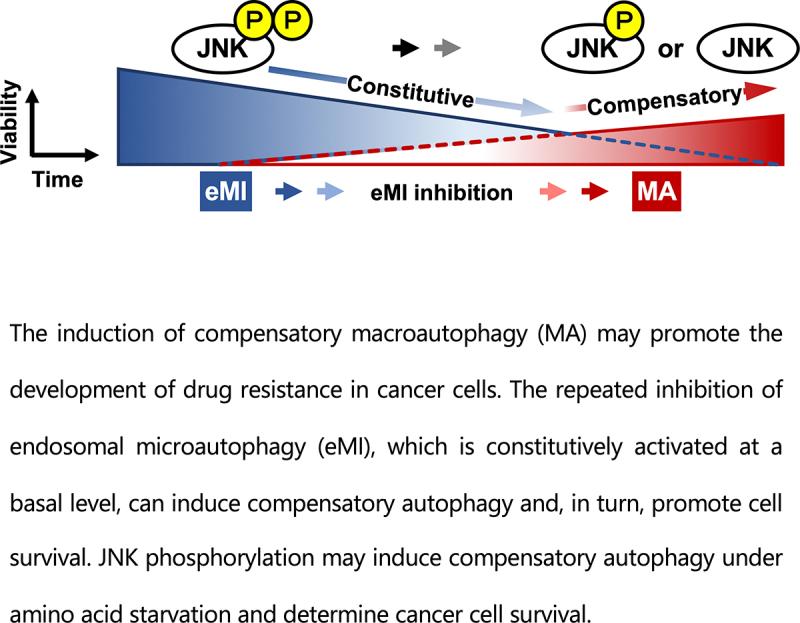
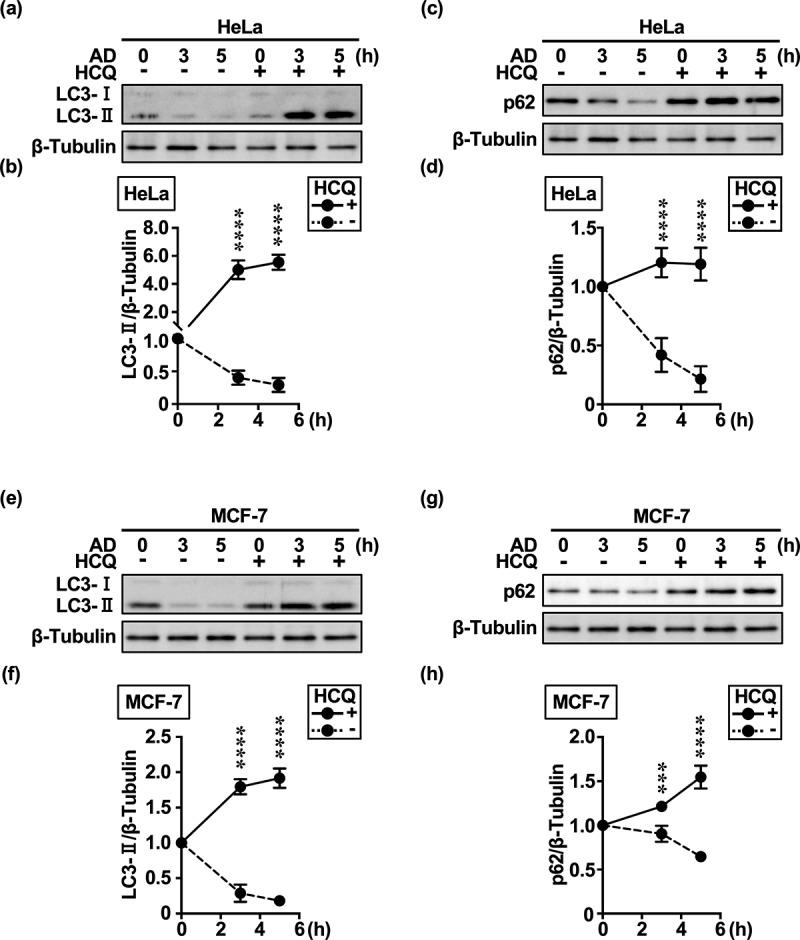
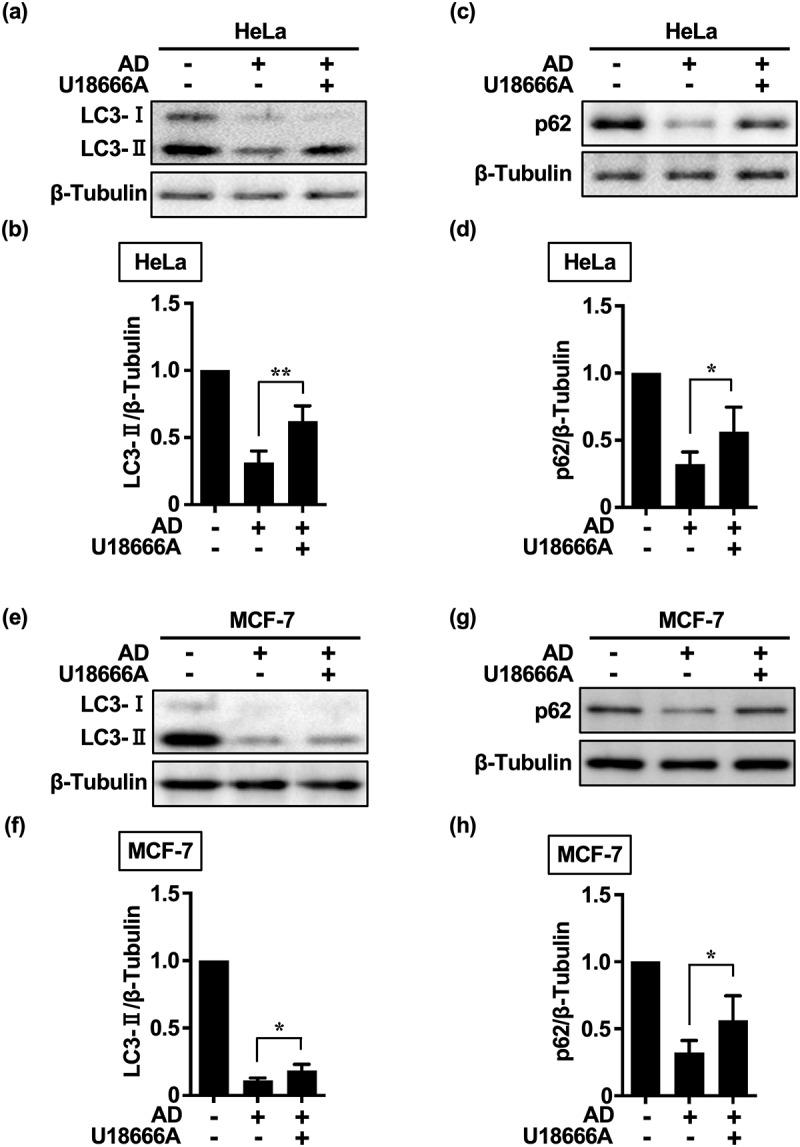
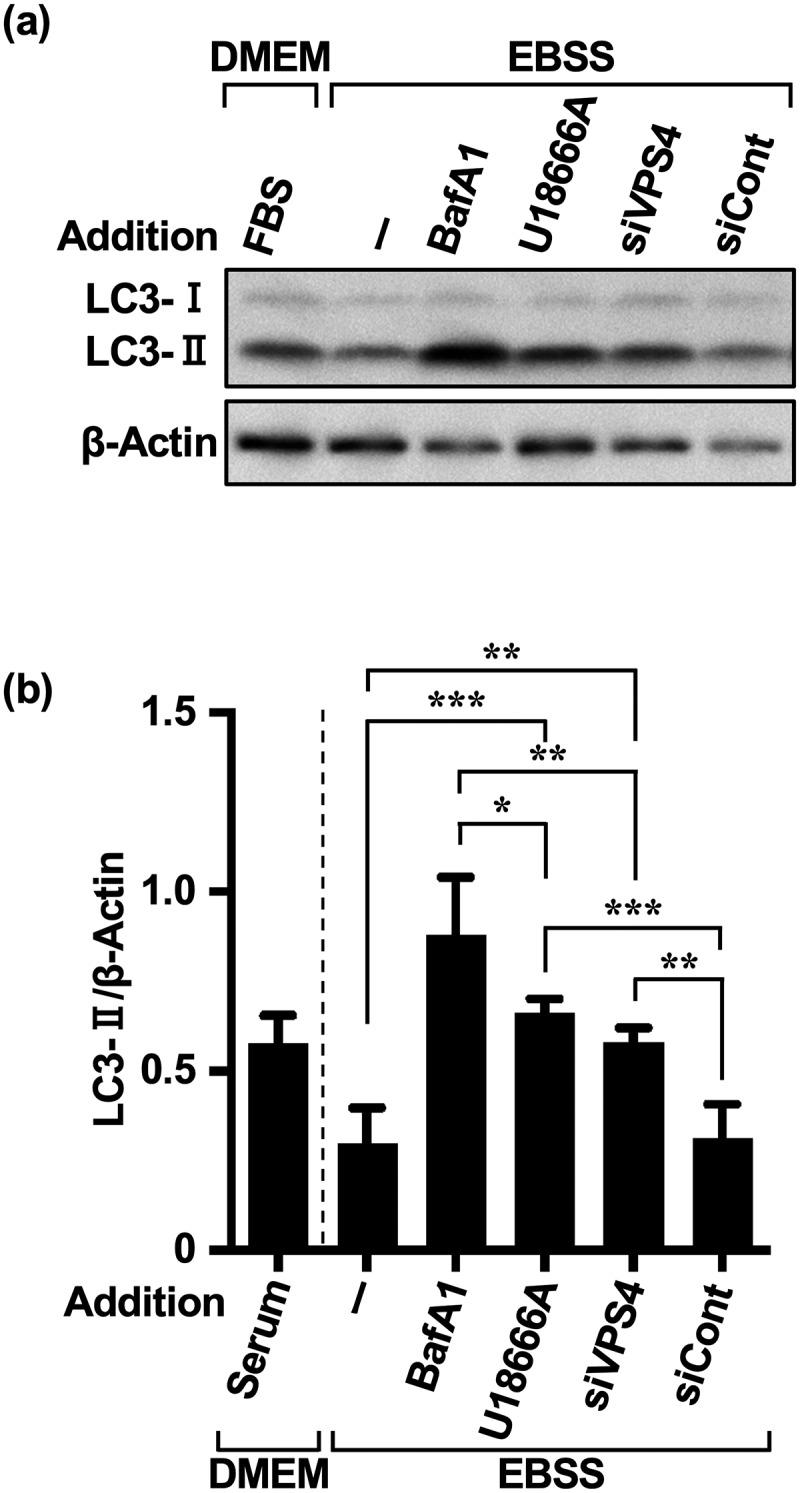
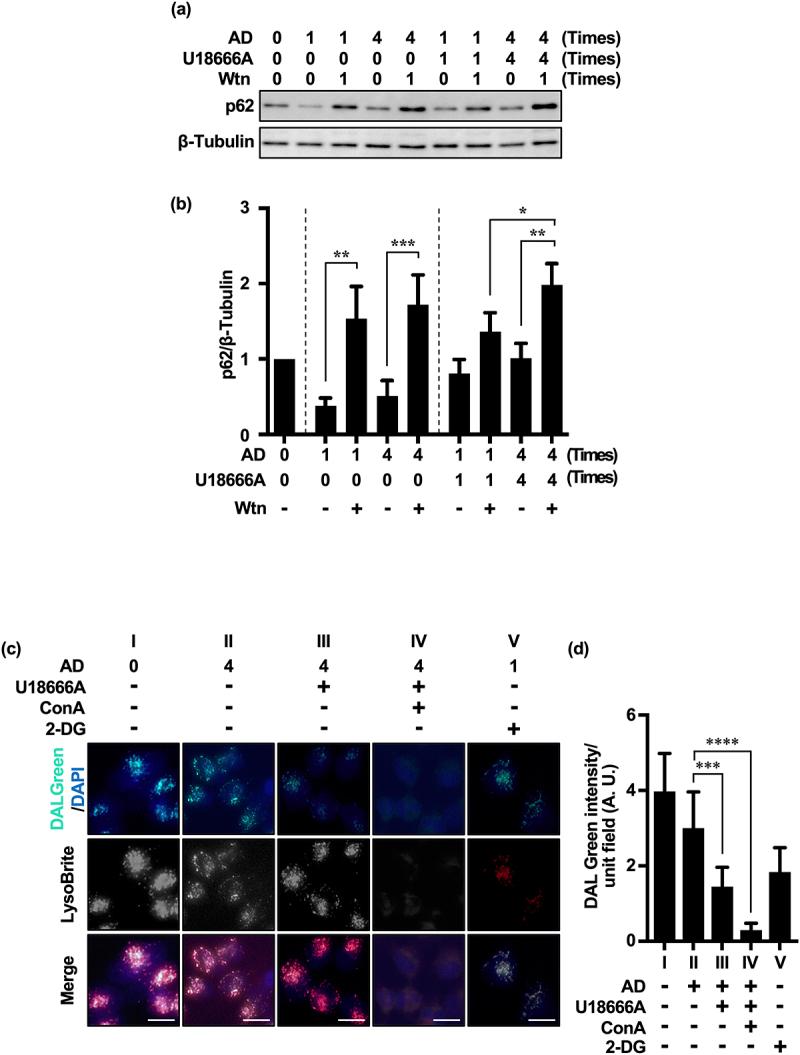
Inhibition of autophagy is an important strategy in cancer therapy. However, prolonged inhibition of certain autophagies in established cancer cells may increase therapeutic resistance, though the underlying mechanisms of its induction and enhancement remain unclear. This study sought to elucidate the mechanisms of therapeutic resistance through repeated autophagy inhibition and amino acid deprivation (AD) in an in vitro model of in vivo chronic nutrient deprivation associated with cancer cell treatment. In the human cervical cancer cell line HeLa and human breast cancer cell line MCF-7, initial extracellular AD induced the immediate expression of endosomal microautophagy (eMI). However, repeated inhibition of eMI with U18666A and extracellular AD induced macroautophagy (MA) to compensate for reduced eMI, simultaneously decreasing cytotoxicity. Here, hyperphosphorylated JNK was transformed into a hypophosphorylated state, suggesting conversion of the cell death signal to a survival signal. In a nutrient medium, cell death could not be induced by MA inhibition. However, since LAT1 inhibitors induce intracellular AD, combining them with MA and eMI inhibitors successfully promoted cell death in resistant cells. Our study identified a novel therapeuic approach for promoting cell death and addressing therapeutic resistance in cancers under autophagy-inhibitor treatment.
抑制自噬是癌症治疗中的一项重要策略。然而,在已建立的癌细胞中长时间抑制某些自噬可能会增加治疗抵抗性,尽管其诱导和增强的潜在机制仍不清楚。本研究旨在通过在与癌细胞治疗相关的体内慢性营养剥夺体外模型中反复抑制自噬和氨基酸剥夺(AD)来阐明治疗抵抗的机制。在人宫颈癌细胞系HeLa和人乳腺癌细胞系MCF-7中,初始细胞外AD诱导内体微自噬(eMI)的立即表达。然而,用U18666A反复抑制eMI和细胞外AD诱导巨自噬(MA)以补偿减少的eMI,同时降低细胞毒性。在此,高磷酸化的JNK转变为低磷酸化状态,表明细胞死亡信号转变为存活信号。在营养培养基中,MA抑制不能诱导细胞死亡。然而,由于LAT1抑制剂诱导细胞内AD,将它们与MA和eMI抑制剂联合使用成功促进了耐药细胞的细胞死亡。我们的研究确定了一种新的治疗方法,用于促进细胞死亡并解决自噬抑制剂治疗下癌症的治疗抵抗性。



 Zotero 插件