Institute for Marine and Antarctic Studies, University of Tasmania, Hobart, Tasmania 7001, Australia.
Coastal and Marine Research Centre, School of Environment and Science, Australian Rivers Institute, Griffith University, Gold Coast, Queensland, Australia.
Proc Biol Sci. 2024 Aug;291(2027):20241065. doi: 10.1098/rspb.2024.1065. Epub 2024 Jul 24.
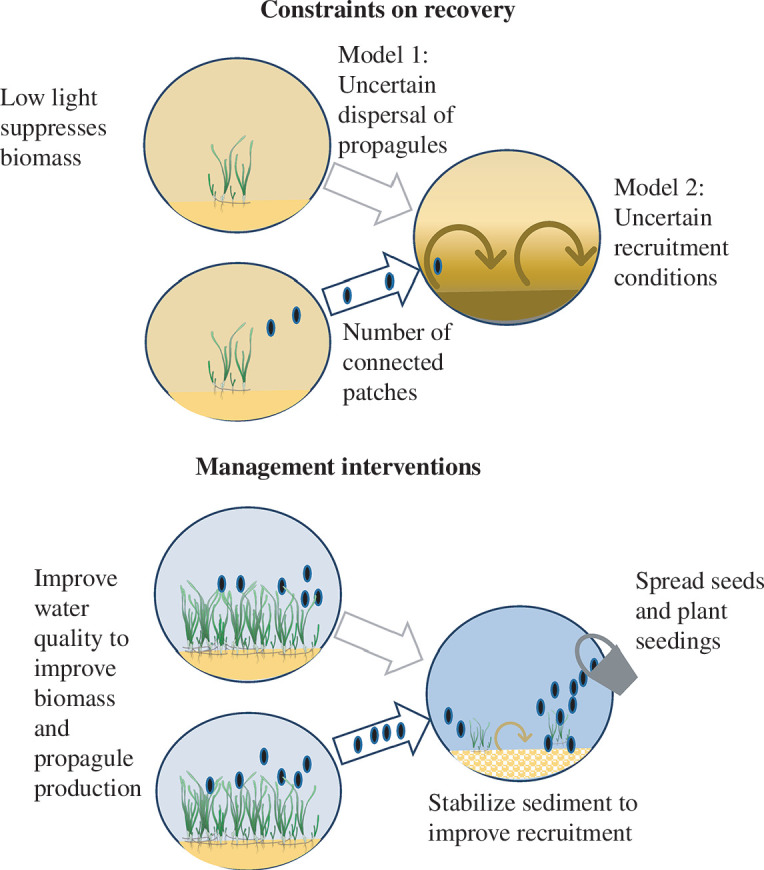
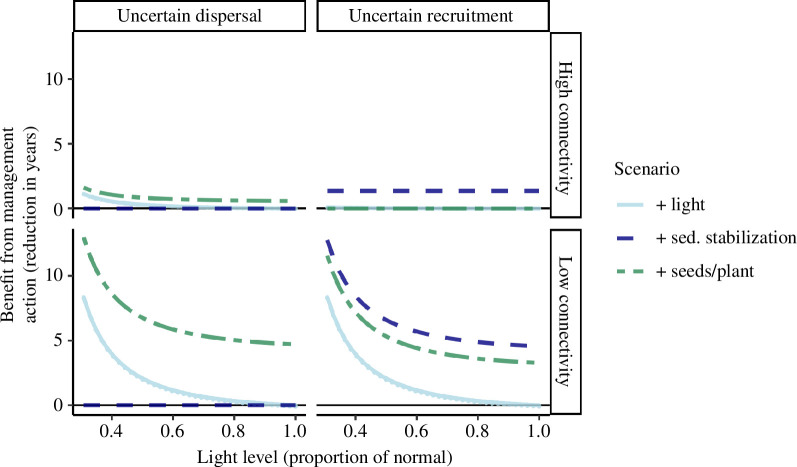
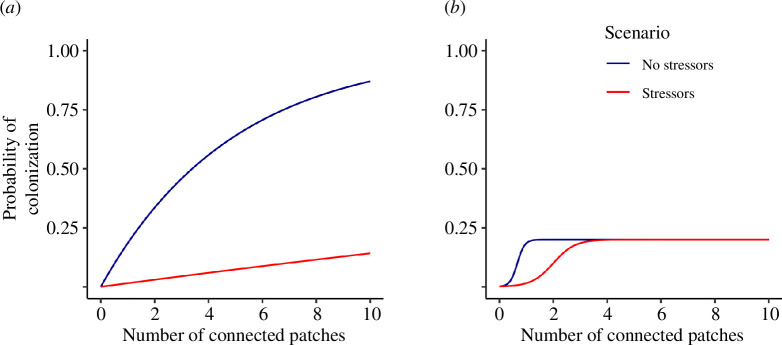
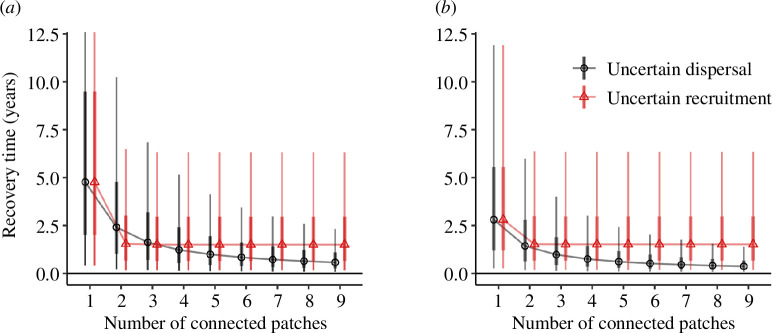
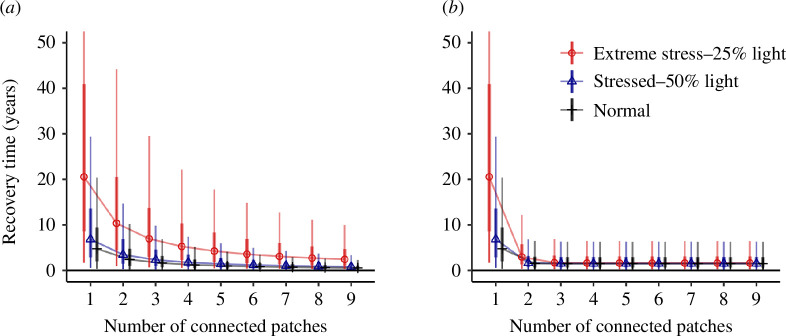
Plans for habitat restoration will benefit from predictions of timescales for recovery. Theoretical models have been a powerful tool for informing practical guidelines in planning marine protected areas, suggesting restoration planning could also benefit from a theoretical framework. We developed a model that can predict recovery times following restoration action, under dispersal, recruitment and connectivity constraints. We apply the model to a case study of seagrass restoration and find recovery times following restoration action can vary greatly, from <1 to >20 years. The model also shows how recovery can be accelerated when restoration actions are matched to the constraints on recovery. For example, spreading of propagules can be used when connectivity is the critical restriction. The recovery constraints we articulated mathematically also apply to the restoration of coral reefs, mangroves, saltmarsh, shellfish reefs and macroalgal forests, so our model provides a general framework for choosing restoration actions that accelerate coastal habitat recovery.
生境恢复计划将受益于对恢复时间尺度的预测。理论模型一直是为规划海洋保护区提供实用指南的有力工具,这表明恢复规划也可以从理论框架中受益。我们开发了一个模型,可以在扩散、招募和连通性的约束下,预测恢复行动后的恢复时间。我们将该模型应用于海草恢复的案例研究,发现恢复行动后的恢复时间可能会有很大的差异,从<1 年到>20 年不等。该模型还表明,当恢复行动与恢复的限制相匹配时,恢复可以加快。例如,当连通性是关键限制时,可以使用繁殖体的传播。我们用数学方法阐明的恢复限制也适用于珊瑚礁、红树林、盐沼、贝类礁和大型海藻林的恢复,因此我们的模型为选择加速沿海生境恢复的恢复行动提供了一个通用框架。