Emerg Infect Dis. 2024 Aug;30(8):1651-1659. doi: 10.3201/eid3008.240007.
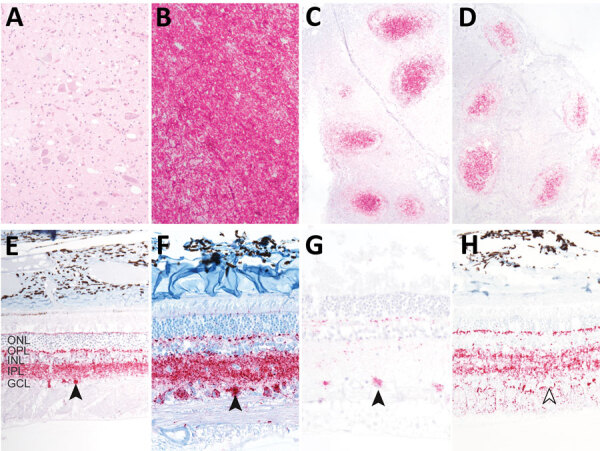
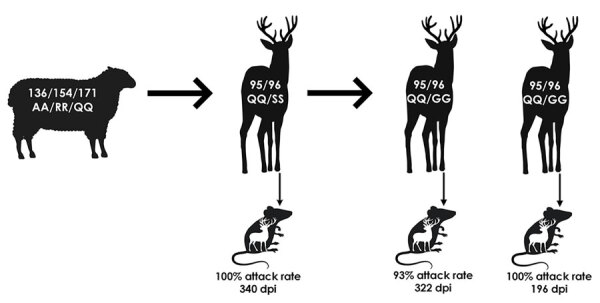
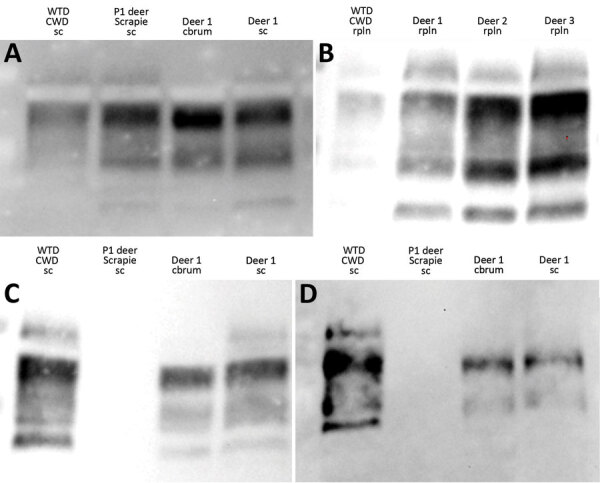
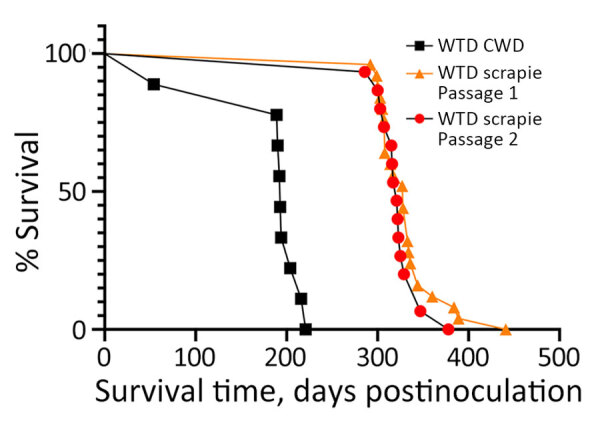
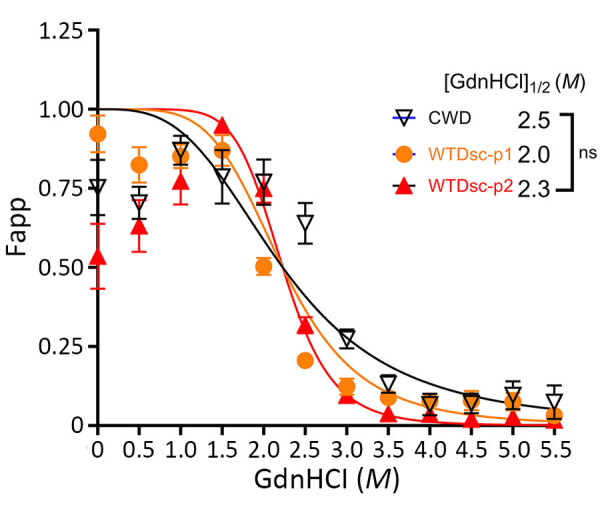
White-tailed deer are susceptible to scrapie (WTD scrapie) after oronasal inoculation with the classical scrapie agent from sheep. Deer affected by WTD scrapie are difficult to differentiate from deer infected with chronic wasting disease (CWD). To assess the transmissibility of the WTD scrapie agent and tissue phenotypes when further passaged in white-tailed deer, we oronasally inoculated wild-type white-tailed deer with WTD scrapie agent. We found that WTD scrapie and CWD agents were generally similar, although some differences were noted. The greatest differences were seen in bioassays of cervidized mice that exhibited significantly longer survival periods when inoculated with WTD scrapie agent than those inoculated with CWD agent. Our findings establish that white-tailed deer are susceptible to WTD scrapie and that the presence of WTD scrapie agent in the lymphoreticular system suggests the handling of suspected cases should be consistent with current CWD guidelines because environmental shedding may occur.
白尾鹿经口鼻感染绵羊经典瘙痒病剂后易患瘙痒病(WTD 瘙痒病)。受 WTD 瘙痒病影响的鹿与感染慢性消耗病(CWD)的鹿难以区分。为了评估 WTD 瘙痒病剂的传染性和组织表型在进一步在白尾鹿中传代时的变化,我们用 WTD 瘙痒病剂经口鼻感染了野生型白尾鹿。我们发现 WTD 瘙痒病和 CWD 剂通常相似,尽管有一些差异。在对鹿化小鼠的生物测定中观察到最大的差异,这些小鼠在接种 WTD 瘙痒病剂时的存活期明显长于接种 CWD 剂的小鼠。我们的研究结果表明,白尾鹿易患 WTD 瘙痒病,并且淋巴网状系统中存在 WTD 瘙痒病剂表明,应根据现行的 CWD 指南处理疑似病例,因为可能会发生环境脱落。