Yang Xue, Zhang Xinyi, Lin Puxuan, Liu Zeheng, Deng Shuhang, Liang Shanwen, Zhu Xinyi, Qiao Qianqian, Chen Qianxue
Department of Neurosurgery, Wuhan University Renmin Hospital, Wuhan, China.
Department of Anesthesiology, Wuhan University Renmin Hospital, Wuhan, China.
Front Surg. 2024 Jul 9;11:1386049. doi: 10.3389/fsurg.2024.1386049. eCollection 2024.
Dexmedetomidine is often used as an adjunct to total intravenous anesthesia (TIVA) for procedures requiring intraoperative neurophysiologic monitoring (IONM). However, it has been reported that dexmedetomidine might mask the warning of a neurological deficit on intraoperative monitoring.
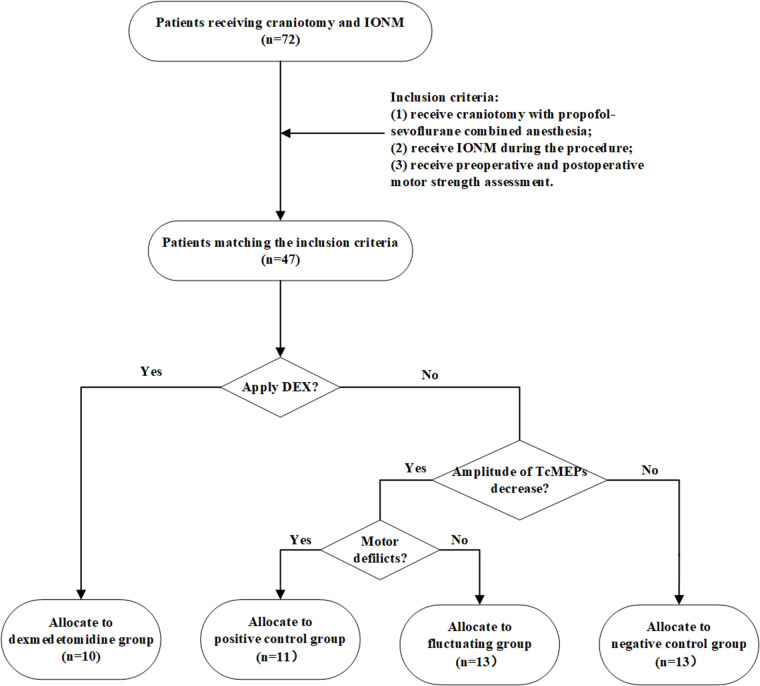
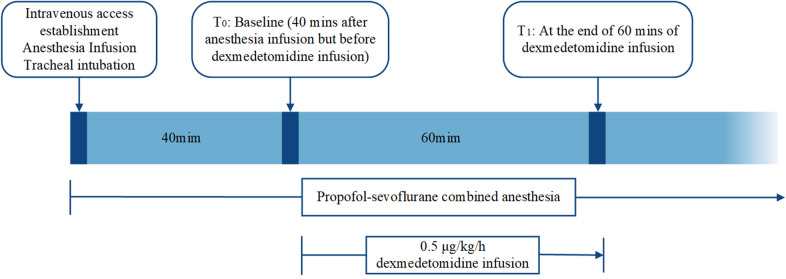
We reviewed the intraoperative neurophysiological monitoring data of 47 patients who underwent surgery and IONM from March 2019 to March 2021 at the Department of Neurosurgery, Renmin Hospital of Wuhan University. Pre- and postoperative motor function scores were recorded and analyzed. Dexmedetomidine was administered intravenously at 0.5 μg/kg/h 40 min after anesthesia and discontinued after 1 h in the dexmedetomidine group.
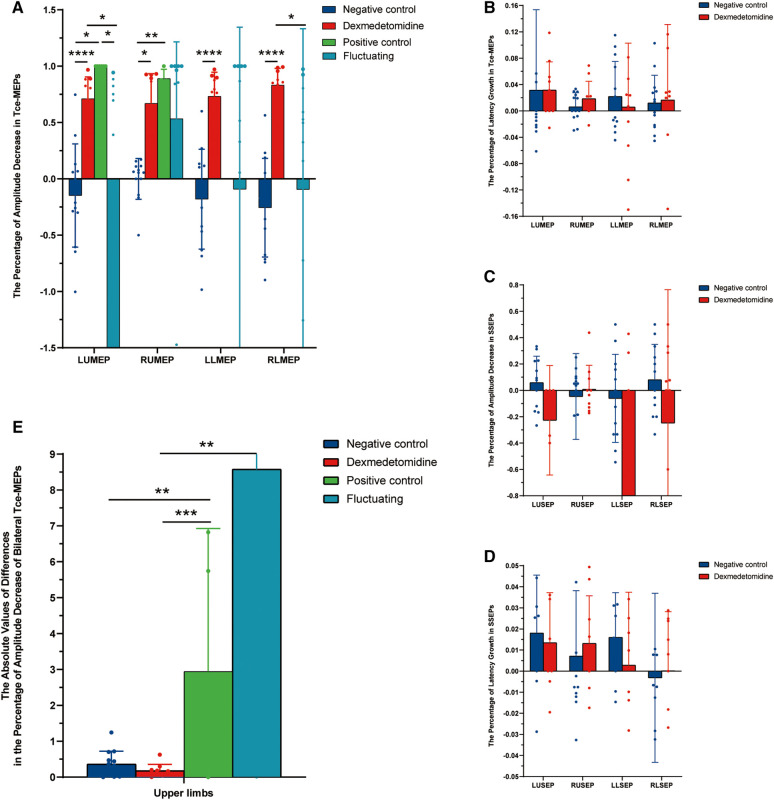
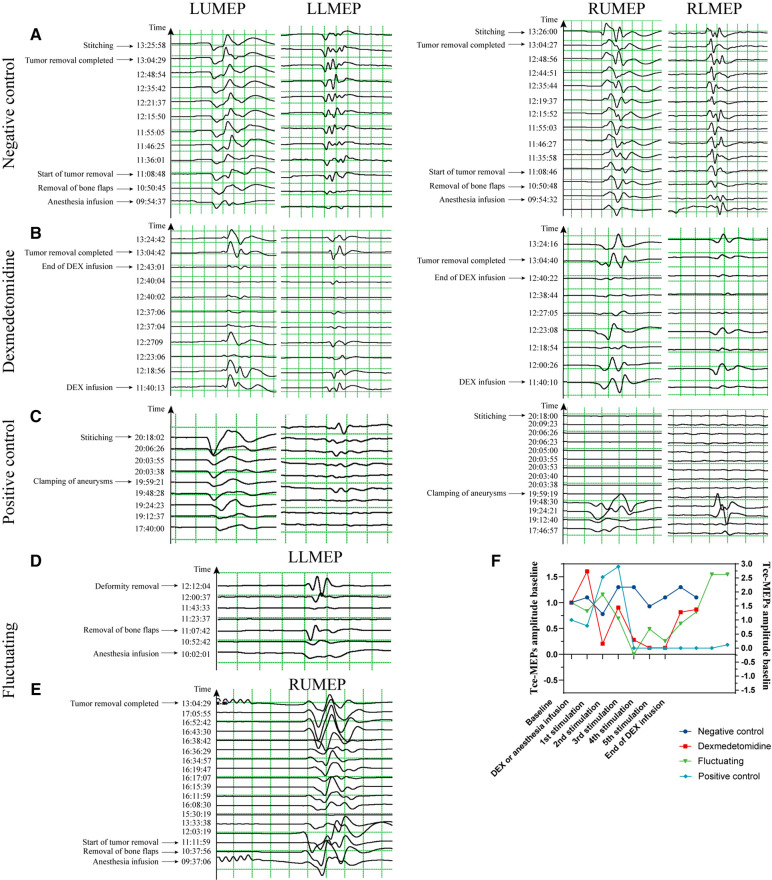
We found that the amplitude of transcranial motor-evoked potentials (Tce-MEPs) was significantly lower in the dexmedetomidine group than in the negative control group ( < 0.0001). There was no statistically significant difference in the somatosensory-evoked potentials (SSEPs) amplitude or the Tce-MEPs or SSEPs latency. There was no significant decrease in postoperative motor function in the dexmedetomidine group compared with the preoperative group, suggesting that there is no evidence that dexmedetomidine affects patient prognosis. In addition, we noticed a synchronized bilateral decrease in the Tce-MEPs amplitude in the dexmedetomidine group and a mostly unilateral decrease on the side of the brain injury in the positive control group ( = 0.001).
Although dexmedetomidine does not affect the prognosis of patients undergoing craniotomy, the potential risks and benefits of applying it as an adjunctive medication during craniotomy should be carefully evaluated. When dexmedetomidine is administered, Tce-MEPs should be monitored. When a decrease in the Tce-MEPs amplitude is detected, the cause of the decrease in the MEPs amplitude can be indirectly determined by whether the decrease is bilateral.
右美托咪定常用于需要术中神经生理监测(IONM)的手术的全静脉麻醉(TIVA)辅助用药。然而,有报道称右美托咪定可能会掩盖术中监测出现神经功能缺损的警示信号。
我们回顾了武汉大学人民医院神经外科2019年3月至2021年3月期间接受手术及IONM的47例患者的术中神经生理监测数据。记录并分析术前和术后运动功能评分。右美托咪定组在麻醉40分钟后以0.5μg/kg/h的速度静脉给药,1小时后停药。
我们发现右美托咪定组的经颅运动诱发电位(Tce-MEPs)波幅显著低于阴性对照组(<0.0001)。体感诱发电位(SSEPs)波幅、Tce-MEPs或SSEPs潜伏期无统计学显著差异。与术前组相比,右美托咪定组术后运动功能无显著下降,这表明没有证据表明右美托咪定会影响患者预后。此外,我们注意到右美托咪定组Tce-MEPs波幅出现双侧同步下降,而阳性对照组主要是脑损伤侧出现单侧下降(=0.001)。
虽然右美托咪定不影响开颅手术患者的预后,但在开颅手术中作为辅助药物应用时,其潜在风险和益处应仔细评估。使用右美托咪定时,应监测Tce-MEPs。当检测到Tce-MEPs波幅下降时,可通过波幅下降是否双侧来间接确定MEPs波幅下降的原因。