Liu Bolin, Qi Lin, Zheng Yanling, Zhang Chao, Zhou Jie, An Zhirui, Wang Bin, Lin Zhuke, Yao Cheng, Wang Yixuan, Yin Guoyu, Dong Hongpo, Li Xiaofei, Liang Xia, Han Ping, Liu Min, Zhang Guosen, Cui Ying, Hou Lijun
Key Laboratory of Geographic Information Science of the Ministry of Education, School of Geographic Sciences, East China Normal University, 500 Dongchuan Road, Shanghai 200241, China.
State Key Laboratory of Estuarine and Coastal Research, Yangtze Delta Estuarine Wetland Ecosystem Observation and Research Station, East China Normal University, 500 Dongchuan Road, Shanghai 200241, China.
ISME J. 2024 Jan 8;18(1). doi: 10.1093/ismejo/wrae138.
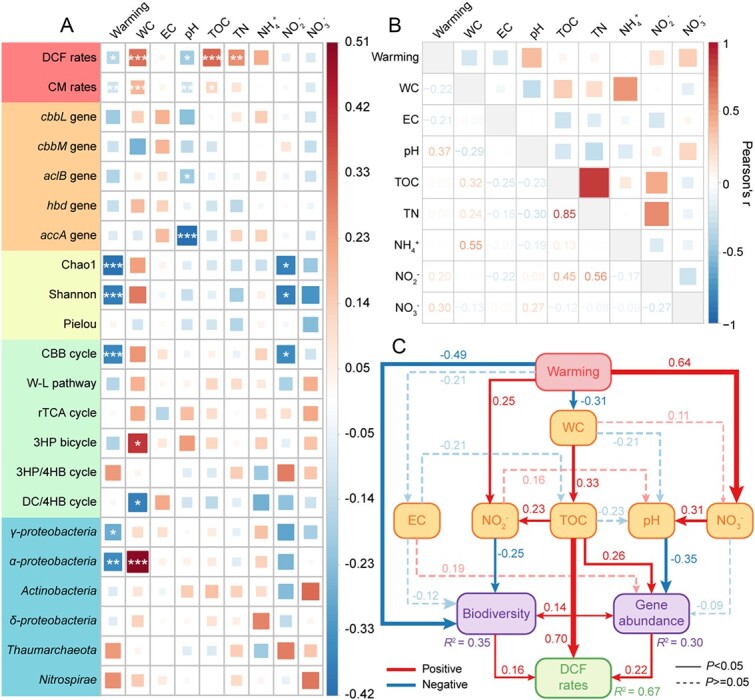
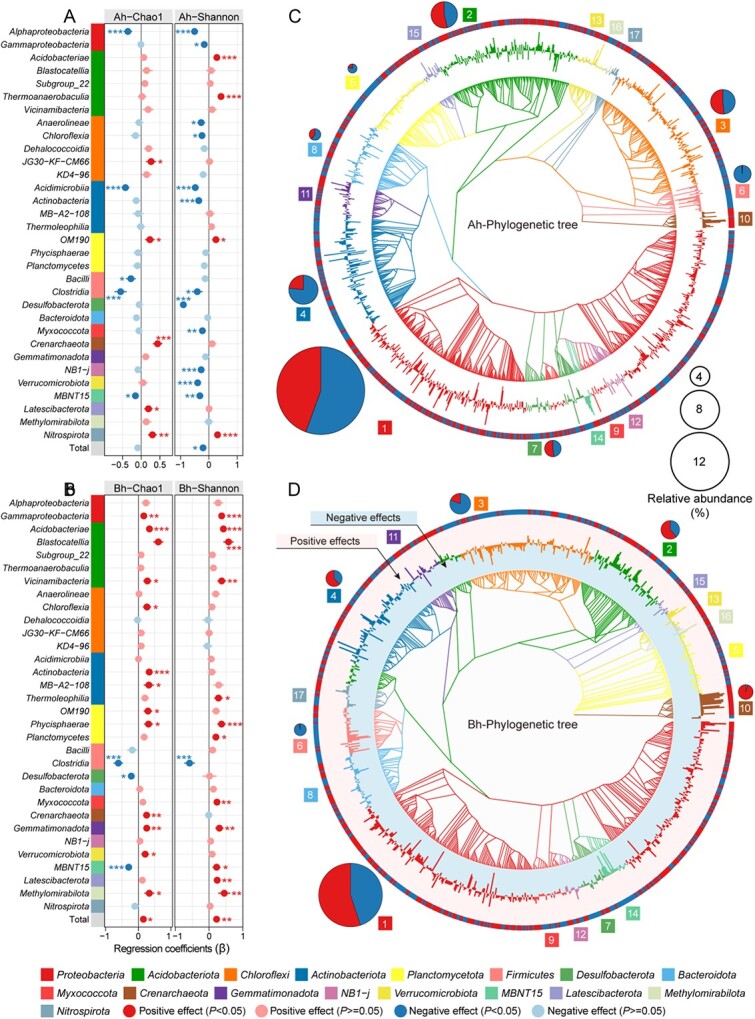
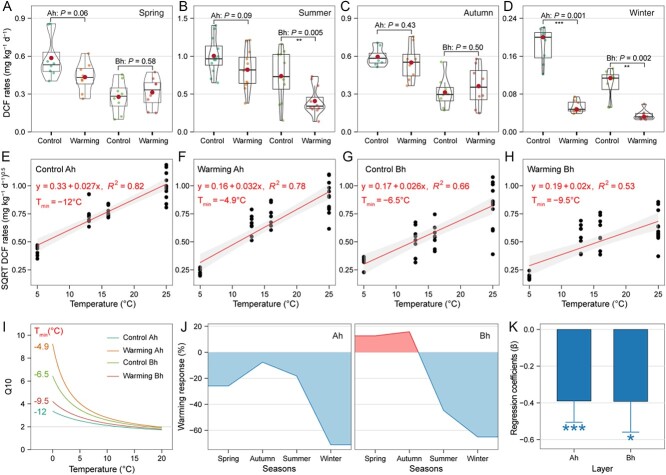
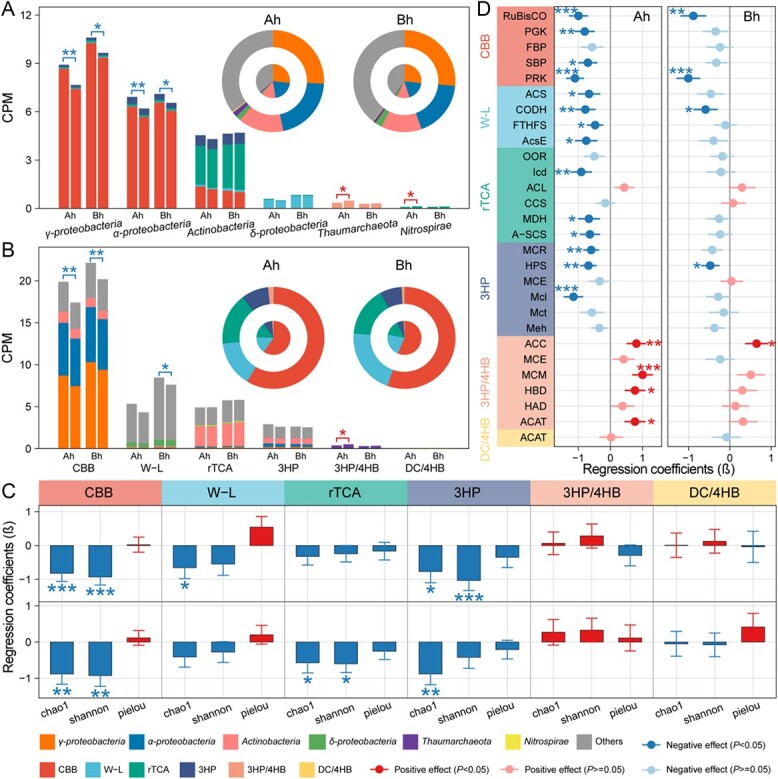
Dark carbon fixation (DCF), conducted mainly by chemoautotrophs, contributes greatly to primary production and the global carbon budget. Understanding the response of DCF process to climate warming in coastal wetlands is of great significance for model optimization and climate change prediction. Here, based on a 4-yr field warming experiment (average annual temperature increase of 1.5°C), DCF rates were observed to be significantly inhibited by warming in coastal wetlands (average annual DCF decline of 21.6%, and estimated annual loss of 0.08-1.5 Tg C yr-1 in global coastal marshes), thus causing a positive climate feedback. Under climate warming, chemoautotrophic microbial abundance and biodiversity, which were jointly affected by environmental changes such as soil organic carbon and water content, were recognized as significant drivers directly affecting DCF rates. Metagenomic analysis further revealed that climate warming may alter the pattern of DCF carbon sequestration pathways in coastal wetlands, increasing the relative importance of the 3-hydroxypropionate/4-hydroxybutyrate cycle, whereas the relative importance of the dominant chemoautotrophic carbon fixation pathways (Calvin-Benson-Bassham cycle and W-L pathway) may decrease due to warming stress. Collectively, our work uncovers the feedback mechanism of microbially mediated DCF to climate warming in coastal wetlands, and emphasizes a decrease in carbon sequestration through DCF activities in this globally important ecosystem under a warming climate.
暗碳固定(DCF)主要由化能自养生物进行,对初级生产和全球碳收支有很大贡献。了解沿海湿地暗碳固定过程对气候变暖的响应对于模型优化和气候变化预测具有重要意义。在此,基于一项为期4年的田间增温实验(年均温度升高1.5°C),观察到沿海湿地的暗碳固定速率受到增温的显著抑制(全球沿海湿地年均暗碳固定下降21.6%,估计每年损失0.08 - 1.5 Tg C yr-1),从而导致正的气候反馈。在气候变暖条件下,受土壤有机碳和含水量等环境变化共同影响的化能自养微生物丰度和生物多样性被认为是直接影响暗碳固定速率的重要驱动因素。宏基因组分析进一步表明,气候变暖可能改变沿海湿地暗碳固定碳汇途径的模式,增加3-羟基丙酸/4-羟基丁酸循环的相对重要性,而主要的化能自养碳固定途径(卡尔文-本森-巴斯姆循环和W-L途径)的相对重要性可能因变暖胁迫而降低。总体而言,我们的工作揭示了微生物介导的暗碳固定对沿海湿地气候变暖的反馈机制,并强调在气候变暖的情况下,这个全球重要生态系统中通过暗碳固定活动的碳汇减少。