Medical Investigation Laboratory 60, School of Medicine, University of São Paulo, Brazil.
Department of Internal Medicine, Erasmus Medical Center, Rotterdam, the Netherlands.
J Infect Dis. 2024 Jul 25;230(1):e60-e64. doi: 10.1093/infdis/jiad389.
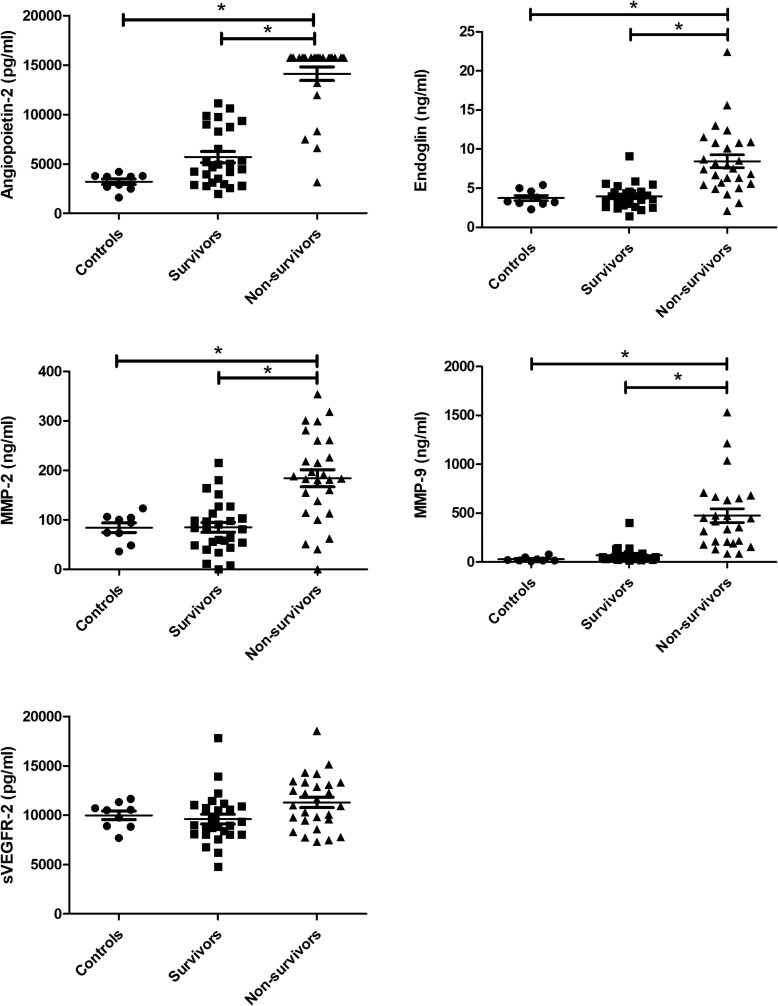
In 2018 there was a large yellow fever outbreak in São Paulo, Brazil, with a high fatality rate. Yellow fever virus can cause, among other symptoms, hemorrhage and disseminated intravascular coagulation, indicating a role for endothelial cells in disease pathogenesis. Here, we conducted a case-control study and measured markers related to endothelial damage in plasma and its association with mortality. We found that angiopoietin 2 is strongly associated with a fatal outcome and could serve as a predictive marker for mortality. This could be used to monitor severe cases and provide care to improve disease outcome.
2018 年,巴西圣保罗爆发了一场大规模的黄热病疫情,死亡率很高。黄热病病毒除其他症状外,还可引起出血和弥散性血管内凝血,表明内皮细胞在疾病发病机制中起作用。在这里,我们进行了一项病例对照研究,并测量了血浆中与内皮损伤相关的标志物及其与死亡率的关系。我们发现血管生成素 2 与致命结局密切相关,可作为死亡率的预测标志物。这可用于监测重症病例并提供护理以改善疾病结局。