Lara-Carrillo Edith, Velázquez-Enríquez Ulises, Ramírez-García Brenda Andrea, Lara-Fonseca María Fernanda, Morales-Luckie Raúl A, Santillán-Reyes Ana Miriam, Toral-Rizo Victor Hugo, Salmerón-Valdés Elias Nahúm, Morales-Valenzuela Adriana Alejandra
Center for Research and Advanced Studies in Dentistry, School of Dentistry, Autonomous University of Mexico State, Toluca de Lerdo 50130, Mexico.
School of Dentistry, Autonomous University of Mexico State, Toluca de Lerdo 50130, Mexico.
Dent J (Basel). 2024 Jun 24;12(7):193. doi: 10.3390/dj12070193.
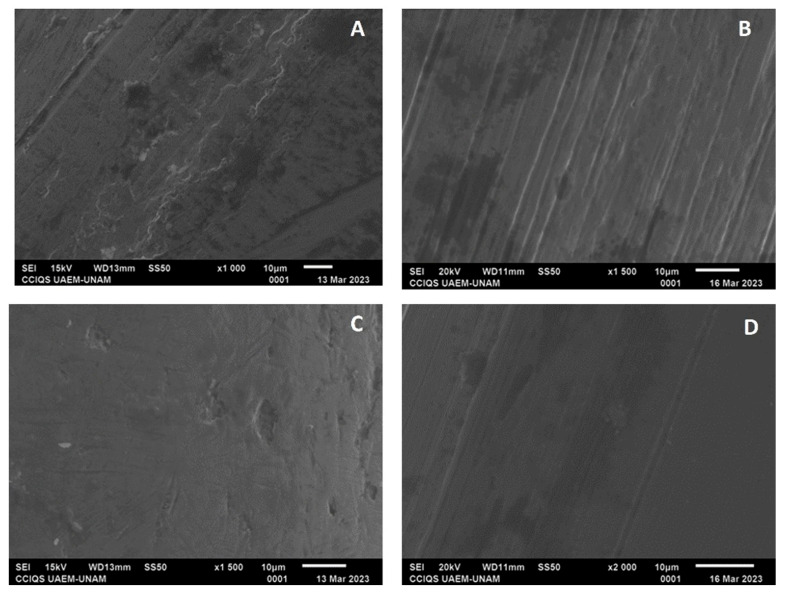
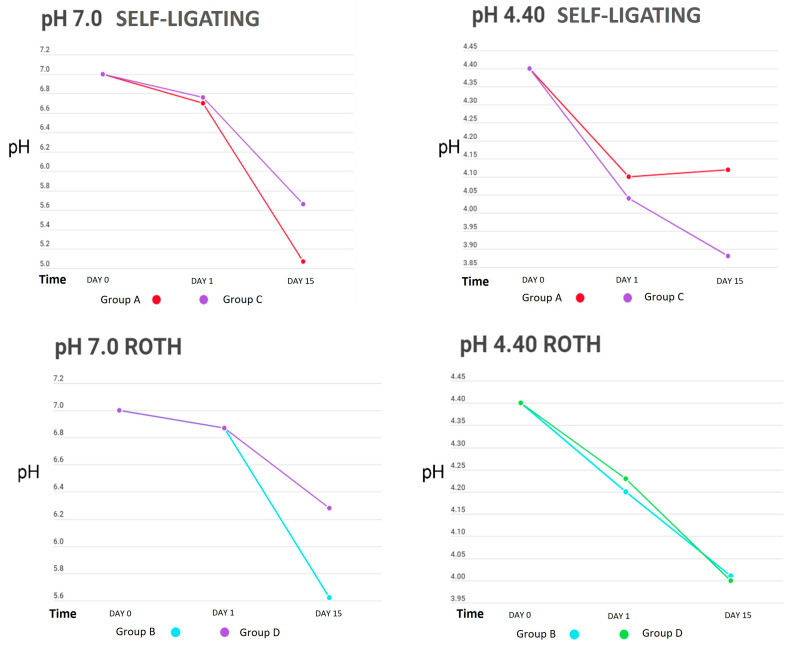
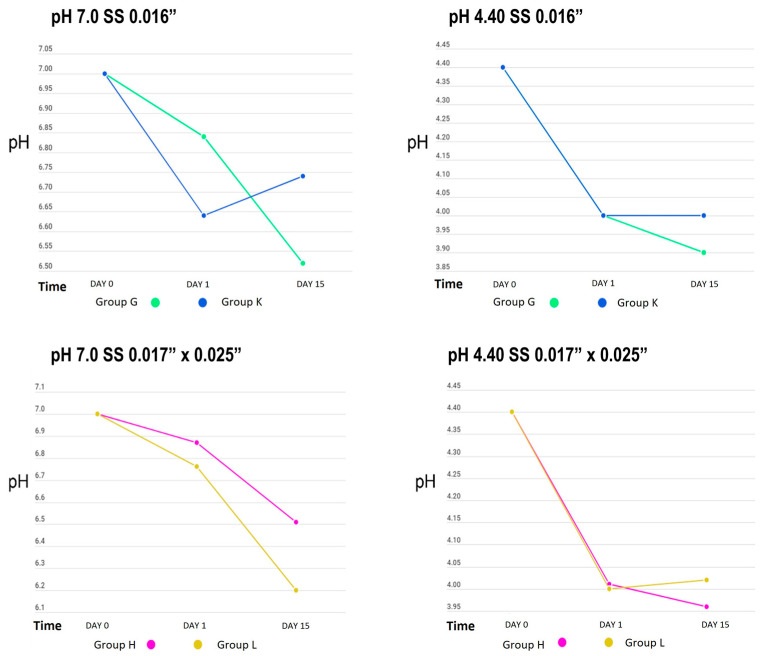
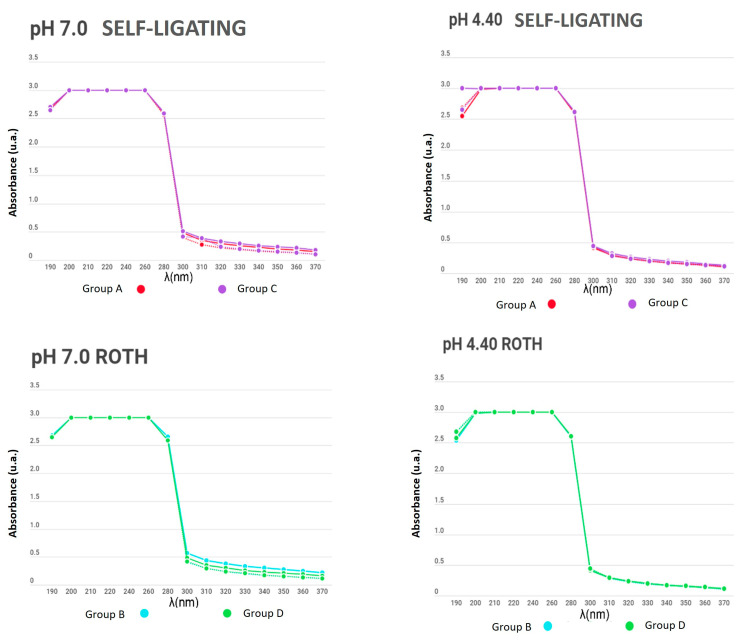
Electropolishing is a common treatment in the industry; however, how it behaves in the mouth and what benefits it can bring over metal dental attachments have not yet been established. Thus, the aim of this study was to determine the levels of corrosion, the released metal ions, and the changes in structural composition in metallic orthodontic appliances following electropolishing treatment. This study included 56 orthodontic brackets and 28 archwires. The samples were subjected to a pH cycle to simulate an oral environment. Using UV-Vis spectrophotometry, the release of metallic particles was evaluated, and using scanning electron microscopy, the structural and composition changes were evaluated. Groups were compared using Student's -tests with a value of ≤ 0.05. The cyclical pH solutions showed variations between groups and days (1, 3, 5, 7 and 15), reaching the highest acidification in the self-ligating brackets; the absorbance between solutions did not differ significantly. As seen from the SEM results, the experimental group showed minor irregularities compared with the control groups. The experimental brackets decreased in iron and increased in chromium after electropolishing, while for the NiTi archwires, they decreased in nickel. Therefore, electropolishing treatments in metallic orthodontic attachments improve their surface structure and corrosion resistance could reduce the risk of metal hypersensitivity, mainly from nickel.
电解抛光是该行业常用的一种处理方法;然而,它在口腔中的表现以及相对于金属牙科附件能带来哪些益处尚未明确。因此,本研究的目的是确定电解抛光处理后金属正畸矫治器的腐蚀程度、释放的金属离子以及结构组成的变化。本研究包括56个正畸托槽和28根弓丝。对样本进行pH循环以模拟口腔环境。使用紫外可见分光光度法评估金属颗粒的释放情况,并使用扫描电子显微镜评估结构和成分变化。采用Student's -检验对各组进行比较,P值≤0.05。循环pH溶液在组间和天数(1、3、5、7和15天)存在差异,自锁托槽的酸化程度最高;溶液之间的吸光度无显著差异。从扫描电子显微镜结果来看,与对照组相比,实验组显示出较小的不规则性。电解抛光后,实验托槽的铁含量降低,铬含量增加,而对于镍钛弓丝,镍含量降低。因此,对金属正畸附件进行电解抛光处理可改善其表面结构,提高耐腐蚀性,从而降低金属过敏风险,主要是镍过敏风险。