Li Hao, Sun Qianyu, Li Fei, Wang Boshen, Zhu Baoli
Key Laboratory of Environmental Medicine Engineering of Ministry of Education, Southeast University, Nanjing 210009, China.
Nanjing Jiangning District Center for Disease Prevention and Control, Nanjing 211100, China.
Metabolites. 2024 Jul 3;14(7):377. doi: 10.3390/metabo14070377.
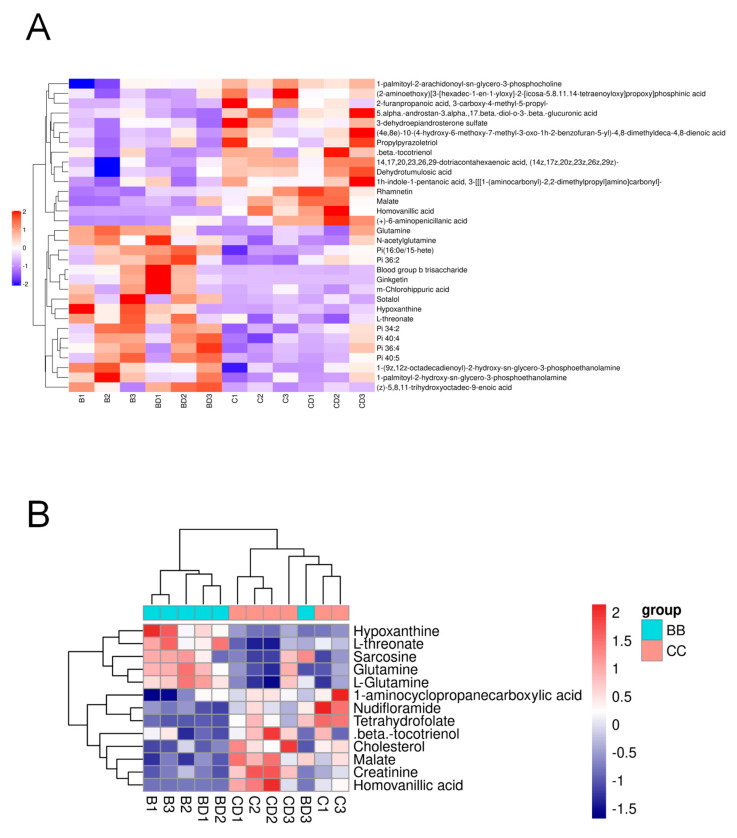
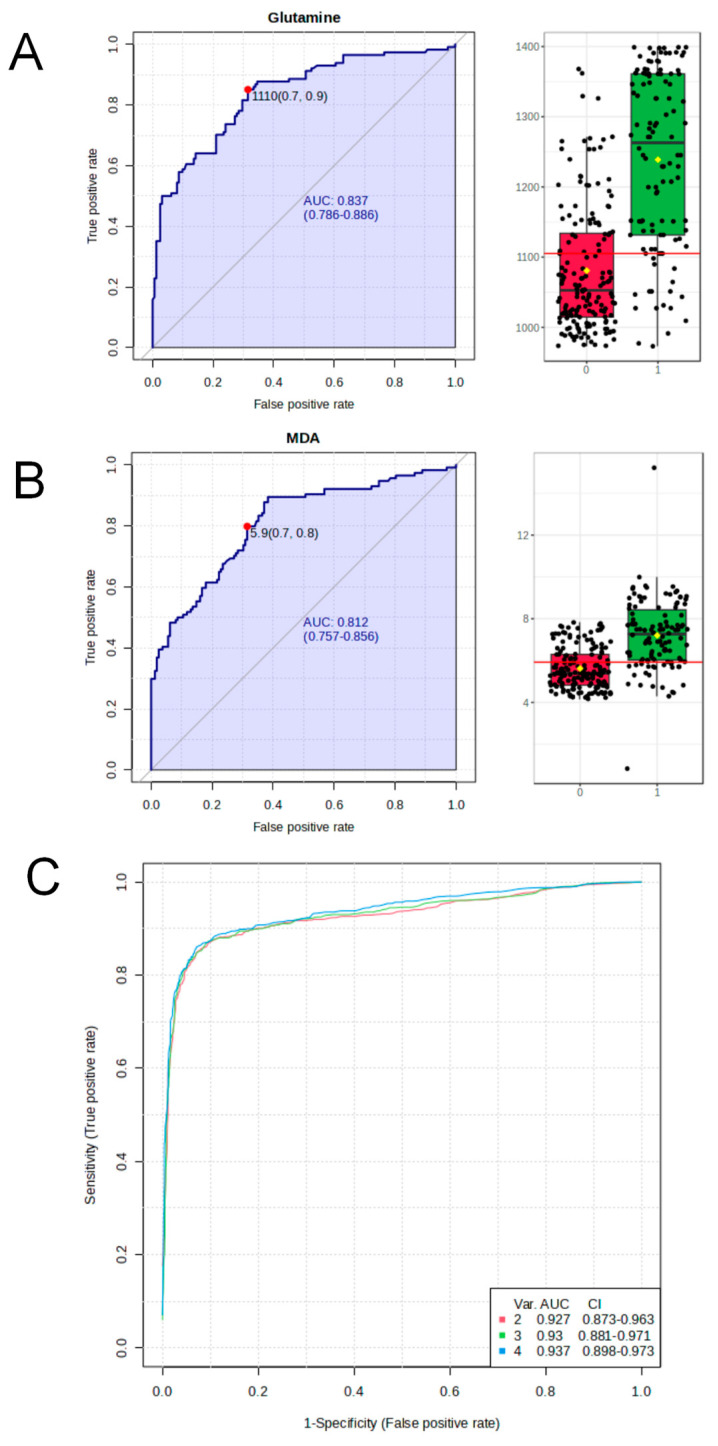
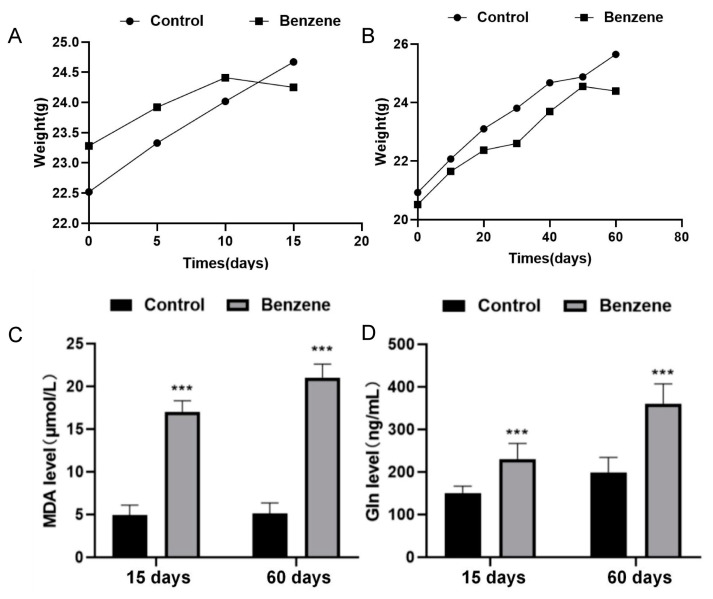
Benzene, a common industrial solvent, poses significant health risks including poisoning and hematopoietic diseases. However, its precise toxicity mechanisms remain unclear. To assess the health impact of prolonged benzene exposure through metabolomic analyses of exposed workers and benzene-poisoned mice, aiming to identify biomarkers and minimize occupational hazards. This study compared 18 benzene-exposed workers with 18 non-exposed workers, matching for age, lifestyle, and BMI. The metabolites in the workers' samples were analyzed using ultra-high-performance liquid chromatography and mass spectrometry. A larger study included 118 exposed and 158 non-exposed workers, incorporating surveys and routine blood and urine tests with differential metabolites targeted via an enzyme-linked immunosorbent assay. The animal studies consisted of two 15- and 60-day benzene staining and control experiments on 28 C57BL/6J mice, followed by sample collection and organ analysis. The data analysis employed eXtensible Computational Mass Spectrometry (XCMS), Python, MetaboAnalyst 6.0, and SPSS24.0. The exposed workers exhibited altered metabolites indicating external benzene exposure, lower glucose levels, and changes in white blood cell counts and urinary ketone bodies. The plasma metabolomics revealed disturbances in energy and lipid metabolism. The benzene-exposed mice displayed reduced weight gain, behavioral changes, and organ damage. Oxidative stress and abnormal purine and lipid metabolism were observed in both the long-term benzene-exposed workers and benzene-exposed mice. Metabolic markers for the early detection of benzene exposure hazards were identified, underscoring the need to mitigate occupational risks.
苯是一种常见的工业溶剂,会带来包括中毒和造血系统疾病在内的重大健康风险。然而,其确切的毒性机制仍不清楚。为了通过对接触苯的工人和苯中毒小鼠进行代谢组学分析来评估长期接触苯对健康的影响,旨在识别生物标志物并将职业危害降至最低。本研究将18名接触苯的工人与18名未接触苯的工人进行了比较,在年龄、生活方式和体重指数方面进行了匹配。使用超高效液相色谱和质谱分析工人样本中的代谢物。一项规模更大的研究纳入了118名接触苯的工人和158名未接触苯的工人,结合了调查以及通过酶联免疫吸附测定针对差异代谢物的常规血液和尿液检测。动物研究包括对28只C57BL/6J小鼠进行的两个为期15天和60天的苯染毒及对照实验,随后进行样本采集和器官分析。数据分析采用了可扩展计算质谱法(XCMS)、Python、MetaboAnalyst 6.0和SPSS24.0。接触苯的工人表现出代谢物改变,表明有外部苯暴露、血糖水平降低以及白细胞计数和尿酮体的变化。血浆代谢组学揭示了能量和脂质代谢的紊乱。接触苯的小鼠体重增加减少、行为改变且出现器官损伤。在长期接触苯的工人和接触苯的小鼠中均观察到氧化应激以及嘌呤和脂质代谢异常。确定了用于早期检测苯暴露危害的代谢标志物,强调了减轻职业风险的必要性。