Liu Mengshuang, Liu Hui, Mei Fangtong, Yang Niping, Zhao Dahe, Ai Guomin, Xiang Hua, Zheng Yanning
State Key Laboratory of Microbial Resources, Institute of Microbiology, Chinese Academy of Sciences, Beijing, China.
College of Life Science, University of Chinese Academy of Sciences, Beijing, China.
Front Microbiol. 2022 Apr 18;13:875843. doi: 10.3389/fmicb.2022.875843. eCollection 2022.
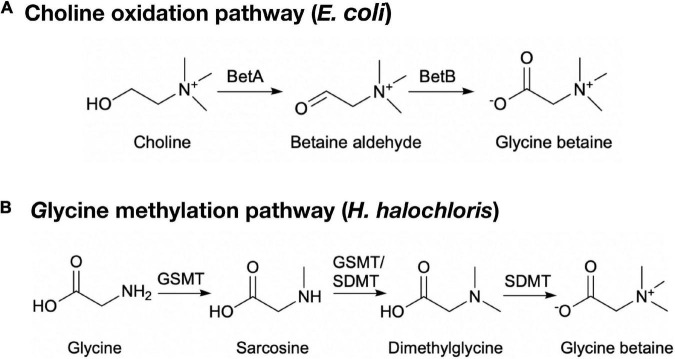
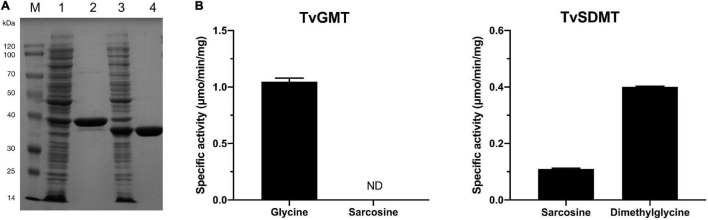
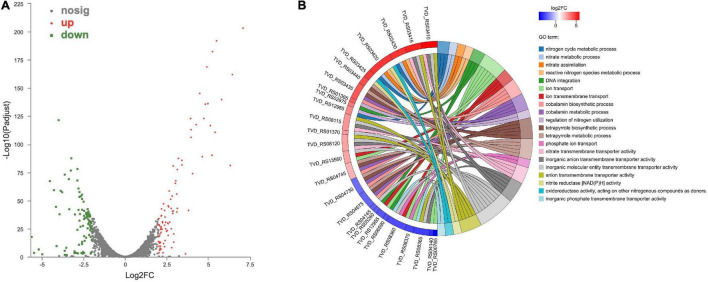
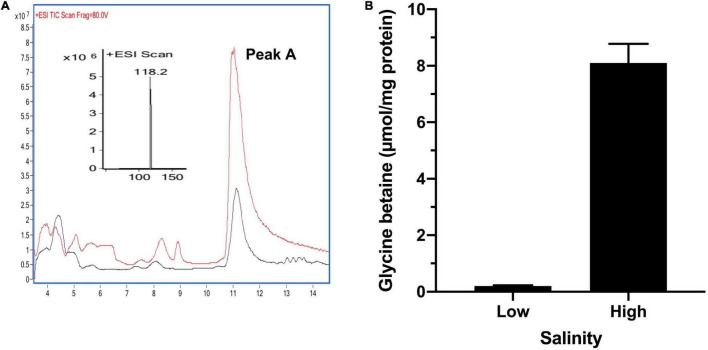
D301 has been widely used in the biodesulfurization process, as it is capable of oxidizing hydrogen sulfide to elemental sulfur under strongly halo-alkaline conditions. Glycine betaine contributes to the increased tolerance to extreme environments in some of species. However, the biosynthetic pathway of glycine betaine in remained unknown. Here, we found that genes associated with nitrogen metabolism of D301 were significantly upregulated under high-salt conditions, causing the enhanced production of glycine betaine that functions as a main compatible solute in response to the salinity stress. Glycine betaine was synthesized by glycine methylation pathway in D301, with glycine -methyltransferase (GMT) and sarcosine dimethylglycine -methyltransferase (SDMT) as key enzymes in this pathway. Moreover, substrate specificities of GMT and SDMT were quite different from the well characterized enzymes for glycine methylation in halophilic . Our results illustrate the glycine betaine biosynthetic pathway in the genus of for the first time, providing us with a better understanding of the biosynthesis of glycine betaine in haloalkaliphilic .
D301已广泛应用于生物脱硫过程,因为它能够在强卤碱性条件下将硫化氢氧化为元素硫。甘氨酸甜菜碱有助于某些物种提高对极端环境的耐受性。然而,D301中甘氨酸甜菜碱的生物合成途径仍然未知。在这里,我们发现D301中与氮代谢相关的基因在高盐条件下显著上调,导致甘氨酸甜菜碱产量增加,甘氨酸甜菜碱作为主要的相容性溶质来响应盐度胁迫。D301中甘氨酸甜菜碱通过甘氨酸甲基化途径合成,甘氨酸甲基转移酶(GMT)和肌氨酸二甲基甘氨酸甲基转移酶(SDMT)是该途径中的关键酶。此外,GMT和SDMT的底物特异性与嗜盐菌中已充分表征的甘氨酸甲基化酶有很大不同。我们的结果首次阐明了D301属中甘氨酸甜菜碱的生物合成途径,使我们对嗜盐碱菌中甘氨酸甜菜碱的生物合成有了更好的理解。