Qian Yi, Zhu Jianqiang, Guo Ruyue, Jin Hangbiao
Department of Environmental Engineering, Taizhou University, Taizhou 318000, China.
Key Laboratory of Microbial Technology for Industrial Pollution Control of Zhejiang Province, College of Environment, Zhejiang University of Technology, Hangzhou 310032, China.
Toxics. 2024 Jun 21;12(7):448. doi: 10.3390/toxics12070448.
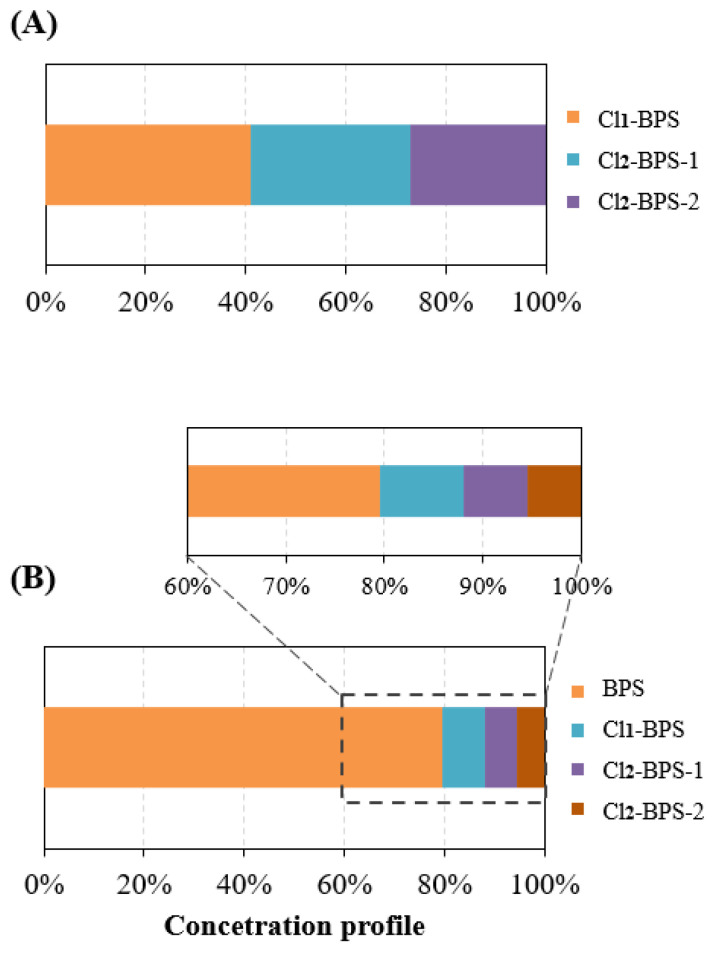
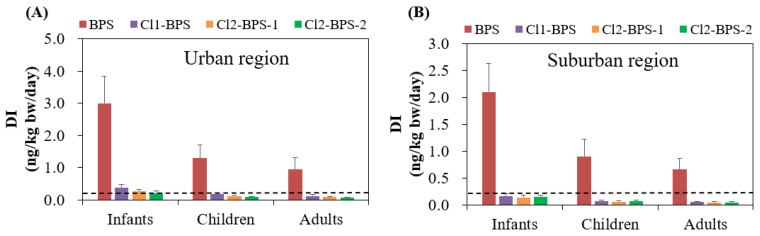
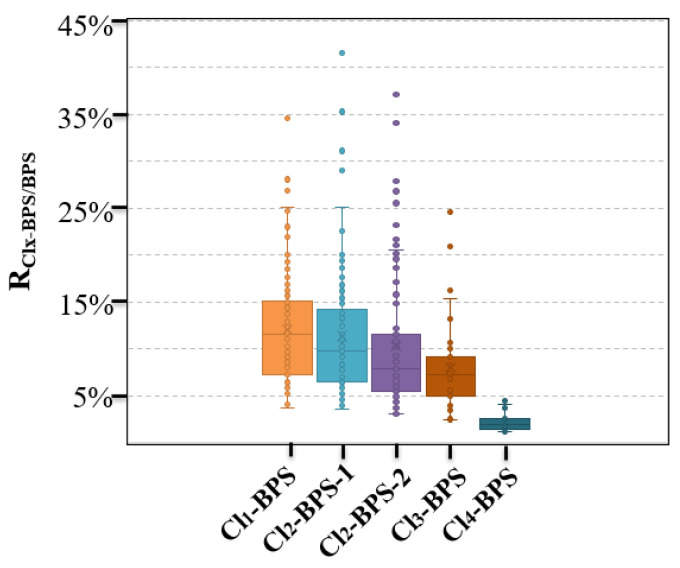
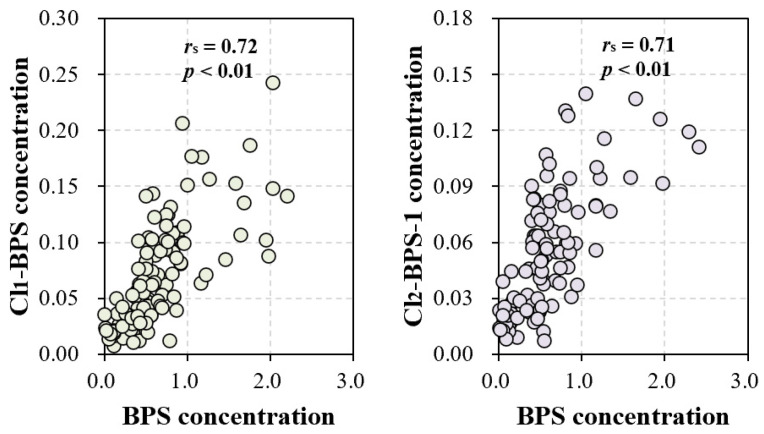
Bisphenol S (BPS), an environmental endocrine disruptor, has been identified in global environmental matrices. Nevertheless, limited studies have investigated the presence of chlorinated analogues of BPS (Clx-BPSs) with potential estrogenic activities in environmental matrices. In this study, the occurrence of BPS and five types of Clx-BPSs was characterized in indoor dust ( = 178) from Hangzhou City. BPS was measurable in 94% of indoor dust samples, with an average level of 0.63 μg/g (<LD-2.4 μg/g). Among the detected Clx-BPSs homologues, Cl-BPS (2-chloro-4-(4-hydroxyphenyl)sulfonylphenol; detection frequency 70%), Cl-BPS-2 (2-chloro-4-(3-chloro-4-hydroxyphenyl)sulfonylphenol; 65%), and Cl-BPS-1 (2,6-dichloro-4-(4-hydroxyphenyl)sulfonylphenol; 61%) were among the frequently detected Clx-BPSs. Cl-BPS was the most abundant analyte, with an average of 0.048 μg/g (<LD-0.24 μg/g), followed by Cl-BPS-1 (0.035 μg/g, <LD-0.14 μg/g), and Cl-BPS-2 (0.031 μg/g, <LD-0.13 μg/g). Significant correlations in indoor dust concentrations were observed between BPS and Cl-BPS ( < 0.01), as well as between BPS and Cl-BPS-1 ( < 0.01). Moreover, an estimation was made for the total daily intake of Clx-BPSs via the ingestion of indoor dust by infants, children, and adults. This study presents the first evidence of the existence of Clx-BPSs in indoor dust, concurrently highlighting the necessity to address their potential human exposure risks.
双酚S(BPS)是一种环境内分泌干扰物,已在全球环境介质中被检测到。然而,关于环境介质中具有潜在雌激素活性的BPS氯化类似物(Clx-BPSs)的研究却很有限。在本研究中,对杭州市室内灰尘(n = 178)中BPS和五种Clx-BPSs的存在情况进行了表征。94%的室内灰尘样本中可检测到BPS,平均含量为0.63 μg/g(<最低检测限-2.4 μg/g)。在检测到的Clx-BPSs同系物中,Cl-BPS(2-氯-4-(4-羟基苯基)磺酰基苯酚;检测频率70%)、Cl-BPS-2(2-氯-4-(3-氯-4-羟基苯基)磺酰基苯酚;65%)和Cl-BPS-1(2,6-二氯-4-(4-羟基苯基)磺酰基苯酚;61%)是最常检测到的Clx-BPSs。Cl-BPS是含量最高的分析物,平均含量为0.048 μg/g(<最低检测限-0.24 μg/g),其次是Cl-BPS-1(0.035 μg/g,<最低检测限-0.14 μg/g)和Cl-BPS-2(0.031 μg/g,<最低检测限-0.13 μg/g)。室内灰尘浓度中,BPS与Cl-BPS之间(p < 0.01)以及BPS与Cl-BPS-1之间(p < 0.01)均存在显著相关性。此外,还对婴儿、儿童和成人通过摄入室内灰尘而摄入Clx-BPSs的每日总摄入量进行了估算。本研究首次证明了室内灰尘中存在Clx-BPSs,同时强调了应对其潜在人体暴露风险的必要性。