Agrawal Prachee, Abimbola Seye
Faculty of Medicine and Health, The University of Sydney, Sydney, New South Wales, Australia.
PLOS Glob Public Health. 2024 Jul 26;4(7):e0003415. doi: 10.1371/journal.pgph.0003415. eCollection 2024.
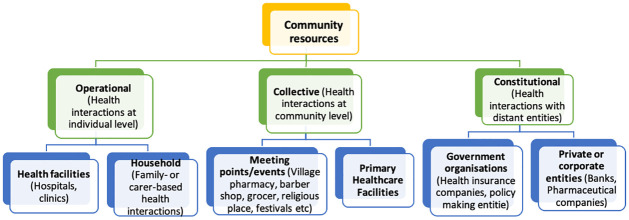
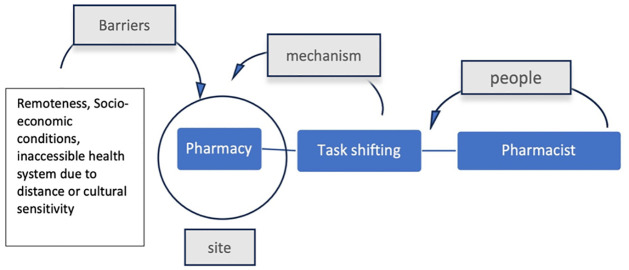
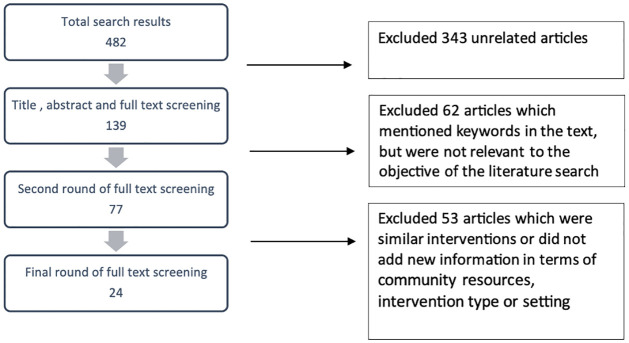
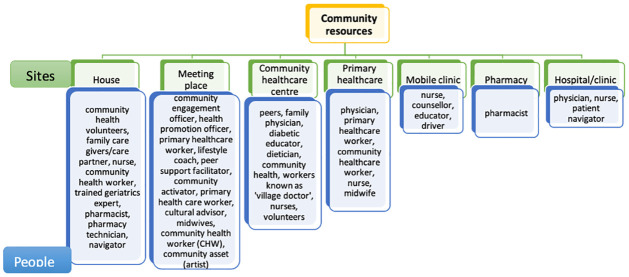
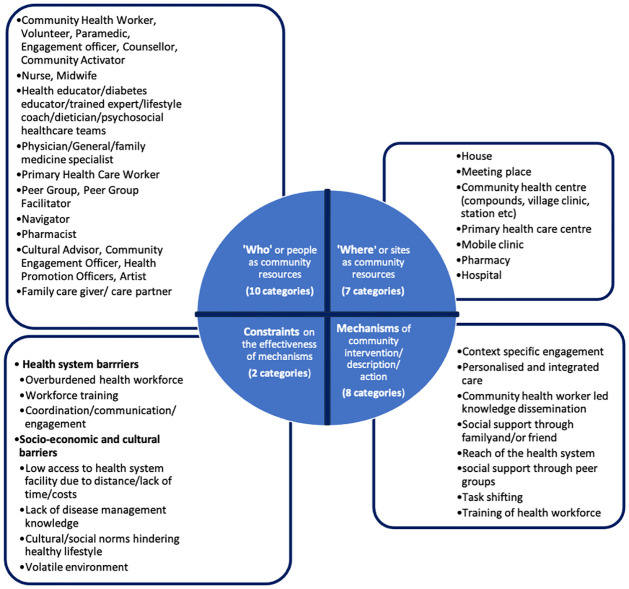
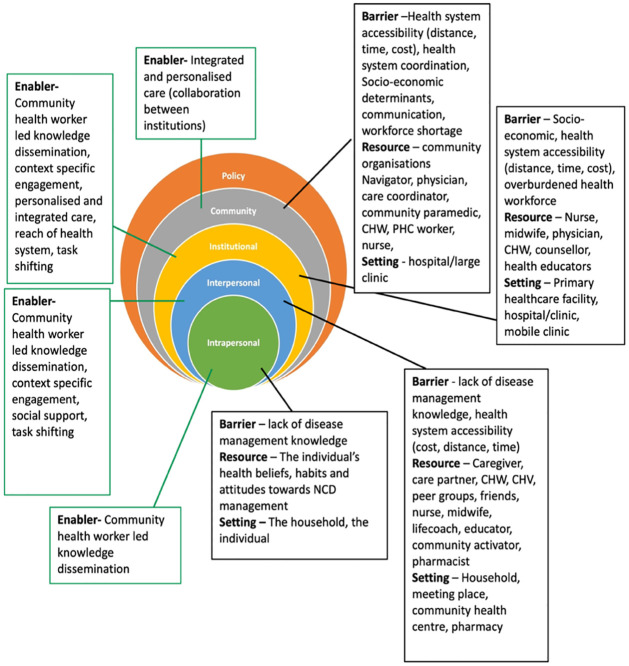
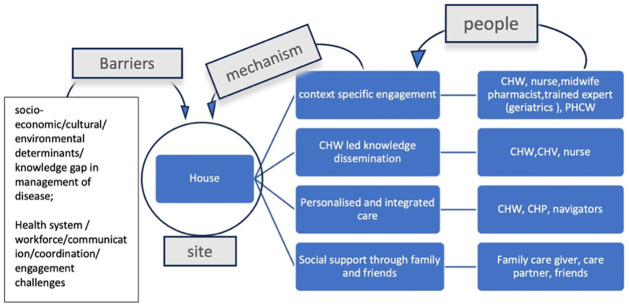
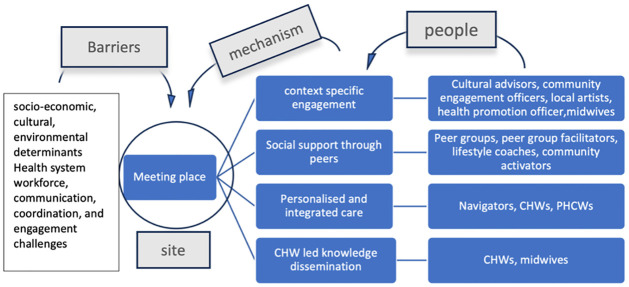
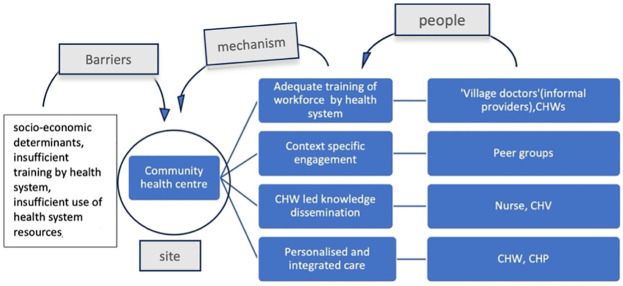
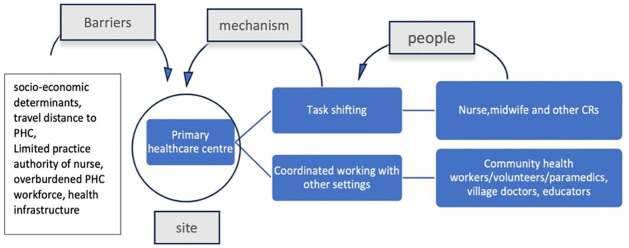
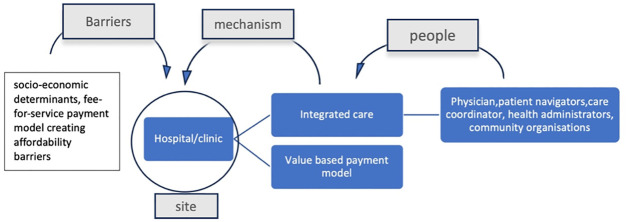
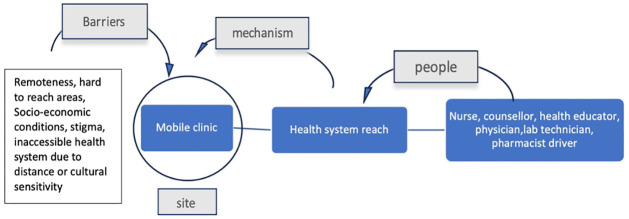
The prevention and management of chronic non-communicable diseases (NCDs) require community-based efforts-especially as their burden grows, and recognition of the need for engaging diverse stakeholders in care grows. The aim of this conceptual analysis was to categorise existing community resources (people and sites) used to support such efforts, the mechanisms by which they work, and the conditions that constrain their effectiveness. We developed an initial framework for categorising community resources. We then used a sample of the literature- 24 studies from 12 countries-to refine and enrich the framework. We identified seven categories of sites ('where': House, Meeting place, Community health centre, Primary health care centre, Mobile clinic, Pharmacy, and Hospital) and ten categories of people ('who': Community Health Worker, Nurse/Midwife, Health educator, Physician, Primary Health Care Worker, Peer Group, Navigator, Pharmacist, Cultural Advisor, Family caregiver). We identified eight mechanisms through which those resources improve NCD prevention and management: Context specific engagement, Personalised and integrated care, Community health worker led knowledge dissemination, Social support through family and/or friends, Extending the reach of the health system, Social support through peer groups, Task shifting, and Training of health workforce. We identified two broad categories of constraints on these mechanisms: (i) health system barriers such as inadequate workforce, training, coordination and engagement; and (ii) socio-economic, political, and cultural barriers to care. The conceptual categories (of people and sites as resources, the mechanisms through which they work and the contextual constraints on their effectiveness) identified in this analysis may be useful in further analysing current approaches in NCD efforts using community resources, in informing the development of community-based efforts, and in exploring the commonalities and transferable insights between different locations or settings around the world and between different efforts to prevent and manage NCDs within communities.
慢性非传染性疾病(NCDs)的预防和管理需要基于社区的努力,尤其是随着其负担的增加,以及对让不同利益相关者参与护理的需求的认识不断提高。本概念分析的目的是对用于支持此类努力的现有社区资源(人员和场所)、它们发挥作用的机制以及限制其有效性的条件进行分类。我们开发了一个对社区资源进行分类的初始框架。然后,我们使用了一个文献样本——来自12个国家的24项研究——来完善和丰富该框架。我们确定了七类场所(“哪里”:家庭、会议场所、社区卫生中心、初级卫生保健中心、流动诊所、药房和医院)和十类人员(“谁”:社区卫生工作者、护士/助产士、健康教育工作者、医生、初级卫生保健工作者、同伴群体、导航员、药剂师、文化顾问、家庭照顾者)。我们确定了这些资源改善非传染性疾病预防和管理的八种机制:针对具体情况的参与、个性化和综合护理、由社区卫生工作者主导的知识传播、通过家人和/或朋友提供的社会支持、扩大卫生系统的覆盖范围、通过同伴群体提供的社会支持、任务转移以及卫生人力培训。我们确定了对这些机制的两大类限制:(i)卫生系统障碍,如劳动力不足、培训不足、协调不足和参与不足;以及(ii)护理方面的社会经济、政治和文化障碍。本分析中确定的概念类别(作为资源的人员和场所、它们发挥作用的机制以及对其有效性的背景限制)可能有助于进一步分析当前利用社区资源开展的非传染性疾病防治工作方法,为基于社区的努力的发展提供信息,并探索世界各地不同地点或环境之间以及社区内不同非传染性疾病预防和管理努力之间的共性和可借鉴的见解。