Lin Lan, Wu Yutong, Liu Lingyu, Sun Shen, Wu Shuicai
Department of Biomedical Engineering, College of Chemistry and Life Science, Beijing University of Technology, Beijing 100124, China.
Intelligent Physiological Measurement and Clinical Translation, Beijing International Base for Scientific and Technological Cooperation, Beijing University of Technology, Beijing 100124, China.
Bioengineering (Basel). 2024 Jun 25;11(7):647. doi: 10.3390/bioengineering11070647.
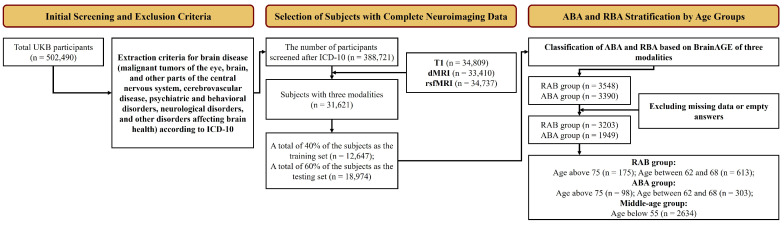
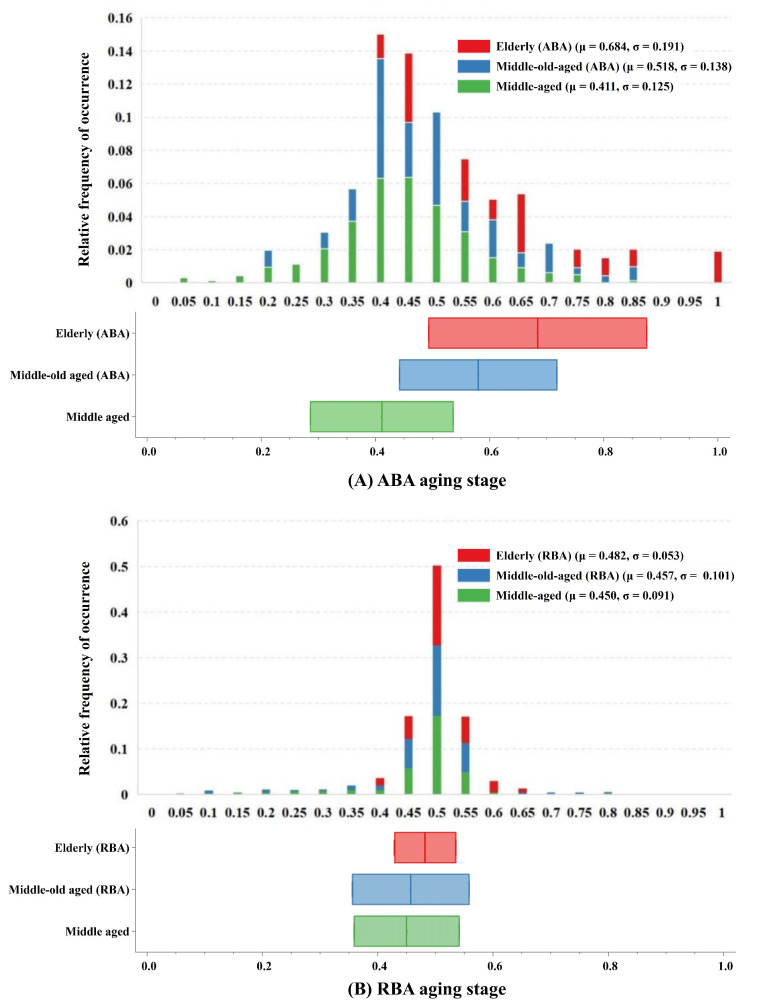
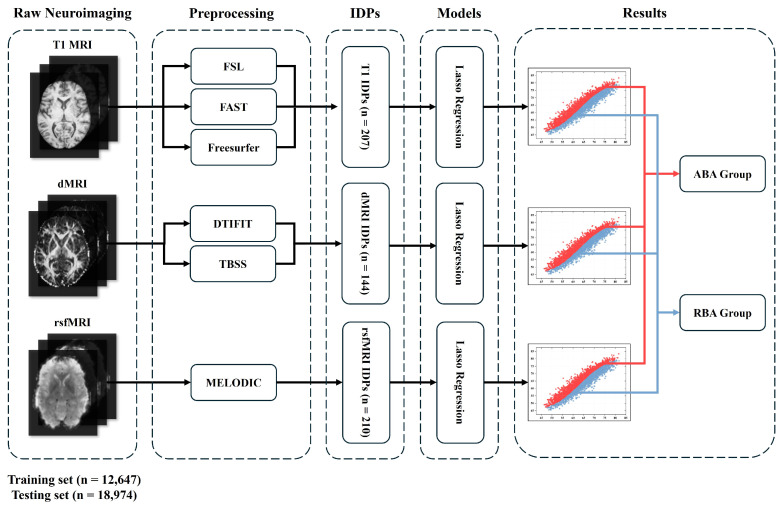
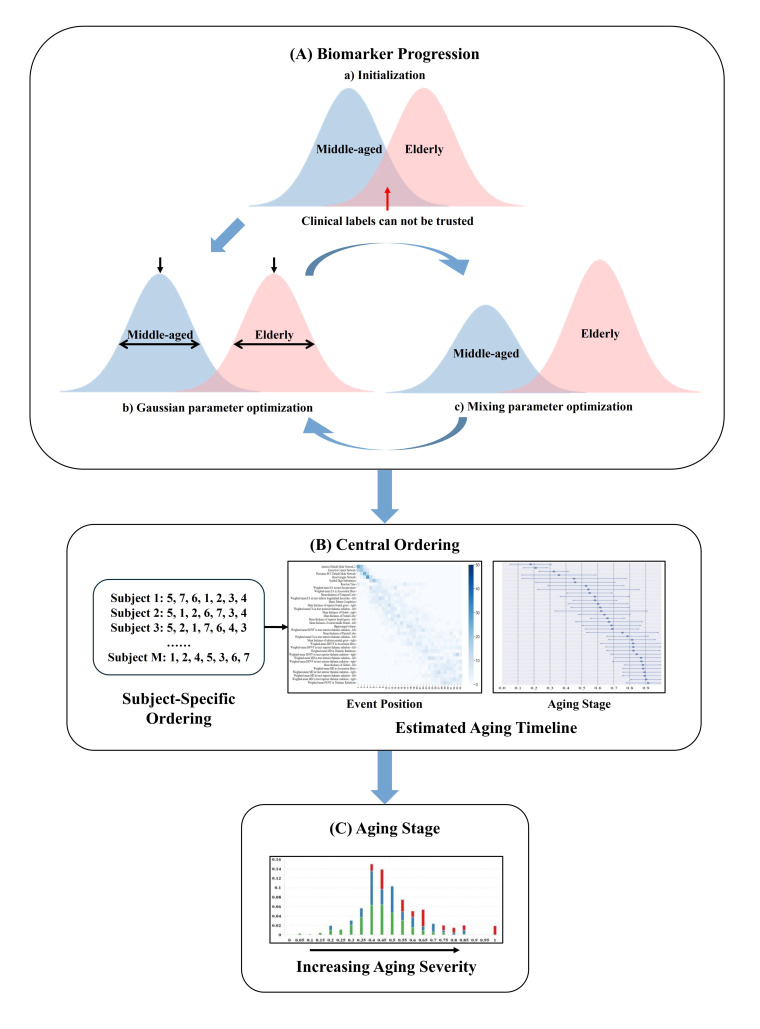
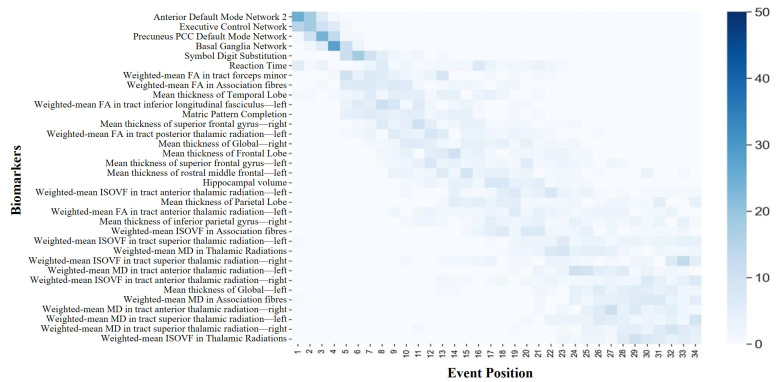
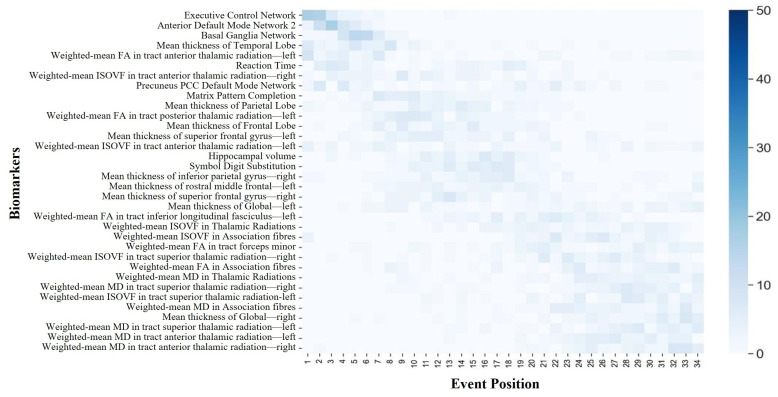
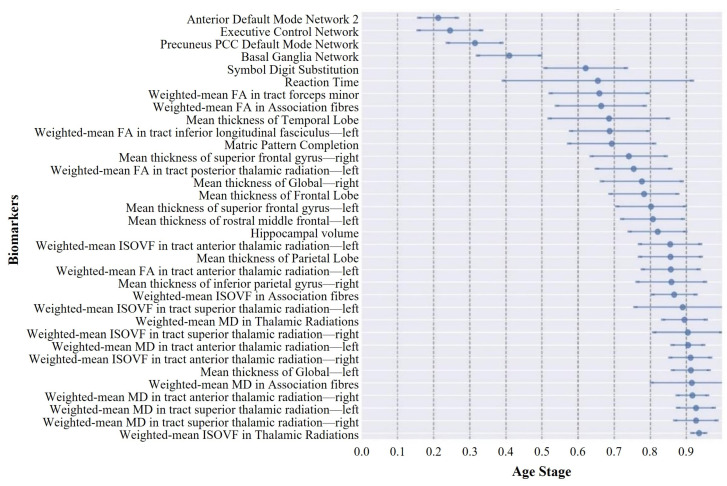
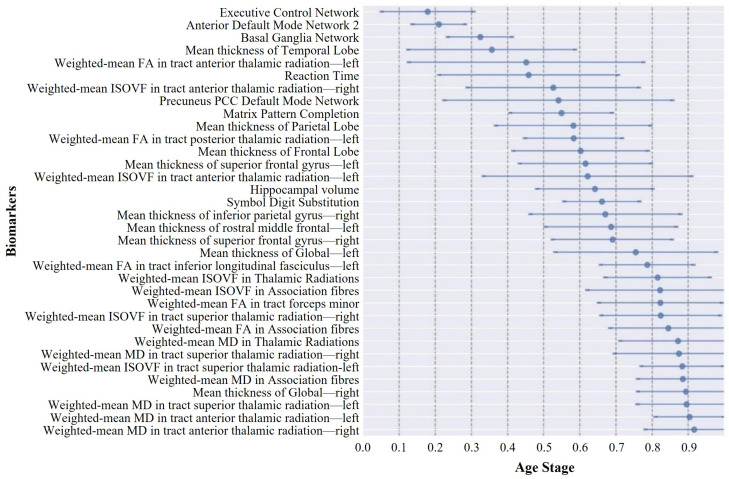
The intricate dynamics of brain aging, especially the neurodegenerative mechanisms driving accelerated (ABA) and resilient brain aging (RBA), are pivotal in neuroscience. Understanding the temporal dynamics of these phenotypes is crucial for identifying vulnerabilities to cognitive decline and neurodegenerative diseases. Currently, there is a lack of comprehensive understanding of the temporal dynamics and neuroimaging biomarkers linked to ABA and RBA. This study addressed this gap by utilizing a large-scale UK Biobank (UKB) cohort, with the aim to elucidate brain aging heterogeneity and establish the foundation for targeted interventions. Employing Lasso regression on multimodal neuroimaging data, structural MRI (sMRI), diffusion MRI (dMRI), and resting-state functional MRI (rsfMRI), we predicted the brain age and classified individuals into ABA and RBA cohorts. Our findings identified 1949 subjects (6.2%) as representative of the ABA subpopulation and 3203 subjects (10.1%) as representative of the RBA subpopulation. Additionally, the Discriminative Event-Based Model (DEBM) was applied to estimate the sequence of biomarker changes across aging trajectories. Our analysis unveiled distinct central ordering patterns between the ABA and RBA cohorts, with profound implications for understanding cognitive decline and vulnerability to neurodegenerative disorders. Specifically, the ABA cohort exhibited early degeneration in four functional networks and two cognitive domains, with cortical thinning initially observed in the right hemisphere, followed by the temporal lobe. In contrast, the RBA cohort demonstrated initial degeneration in the three functional networks, with cortical thinning predominantly in the left hemisphere and white matter microstructural degeneration occurring at more advanced stages. The detailed aging progression timeline constructed through our DEBM analysis positioned subjects according to their estimated stage of aging, offering a nuanced view of the aging brain's alterations. This study holds promise for the development of targeted interventions aimed at mitigating age-related cognitive decline.
大脑衰老的复杂动态,尤其是驱动加速脑衰老(ABA)和弹性脑衰老(RBA)的神经退行性机制,在神经科学中至关重要。了解这些表型的时间动态对于识别认知衰退和神经退行性疾病的易感性至关重要。目前,对于与ABA和RBA相关的时间动态和神经影像学生物标志物缺乏全面的了解。本研究通过利用大规模的英国生物银行(UKB)队列解决了这一差距,旨在阐明脑衰老的异质性并为靶向干预奠定基础。我们对多模态神经影像数据、结构磁共振成像(sMRI)、扩散磁共振成像(dMRI)和静息态功能磁共振成像(rsfMRI)进行套索回归,预测脑龄并将个体分为ABA和RBA队列。我们的研究结果确定了1949名受试者(6.2%)为ABA亚群的代表,3203名受试者(10.1%)为RBA亚群的代表。此外,应用基于判别事件的模型(DEBM)来估计衰老轨迹上生物标志物变化的序列。我们的分析揭示了ABA和RBA队列之间不同的中心排序模式,这对理解认知衰退和神经退行性疾病的易感性具有深远意义。具体而言,ABA队列在四个功能网络和两个认知领域表现出早期退化,最初在右半球观察到皮质变薄,随后是颞叶。相比之下,RBA队列在三个功能网络中表现出初始退化,皮质变薄主要发生在左半球,白质微结构退化发生在更晚期阶段。通过我们的DEBM分析构建的详细衰老进展时间线根据受试者估计的衰老阶段对其进行定位,提供了对衰老大脑变化的细致入微的看法。这项研究有望开发出旨在减轻与年龄相关的认知衰退的靶向干预措施。